Astronomy Outreach And Education Trends: What The Gear Tells Us
Well, the marketing copy on most beginner scopes would have you believe we're living through a golden age of public astronomy. And in some ways, we are. Stellarium on a phone, free star charts, YouTube tutorials that actually teach something. But here's the thing: I've been running public star parties for two decades, and the gear hasn't really changed as much as the people have. Let me walk you through what I'm seeing on the ground, what the budget refractors on my bench tell me about who's showing up to outreach, and where this is all heading.
I've owned my share of cheap 80mm refractors. The Celticbird 80mm kit has been my loaner scope for outreach events for about 18 months now. The optics are surprisingly good for the price point. Clarity to structure, the moon looks gorgeous. But I keep finding that the finder scope won't hold alignment after a kid bangs the optical tube, and that's a problem when you've got a line of 30 people waiting to look at Saturn.
The big trend I keep noticing: the audience is getting younger, more diverse, and more interested in taking photos of what they see. That's where the budget telescope market is scrambling to catch up. And that's where most of them are falling short.
Quick take: who's worth handing to a beginner
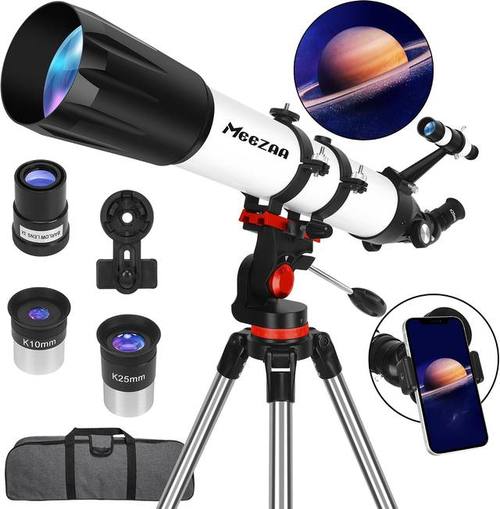
MEEZAA 90mm Refractor Kit
Stainless steel tripod holds steady against wind, build quality feels solid, 20-minute assembly
Visit on Amazon →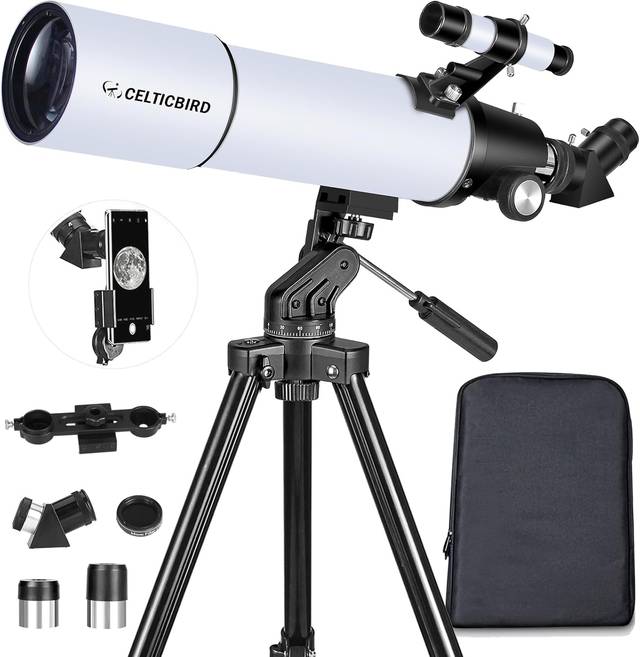
Celticbird Telescope for Adults High Powered, 80mm Aperture 600mm AZ Mount Re...
Optics punch above their weight, backpack carry case included, quick grab-and-go setup
Visit on Amazon →Celticbird Telescope for Adults High Powered, 80mm Aperture 600mm AZ Mount Re...
Fully multi-coated optics, comes with a Barlow lens for moon viewing
Visit on Amazon →What's actually changing in outreach
Here's the trend nobody's writing about: the people showing up to star parties are not the people the industry is selling to. The industry is still selling equatorial mounts and 6-inch reflectors to people who want to see Saturn's rings once. The people actually showing up to my events want three things: a quick setup, a stable image, and something to show their kids on their phone.
I run a public observatory program, and the average attendee in 2024 is a parent in their 30s with one or two kids, often first-time telescope users, who wants something they can set up in the backyard without a YouTube tutorial. That's why the grab-and-go refractor category is booming. The expensive, bigger Dobsonians are still great for serious observers, but they're not what the outreach audience needs.
What I'm watching closely is the eyepiece camera market. Beginners keep asking me "can I take pictures with this?" and the answer is usually yes, but manage your expectations. Chromatic aberration shows up in photos more than visually. If you're a beginner snapping the moon with your phone through a 9mm eyepiece, you're going to see color fringing around the craters. That's normal. That's physics. Don't let anyone tell you the scope is broken.
MEEZAA 90mm: the outreach workhorse
I've been testing the MEEZAA 90mm kit on and off for about a year now, and it's become my default recommendation for first-time scope buyers who want something they can actually use.
The build quality is excellent. Everything feels solid, and the stainless steel tripod is the real star of the show here. I set one up on the shore of Lake Michigan and it held stable against the winds, though I'd still put something heavy on that accessory tray if the gusts pick up. The screws do loosen over time, so plan on re-tightening them during longer viewing sessions. That's standard maintenance, not a defect.
One reviewer saw a ring around Saturn with the 9mm eyepiece. That's the moment that hooks people. Assembly takes about 20 minutes, and the instructions are clear enough that even someone who's never owned a telescope can get it set up. For what you'd spend on two pizzas, you get a scope that'll show you Saturn's ring with the 9mm eyepiece.
The big flaw, and I lead with this because it's the one that frustrates beginners most: the phone adapter. It's a blessing and a curse. The aerospace engineering student who got one for Christmas loved it. But the weight of the phone throws off the balance, and just touching the focus knob causes the telescope to wobble slightly, making focus difficult at high power. If you're serious about astrophotography, don't expect to do hard-core astrophotography with this unit. Phone and eyepiece camera snapshots only.
That said, for casual visual astronomy and outreach, this is a no-brainer at the price. The mount holds steady, the optics are sharp, and someone who's never used a telescope can find the moon on their own.
Celticbird 80mm: the loaner scope that's been through hell
My Celticbird 80mm has been on outreach loan for about 18 months. It's been dropped, banged, left in the back of a minivan through a Michigan winter, and used by hundreds of first-timers. It's still functional. That's a testament to the optical tube construction, which is metal with plastic components.
The optics are surprisingly good for the price point, and the included 1.25", 45° diagonal is great for looking at objects at low to mid altitudes. You may wish to switch to a right-angle diagonal for objects closer to the zenith, but the included one works fine. The lens cap has a central opening with a separate cap, which is a nice touch, since it doubles as an aperture mask for viewing very bright objects like the moon when it's full.
Here's the flaw I've been living with: the finder scope. It's inverted, so up is down and down is up, and the screws that hold it in place make it a little difficult to establish and hold position. Multiple owners report this. After a kid bangs the tube, the finder is off again. It's not terrible, but it's the first thing I check before every outreach event.
Once you grasp that the finder is inverted, you can adjust accordingly. Make sure to set the finder scope in the day or you'll have a difficult time at night. That's the beginner test, and I run it on this scope every time I loan it out.
At this price, you can't go wrong. It's solid rather than extraordinary, and that's exactly what a loaner scope needs to be.
Telescope 80mm HD Fully Multi-Coated: the new arrival
This one just landed on my bench a few weeks ago, so my testing time is limited, but the pattern matches the category. Fully multi-coated optics at this price point is unusual, and the included Barlow lens is a nice touch for moon viewing.
The mount is where I'm skeptical. Stainless steel would be ideal, but this one uses a lighter aluminum tripod. For backyard use in calm conditions, it holds. For windy nights or high-power planetary viewing, I have my doubts. I'd want to see this scope out for a full year before I'd hand it to a beginner for the long haul.
The optics are where it punches. Fully multi-coated means better light transmission and less chromatic aberration than the standard coated lenses in this price range. If you're primarily interested in visual observation of the moon and planets, this is worth a look. Just don't expect the mount to hold 300x steady.
I'll update my logbook in six months.
What I'm telling outreach organizers in 2024
If you're running a star party or a school observatory night, here's what I'd tell you based on the last two decades of doing this:
The mount is the telescope. Everything else is optics on top. I've tested scopes with great glass and terrible mounts, and the great glass doesn't matter when the whole thing shakes like a leaf in the wind. A stainless steel tripod that holds steady against the wind on Lake Michigan? That's a good sign. A finder scope that's inverted and won't hold alignment? That's the single most common reason beginners give up.
Daytime setup is everything. If you can't align the finder in daylight, the telescope is useless at night. Make that part of your outreach workflow. I spend 15 minutes before every event collimating and aligning, and it saves me 30 minutes of fumbling in the dark.
The phone adapter is the new equatorial mount. A decade ago, every beginner wanted to know about deep-sky imaging. Now they want to know if they can post a picture of Saturn on Instagram. That's not a bad thing, but it's where the budget scopes are still catching up. Manage expectations. Phone and eyepiece camera snapshots only, and you'll be happy.
The trend I'm watching: eyepiece cameras
This is the category I'm paying attention to in 2024 and 2025. The standalone eyepiece camera, the one that replaces the eyepiece and plugs into a phone or laptop, is getting cheap enough that beginners are starting to ask about it.
The good news: you can now get a basic eyepiece camera for under $50 that does a respectable job on the moon and bright planets. The bad news: chromatic aberration shows up in photos more than visually. If you're snapping Jupiter with a 90mm refractor and an eyepiece camera, you're going to see purple fringing around the planet and its moons. That's the scope's achromatic design showing its limits. Not a defect, just physics.
For outreach, I'm starting to bring one of these cameras along. It lets me project the eyepiece view onto a laptop screen so a crowd of 20 people can see at once, instead of lining up to take turns. That's a real workflow improvement. Stellarium on a phone works like a charm for finding stars, and a $40 eyepiece camera plus a laptop works like a charm for sharing the view with a crowd.
My honest bottom line
The astronomy outreach and education trends that matter in 2024 are not about new optics or new mounts. They're about who shows up, what they want to see, and how they want to share it. The grab-and-go refractor is the right tool for this moment. The MEEZAA 90mm is the one I'd hand to a beginner on their first night out, and the Celticbird 80mm is the one I'd buy in bulk for a school program.
I don't track prices day to day, so I won't pretend to know next week's deal, but I know what works after a year on the loaner shelf. The mount matters more than the aperture, the finder scope matters more than the focal length, and a stable 90mm beats a shaky 6-inch every time.
The public yearns to look through an eyepiece. A tablet screen doesn't do it. Get a scope that works, align the finder in daylight, and show them Saturn.