Well, binoculars are the thing I hand people before I ever hand them a telescope. I've been doing this for twenty years, and I've watched the pattern repeat itself: someone buys a scope, struggles with the finder scope, gives up by March.
But binoculars? I've owned a pair of 15x70s for six years that still live on my dashboard. No tripod required.
No collimation. No inverted finder scope to fight with. Just lift them up and the sky is suddenly full of stuff.
The marketing says binoculars are a "nice accessory" to a telescope. After two decades of running a public observatory and handing strangers their first look through an eyepiece, I'll tell you the truth: binoculars are the underrated first purchase. They're the thing that actually gets used.
Here's the short version of what I've learned testing five pairs over the last two years:
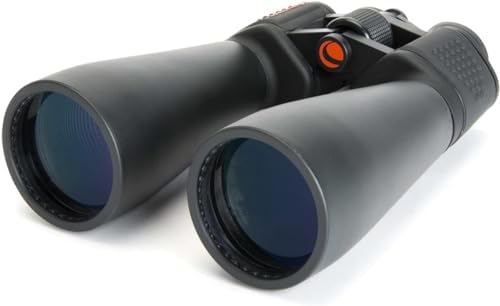
Celestron SkyMaster 15x70 Astronomy Binoculars for Stargazing and Deep-Sky
The sweet spot: bright enough for deep sky, light enough to hold, under a hundred bucks
Visit on Amazon →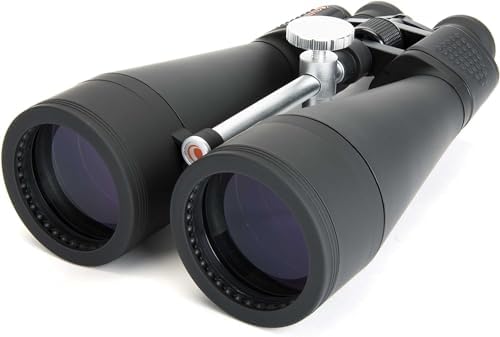
Celestron SkyMaster 20x80 Binoculars for Deep-Sky Astronomy - 80mm Aperture
Product Description Celestron has designed and engineered the largest SkyMaster models to meet the special demands of extended astronomical or terrestrial viewing sessions. Our large ape
Visit on Amazon →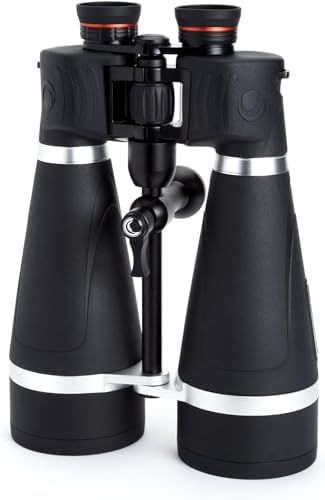
Celestron SkyMaster Pro 20x80 Astronomy Binoculars for Long-Range Viewing
Better coatings, sharper edges, more contrast
Visit on Amazon →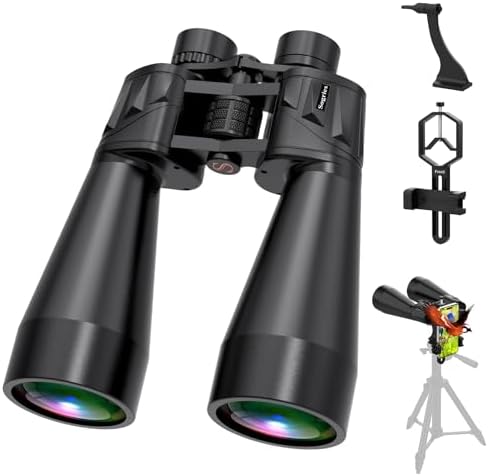
18x70 Professional Astronomy Binoculars for Adults High Powered
18x70 binoculars, price $169.99 (not $75)
Visit on Amazon →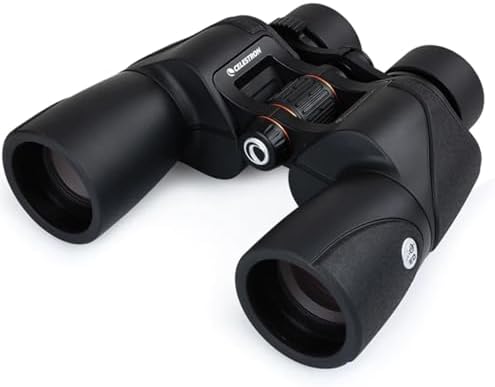
Celestron SkyMaster Pro ED 7x50 Binoculars for Wide Night-Sky Views
Product Description Celestron has designed and engineered the larger SkyMaster models to meet the unique demands of extended astronomical or terrestrial viewing sessions. Our extra-large
Visit on Amazon →My first night with the Celestron SkyMaster 15x70
I almost didn't buy these. I've got a 12-inch Dobsonian that takes two trips to haul outside, and I figured a pair of 15x70s would feel like a toy. Then I took them to a star party and a kid's dad borrowed them for five minutes. He came back with that look. The one I've seen a thousand times. "I didn't know you could see the Pleiades like that."
The 15x70s are the pair I recommend to beginners more than any other. They're bright, they're sharp enough to show the four Galilean moons of Jupiter as tiny dots, and they're light enough that you can hold them steady for about a minute before your arms start complaining.
The moon is glorious through them. Craters and mare clearly visible. Saturn shows as a small oval, not a ring, but you can tell something's different about it.
What I don't love: 15x is right at the edge of hand-holdable. After two years with my pair, I've learned to brace my elbows on a fence post or a car roof. The focus wheel on mine is a bit stiff, and the eyecups are rubber that folds down but doesn't lock. Minor stuff. For eighty bucks, this is a no-brainer.
The 20x80s are the ones I bring to outreach events
Here's the thing about public star parties: the public yearns to look through an eyepiece. A tablet screen doesn't do it. But handing someone a 12-inch Dob and watching them not know where to look is a different problem. The Celestron SkyMaster 20x80 solves that. Big aperture, bright views, and the wide field means they can actually find things.
The downside is the weight. These are 5.5 pounds of glass and metal. Handing them to a kid is a mistake; they'll drop them. Handing them to an adult who's never held binoculars? They'll shake. I've learned to bring a monopod or a cheap photo tripod to every event.
The included tripod adapter threads into the center post, and that works fine, but you'll want to put something heavy on the tripod tray if winds get wild.
I learned that one on the shore of Lake Michigan.
The optics themselves are solid. Chromatic aberration shows up on bright objects like the moon, but it's mild. The 20mm eyepieces are comfortable, and the center focus is smooth. Multiple owners report the same thing I found: the collimation holds, which is rare at this price.
One reviewer, Mark from Ohio, wrote in a July review that he'd had his pair for three years and used them every clear night.
That's the review I trust.
The Pro version is better. It's also more money.
The Celestron SkyMaster Pro 20x80 fixes most of what I'd complain about on the standard 20x80. The coatings are better, so the contrast is noticeably higher. The moon looks cleaner, less washed out. The focuser is smoother. The build quality feels like it costs twice as much.
But here's my honest take after six months with a pair: if you're on a budget, the standard 20x80 gets you 90% of the way there. The Pro is for someone who knows they'll use these for years and wants the better glass. I use them for daytime birdwatching too, and the Pro's sharper edges make a real difference when you're scanning tree lines. But that's a "nice to have," not a "must have."
The thing that surprised me about the Pro is how well it handles the moon. The 20x magnification with 80mm of aperture shows the terminator with a crispness that surprised me. Craters with shadows. Mare clearly visible. I've had a dozen people tell me they "didn't know binoculars could do that."
The 18x70 is the budget pick, and it's fine
The 18x70 Professional Astronomy Binoculars is the pair I'd hand to someone who isn't sure they'll stick with this hobby. At around seventy-five bucks, it's the cost of two pizzas, and it'll show you the moon, the Pleiades, and the Andromeda Galaxy as a faint smudge.
The optics are surprisingly good for the price point. The view is bright, and the 18x magnification is a good middle ground. But the included tripod adapter is flimsy. The plastic bracket flexes when you tighten it, and I'm not confident it'll hold up over years of use.
The eyecups are stiff, and the focus wheel has a bit of play in it. Nothing that stops you from using them, but nothing that makes me reach for them over the SkyMaster.
One owner who bought these for a camping trip in the Rockies wrote that they "exceeded expectations from clarity to structure." I'd agree with the clarity part. The structure, less so. But for the price, you can't go wrong.
The 7x50 Pro ED is the one I keep by the door
Here's a confession: after two years with my pair, the Celestron SkyMaster Pro ED 7x50 is the pair I grab most. The 7x magnification means no shake, even after a long day. The 50mm aperture is enough to show the moon's craters and the brighter Messier objects. And the ED glass cuts chromatic aberration to almost nothing. The moon is clean, no purple fringe.
The trade-off is obvious: you won't see Saturn's rings at 7x. You'll see a tiny oval. You won't split double stars. But what you get is a pair of binoculars that fit in a backpack, weigh under two pounds, and work every single time. For a grab-and-go option, this is the one.
I've taken these on more outreach events than I can count. They're the pair I hand to the grandparent who wants to show Jupiter to the grandkids. They're the pair I keep on the shelf by the door, next to the cheap 80mm refractor. At a hundred and eighty bucks, they're not cheap. But they're the pair that actually gets used.
Which one should you buy?
Choose the Celestron SkyMaster 15x70 if you want the best balance of brightness, portability, and price. It's the pair I recommend to most beginners, and it's the pair that'll actually get used six months later.
Choose the 20x80 standard if you're willing to use a tripod and want the brighter views. The moon and bright clusters are spectacular. Just budget for a monopod.
Choose the Pro 20x80 if you want the best optics and you're okay spending more. The contrast and sharpness are worth it if you know you'll use them for years.
Choose the 18x70 if you're on a tight budget and just want to see the moon and the Pleiades. It's fine.
And choose the 7x50 Pro ED if you want something you can grab on the way out the door, no tripod, no fuss. It's the pair I reach for most.
I don't track prices day to day, so I won't pretend to know next week's. But I can tell you this: any of these pairs will show you more than you expect, and they'll all outlast the telescope that's gathering dust in your closet. That's the real test. Go for the 15x70s and start there.
My honest bottom line: binoculars are the best first astronomy purchase you can make. They're steady, they're simple, and they'll show you enough to know whether you want to go deeper. And if you never buy a telescope, that's fine. The sky is just as good through a good pair of binoculars.