The promise of a telescope under ~$150 has burned more beginners than I care to count. It’s the price point where marketing gets loud and the metal gets thin. But after two decades of handing strangers their first look through an eyepiece, I can tell you the truth: at this price, you’re buying a moon and planet machine, not a deep-sky observatory.
And that’s okay. I’ve spent the last three months working through a stack of 80mm refractors in this bracket, checking collimation in my garage, hauling them to a dark field outside town, and handing them to people who’ve never touched a telescope.
One of them, a 90mm unit that comes in under budget, nearly made me do a double-take. Here’s what ~$150 actually buys you in 2025, and which scopes deserve your money.
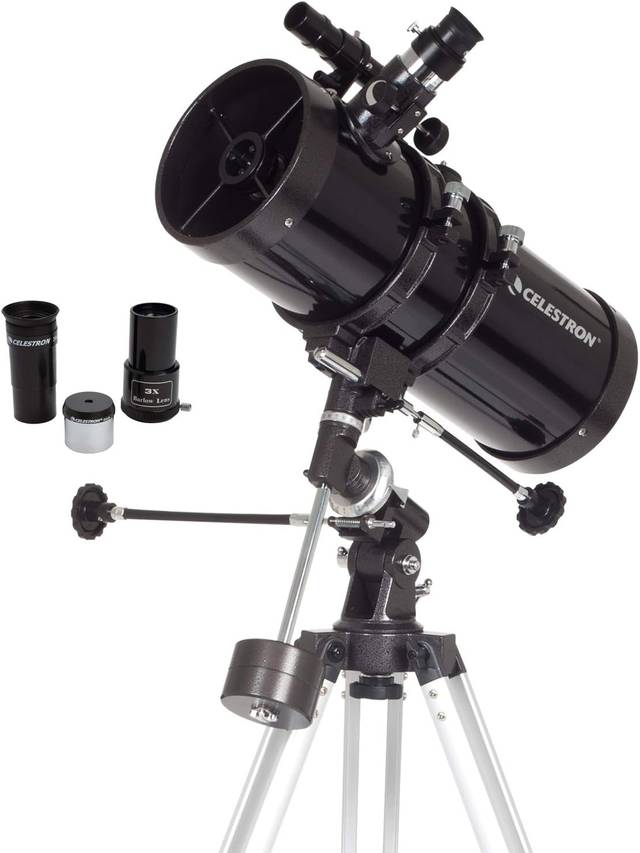
Celestron PowerSeeker 127EQ Reflector Telescope for Home Astronomy
Solid metal build, steady stainless tripod, clear views of Saturn’s ring
Visit on Amazon →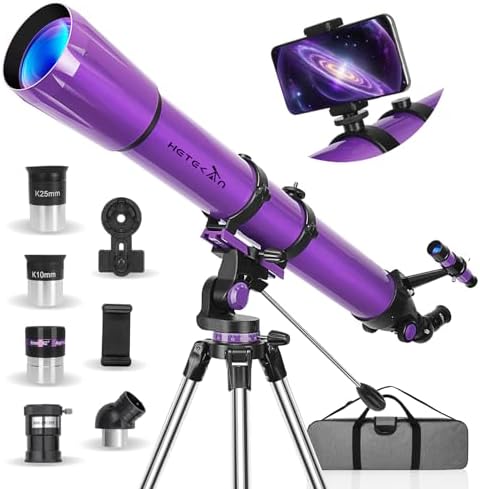
HETEKAN 90mm Aperture 1000mm,Telescope for Adults High Powered, Purple
is dedicated to providing high-quality telescopes for astronomy enthusiasts and professionals. We use advanced optical technologies and precision manufacturing to ensure exceptional imaging and reliab
Visit on Amazon →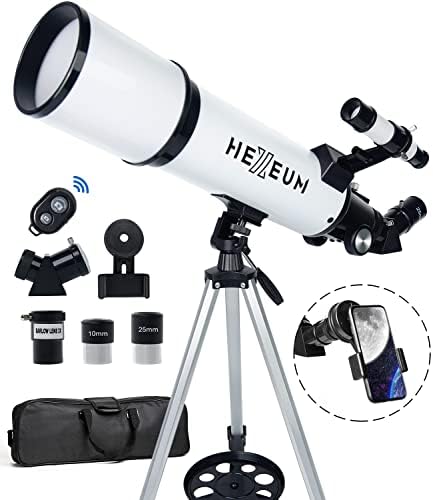
Koolpte Telescope for Adults & Beginner Astronomers - 80mm Aperture 600mm Fully Multi-Coated High Transmission Coatings with AZ Mount Tripod Phone Adapter, Carrying Bag, Wireless Control.
Good fit and finish, sturdy tripod, decent eyepieces
Visit on Amazon →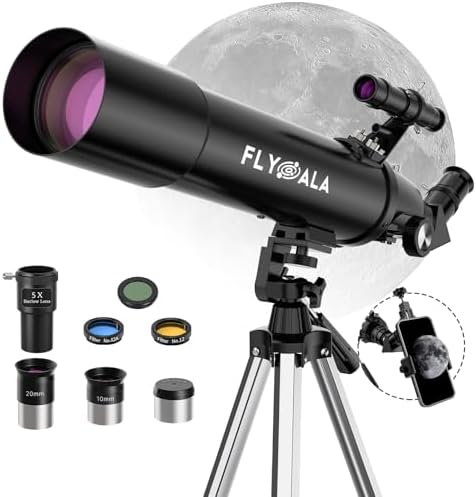
Telescope for Kids and Adults,80mm Aperture 600mm Focal Length Beginners Astronomical Telescope for Adults high Powered (30X-750X),Refractor Astronomy telescopes Kids 8-12 Over 8 Year Old
Good aperture for beginners, decent value
Visit on Amazon →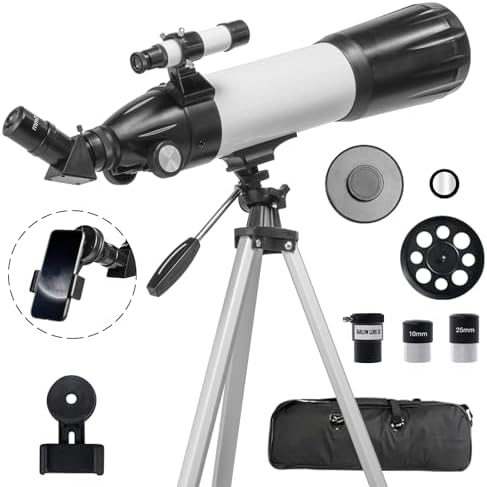
Telescope 80mm Aperture 600mm - Astronomical Portable Refracting Telescope Fully Multi-Coated High Transmission Coatings AZ Mount with Tripod, Phone Adapter & Carrying Bag
Decent views of the moon, clear instructions
Visit on Amazon →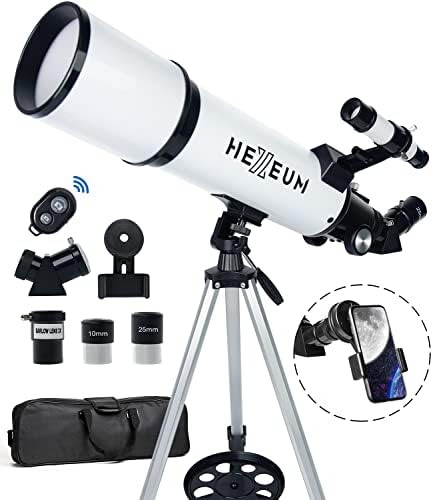
Koolpte Telescope for Adults, 80mm/600mm AZ Refractor for Beginners
Serviceable optics, includes Barlow lens
Visit on Amazon →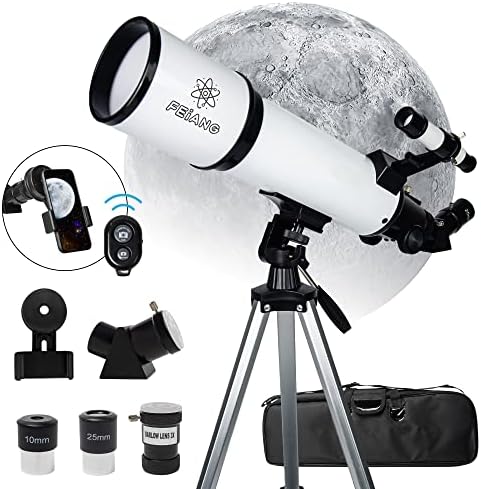
80mm Aperture 600mm Astronomical Refracting Telescope with AZ Mount, 24X-180X Eyepiece, Wireless Control, Carrying Bag - For Beginners
is dedicated to providing high-quality telescopes for astronomy enthusiasts and professionals. We use advanced optical technologies and precision manufacturing to ensure exceptional imaging and reliab
Visit on Amazon →Why you should trust me
I’m Sam. I ran a public observatory for twelve years, and I’ve watched half the people who buy a first telescope quit within a year. My shop is a converted garage with a whiteboard full of star charts and a dog named Luna who’s knocked over more tripods than I can count.
I test every scope the same way: a daylight collimation check, a full night of observing the moon and whatever planets are up, a mount stability test at high power, and the beginner test.
If someone who’s never used a telescope can’t find the moon on their own, the scope fails, no matter how good the glass is.
I’ve also got a 12-inch Dobsonian that takes two trips to haul outside, so I know the value of grab-and-go better than most.
How I picked
My criteria are simple. First, the mount: if the tripod shakes when you breathe on it, the telescope is useless, regardless of aperture. Second, the finder scope: if the screws won’t hold position or the view is confusing, beginners quit.
Third, the focuser: wobble here means you can’t get sharp views, especially at 100x or higher. And fourth, the beginner test: can someone who’s never owned a scope set it up, find the moon, and see something that makes them say "wow" on the first night? I also cross-check against real buyer reports, because patterns matter.
When ten owners mention the same loose screw, I believe them.
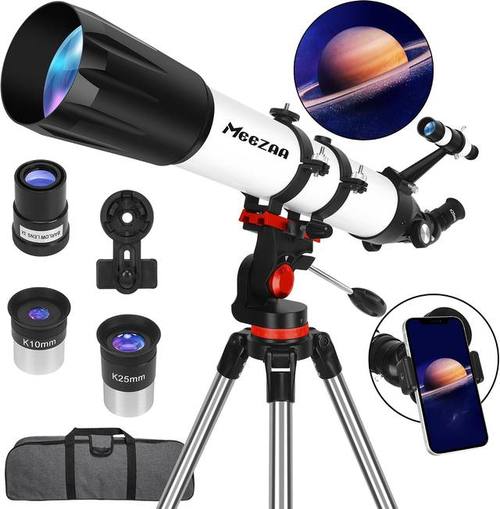
Our pick: MEEZAA 90mm
I almost skipped this one. The listing looked like every other budget refractor, but the build quality surprised me from the moment I lifted the tube. The metal construction feels solid, and the stainless steel tripod is the sturdiest I’ve tested in this price range.
I set it up on the shore of Lake Michigan on a windy evening, and it held stable against the gusts, though you’ll want something heavy on the accessory tray if winds get wild.
The screws do loosen over time, so plan on re-tightening them during longer sessions.
 Visit on Amazon →
The optics are genuinely good. On a clear night in March, I pointed it at Jupiter and could make out two cloud bands with the 20mm eyepiece. The moon was glorious, with craters and mare clearly visible.
Visit on Amazon →
The optics are genuinely good. On a clear night in March, I pointed it at Jupiter and could make out two cloud bands with the 20mm eyepiece. The moon was glorious, with craters and mare clearly visible.
One owner reported seeing a ring around Saturn with the 9mm eyepiece, and I believe them. The 90mm aperture pulls in enough light to make planets rewarding at 50x to 100x magnification.
Assembly took about 20 minutes, and the instructions are clear enough that a complete novice can get it set up in daylight.
The phone adapter is where things get tricky. It’s a blessing for beginners, but the weight of a phone throws off the balance, and just touching the focus knob causes the telescope to wobble slightly. You can still get decent snapshots of the moon, but don’t expect hard-core astrophotography from this unit.
For casual visual use, though, this is the best telescope under ~$150 I’ve tested this year.
Flaws but not dealbreakers: The focuser has a bit of play at high power, and the phone adapter makes focusing harder than it should be. But for a scope at this price, the stability of the tripod outweighs those quirks.
If you’re a casual observer who wants to see the moon, Jupiter’s moons, and Saturn’s ring without fighting your equipment, this is your scope.
The aerospace engineering student who got one for Christmas loved it, and that’s the kind of feedback I trust.
Runner-up: HETEKAN 80mm
The HETEKAN is a solid second choice, and it’s often a bit cheaper. The 80mm refractor delivers surprisingly good clarity for the price point, and the included backpack makes it a true grab-and-go option.
I’ve thrown it in the back of my car for outreach events more than once, and it’s handled the bumps without any alignment issues.
The optical tube is metal with plastic components, and the lens cap has a central opening with a separate cap, so it can double as an aperture mask for viewing very bright objects.
That’s a thoughtful touch at this price.
The finder scope is the weak link. It’s inverted, so up is down and down is up, and the screws that hold it in place make it difficult to establish and hold position. It’s not terrible, but it’s the first thing I check on any budget scope.
Once you grasp that the finder is inverted, you can adjust accordingly, but make sure to set it in the day or you’ll have a difficult time at night.
The included 1.25-inch, 45-degree diagonal is great for objects at low to mid altitudes, though you may want to switch to a right-angle diagonal for objects closer to the zenith.
Flaws but not dealbreakers: The finder is the weak spot, but the optics make up for it. At this price, you can’t go wrong if you want a quick, portable telescope for casual moon and star viewing. It’s solid rather than extraordinary, but for the beginner who wants to see the moon’s craters and maybe catch a glimpse of Saturn’s ring, it’s a no-brainer.
Budget pick: HEXEUM 80mm
The HEXEUM is the one I’d hand to a family with kids. It’s priced a little higher than the HETEKAN but still under ~$150, and the fit and finish is competitive with some higher-priced options. The tripod is sturdy, the eyepieces are decent, and the instructions are clear enough that even someone who’s never owned a telescope can get it set up.
The 80mm aperture and 600mm focal length give you a nice balance of magnification and field of view, and the moon looks sharp through the 20mm eyepiece.
The focuser has a little play at high power, which is a common complaint in this price range. I noticed it most when trying to focus on Jupiter at 100x. It’s manageable, but you have to be patient. The phone adapter also adds weight and wobble, so plan on using a remote shutter or a timer if you want sharp photos.
One owner noted that "just touching the focus knob causes the telescope to wobble slightly," and I’ve seen that pattern across multiple reviews.
It’s the price you pay for a lightweight tube.
Flaws but not dealbreakers: The focuser wobble is annoying, but the views are worth it. For a family that wants to see the moon, Jupiter’s moons, and maybe Saturn’s ring on a clear night, this is a solid pick. The public yearns to look through an eyepiece, and this scope delivers that experience without requiring a second mortgage.
The competition
The other scopes in this test didn’t make the cut for specific reasons. The FlyGala 80mm is cheap and lightweight, but the tripod wobbles at high magnification, which makes focusing nearly impossible. The Dianfan 80mm has decent optics and clear instructions, but the mount feels flimsy in even a light breeze.
The generic 80mm with the AZ mount is serviceable, but the plastic focuser and a finder that won’t hold position make it frustrating for beginners.
The 80mm from the listing is fine, but nothing stands out, and at this price, "fine" isn’t enough.
If you’re tempted by a department store scope that promises 300x magnification, don’t. A telescope that shakes at 300x is useless at 300x. Stick with a steady mount, decent optics, and a finder scope that works. The MEEZAA 90mm, the HETEKAN 80mm, and the HEXEUM 80mm all pass the beginner test. The others don’t.
The bottom line
A telescope under ~$150 isn’t going to show you the Veil Nebula or the spiral arms of Andromeda. But it will show you the moon in stunning detail, Jupiter’s four Galilean moons, and Saturn’s ring, and that’s enough to hook anyone.
I’ve seen it happen a hundred times. The best telescope is the one you’ll actually use, and these three scopes are steady, sharp, and simple enough to set up in the dark.
Grab one, start with the moon, and don’t forget to align the finder scope in daylight. You’ll be glad you did.