Every beginner telescope comparison I write starts with the same uncomfortable fact: most first telescopes get used a handful of times and then live in a closet. I spent 20 years teaching astronomy, 12 of them running a public observatory, and I have watched thousands of people buy a first scope. The ones that stay in use are almost never the ones with the biggest number printed on the box. This beginner telescope comparison covers four scopes built for four different jobs: a 150mm tabletop Dobsonian, an APO refractor made for imaging, a 90mm refractor on a tripod, and a 50mm starter scope aimed at kids.
Related: Tabletop Dobsonian Vs Tripod Refractor For A First Scope
If you want to look at the sky with your own eyes, the Celestron StarSense Explorer 150mm App-Enabled Tabletop Dobsonian is the scope on this list I would hand to a beginner. Aperture and a steady base beat every feature printed on a box. If you want to photograph the sky, three of these four are the wrong tool, and the SVBONY SV555 is the only imaging-first scope in the group.
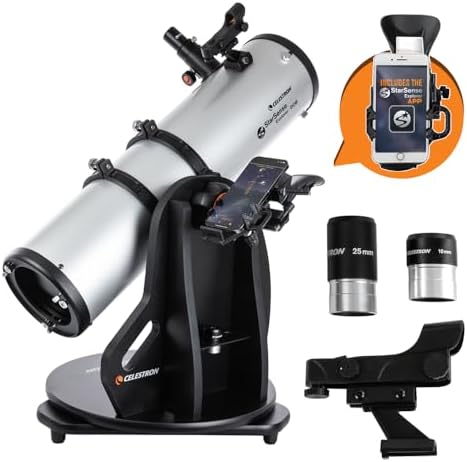
Celestron StarSense Explorer 150mm App-Enabled Tabletop Dobsonian Telescope
Most aperture here by a wide margin, plus a tabletop Dobsonian base with no tripod legs to flex and app-assisted star finding
Needs a genuinely solid table or stool, and eyepiece height is fixed by whatever you set it on
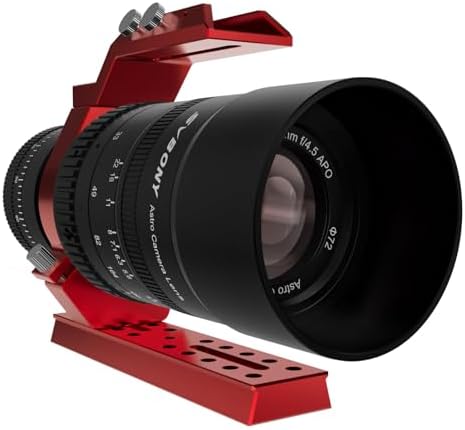
SVBONY SV555 APO Astrophotography Telescope, F4.5-F22 Refractor Telescope
The only scope here designed around a camera, with APO glass and a listed f/4.5 to f/22 range
No mount, no tripod, and a price that assumes you already own the rest of an imaging rig
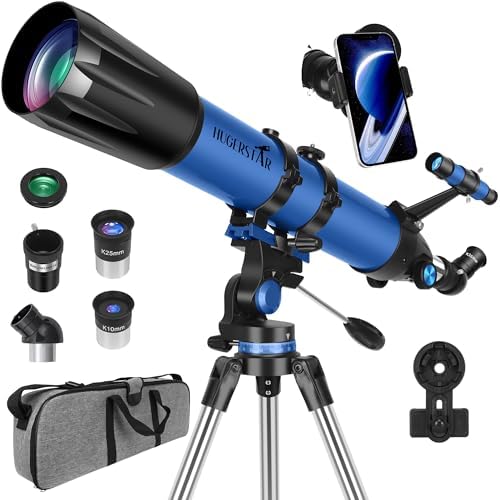
Telescope for Adults High Powered, 90mm Aperture 800mm Refractor
A familiar 90mm f/8.9 refractor layout that is comfortable on the Moon and bright planets
Achromatic glass shows color fringing on bright targets, and the mount is the part that usually disappoints
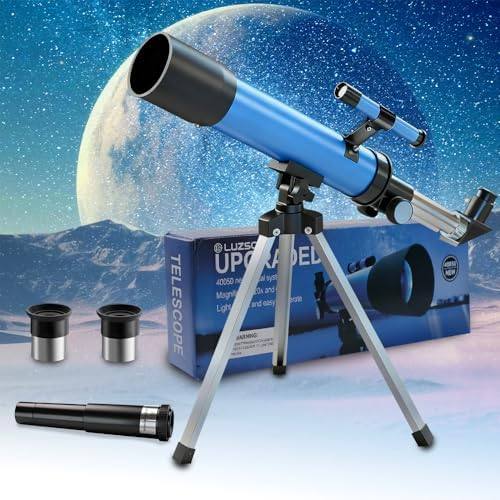
Telescope for Kids, 50mm 100x Beginner Telescope with Tripod
Light, fast to set up, and a low-risk way to find out whether a kid actually wants to observe
50mm runs out of light quickly, and 100x is a ceiling, not a comfortable working magnification
Prices and availability were captured from Amazon Creators API and may change.
How I judge a beginner telescope
My checklist for any scope that lands in front of a beginner has four questions. Does the mount hold steady at high power? Are the optics sharp and in collimation? Could someone who has never touched a telescope use it on night one? And would I recommend it to a friend who has never owned a scope? If a telescope fails the mount question, nothing else matters.
I am judging these four on their design, their listed specifications, and the category each one belongs to. I will not invent a night of observing I did not have. What I can tell you is what each design does well and where each one is likely to frustrate you, because those patterns repeat across every scope in these classes.
Aperture is the number that decides your first year
Aperture is the diameter of the main mirror or lens, and it is the single most important spec in a telescope. It sets how much light you collect and how much detail you can resolve. Magnification is a consequence of aperture, not a substitute for it.
Run the numbers on this group. A 150mm mirror has roughly nine times the light-gathering area of a 50mm lens. The 90mm refractor collects about 3.2 times what the 50mm does, and the 150mm gathers about 2.8 times what the 90mm gathers. Those ratios are why the tabletop Dobsonian can show you globular clusters and galaxy cores while a 50mm scope shows you the Moon and little else.
Useful magnification runs about 2x per millimeter of aperture under decent skies. That puts a practical ceiling near 100x for the 50mm, around 180x for the 90mm, and near 300x for the 150mm. Notice that the kids scope is marketed at 100x, which is its absolute theoretical limit on a perfect night, not a magnification you will actually live at. Most nights you will be at 20x to 50x with it, and that is fine as long as you know it going in.
The mount is the telescope
A great optical tube on a wobbly mount is a great tube you cannot use. That is the whole reason the tabletop Dobsonian leads this comparison.
A Dobsonian rocker box sits flat on a table, so there are no tripod legs to flex and no center column to twist. The trade-off is real: you need a sturdy table, a stool, or a crate, and the eyepiece height is whatever that furniture gives you. A wobbly folding table ruins the whole thing.
Tripod refractors in the 50mm to 90mm range live or die on the head and legs. Thin aluminum legs and a plastic altitude joint will shake every time you touch the focuser, and that shake is what convinces people that astronomy is boring. When you look at the 90mm and 50mm scopes here, spend your attention on the mount photos, not the aperture number.
Celestron StarSense Explorer 150mm App-Enabled Tabletop Dobsonian Telescope
This is the visual observing pick, and it is not close. A 150mm Newtonian on a Dobsonian base gives you the aperture to see Saturn's rings as rings, the Moon at high power with crater detail, and a long list of deep-sky objects from a dark site. The app-enabled star finding is a genuine convenience for a beginner, because it lowers the number of failed star hops in your first month.
The honest caveats: a Newtonian needs collimation, and you should learn it early. The tabletop format means no tripod, so plan your observing surface before you buy. And the eyepiece that ships with it is a starting point, not a destination.
SVBONY SV555 APO Astrophotography Telescope, F4.5-F22 Refractor Telescope
This is the only scope in the group built for imaging, and that changes everything about how you evaluate it. APO glass is designed to bring colors to a single focus, which is exactly what a camera sensor demands and what an achromatic refractor struggles with. The listed f/4.5 to f/22 range covers fast wide-field work at one end and a slower, longer configuration at the other.
Here is the part the listing cannot do for you: this is an optical tube. It arrives without a mount, and imaging means a tracking mount, which is usually the most expensive piece of the setup. If your budget is one purchase, this is not that purchase. If you already own a tracking mount and a camera, this is the most capable tube here for the night sky beyond the eyepiece.
Telescope for Adults High Powered, 90mm Aperture 800mm Refractor
A 90mm refractor at 800mm focal length works out to f/8.9, which is a sensible ratio for lunar and planetary viewing. This is the classic first-scope shape: point it at the Moon, swap to a higher-power eyepiece, and you get a satisfying view without any collimation ritual. It is also light enough that most people will actually carry it outside.
The catch is the glass and the mount. At this price, the objective is achromatic, so expect a purple fringe around the Moon and bright planets at higher magnifications. That is a design trade-off, not a defect. The bigger question is the tripod, and the "high powered" label is marketing language rather than a spec you should trust.
Telescope for Kids, 50mm 100x Beginner Telescope with Tripod
The reason to buy this scope is not the views. It is the answer to a question every parent asks: does my kid actually want to do this? A 50mm refractor on a lightweight tripod sets up in a minute, weighs almost nothing, and shows the Moon with real crater detail, plus a handful of the brightest objects in the sky. For a seven or eight year old, that is often enough to start a lifelong habit.
The reason to be careful is the 100x figure. On a 50mm lens that is the physics ceiling, and in practice a wobbly tripod plus a small exit pupil makes anything past about 50x frustrating. Set expectations at the Moon and bright planets, and treat this as a stepping stone rather than a destination. If the kid sticks with it for a season, you graduate to aperture.
Trade-offs I will not paper over
The imaging scope is the most expensive item here and it cannot show you anything by itself. The visual pick needs furniture and collimation. The 90mm refractor is comfortable but color-fringed. The 50mm kids scope is cheap and limited, in that order.
There is also the eyepiece problem. Whatever ships in the box is a suggestion, not a tool. Budget for one decent mid-power eyepiece on any of these scopes and your experience changes more than it would from any other accessory.
Which one to buy, and in what order
Buy the Celestron StarSense Explorer 150mm if you want to observe with your eyes and you have a table or stool to set it on. It is the scope that survives the closet test, because aperture keeps rewarding you as your skill grows.
Buy the SVBONY SV555 only if you already own a tracking mount and a camera and you want a dedicated imaging tube. Buy the 90mm refractor if you want a simple grab-and-go Moon and planet scope and you accept the glass limitations. Buy the 50mm kids scope as a trial run for a child, not as the family telescope.
Before you click buy
Check three things on any listing before you order. First, does the price include a mount, and is that mount a tripod or a base? Second, what is the actual aperture in millimeters, because that number predicts what you will see? Third, what eyepieces are included, and what size are they, since that determines how easily you can upgrade later.
Aperture is king for visual observing, the mount is the telescope, and the best scope is the one you actually use. Pick the one that fits the nights you really have, not the nights you wish you had.