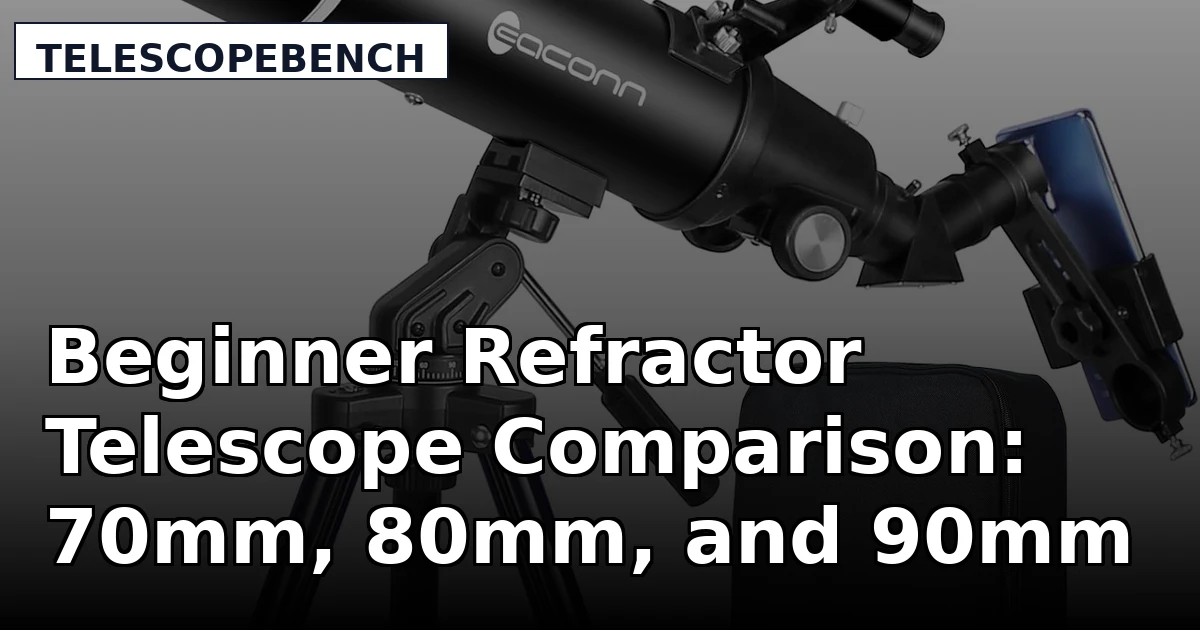
Twenty years of running public observatory nights in Tucson taught me something no spec sheet will ever tell you: most beginner refractor telescopes get used for three nights and then live in a closet. I have watched it happen hundreds of times, and it is almost never the optics that end the hobby. It is a mount that shakes in a breeze, a finder that will not align, and an eyepiece that turns Saturn into a smudge. This beginner refractor telescope comparison covers four products that show up in the same shopping searches, and I am going to tell you plainly which ones a first-time buyer should consider, and which one is not a telescope at all.
Related: Refractor Vs Reflector Telescopes: Which Should A Beginner Buy
For most first-time buyers, the 80mm aperture 600mm refractor is the best balance of aperture, portability, and price in this group, and the 90mm aperture 900mm refractor is the better choice if the scope can live in one spot and you want more reach on planets. The 70mm travel scope is the cheapest way to see the Moon and the rings of Saturn, with the caveat that it will run out of light on anything faint. The fourth product is a collimation and Barlow bundle, not a telescope, and I will explain why it still belongs in this conversation.
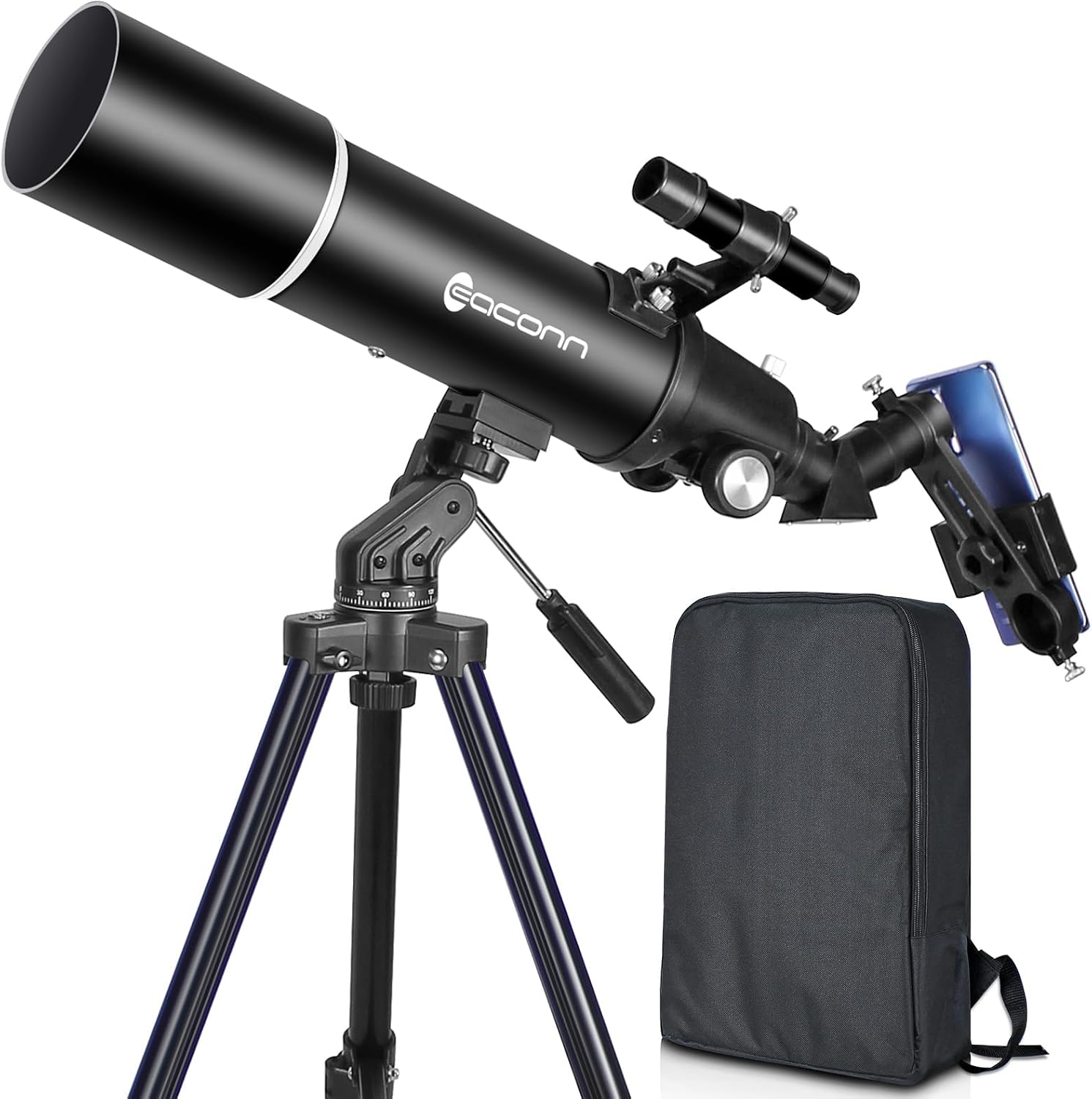
Telescopes for Adults Astronomy, 80mm Aperture 600mm Refractor Telescope for Kids & Beginners, Compact and Portable Travel Telescopio with Backpack
Best balance of aperture and portability here, with 80mm of glass in a package that fits a backpack, so it actually leaves the house
The bundled eyepieces are starter grade, and the tripod is the first part to scrutinize
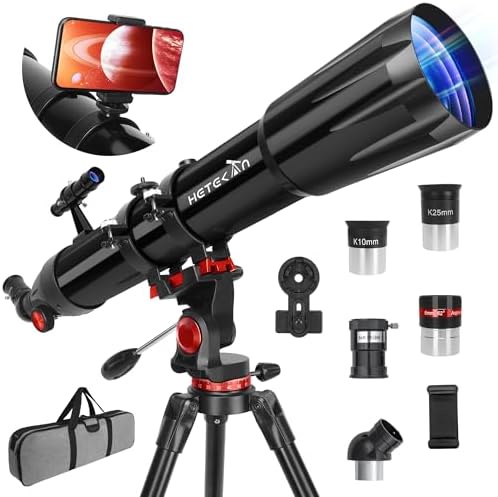
HETEKAN Telescope for Adults High Powered, 90mm Aperture 900mm Refractor
The most aperture in this group, plus a longer focal length that is kinder to simple eyepieces and better on planets
Bigger tube, heavier overall package, and it needs a home where it can stay set up
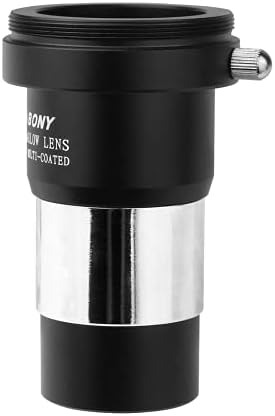
SVBONY SV121 Red Laser Collimator Bundle with Barlow Lens
The included Barlow doubles the power of any eyepiece you already own, a real upgrade for all three scopes
It is not a telescope, and the laser collimator half is built for Newtonian reflectors, not the refractors here
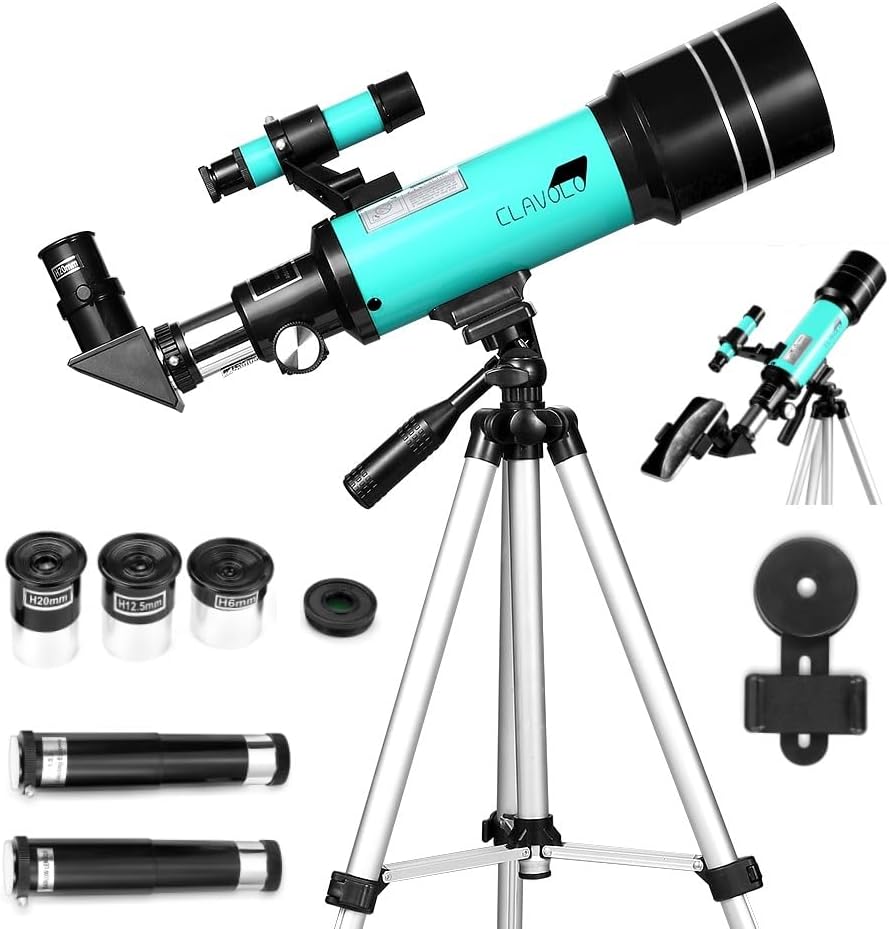
Telescope 70mm Aperture for Kids & Astronomy Beginners, Travel Telescope with Adjustable Tripod & Phone Adaper, Magnification 20X, 200X
The lowest barrier to entry, light enough for a kid to carry, with a phone adapter that gets a camera onto the Moon fast
70mm runs out of light on faint targets, and the magnification number on the box is marketing, not a usable spec
Prices and availability were captured from Amazon Creators API and may change.
How I judge a beginner refractor telescope
The mount is the telescope. Everything else is optics sitting on top of it. When I evaluate any first scope, I start at the tripod and work upward, because a steady 70mm view beats a shaking 90mm view every single night of the week. A refractor is the right design for a beginner in one important way: the lens is sealed in the tube, so there is no mirror to collimate and nothing to knock out of alignment on the drive to a dark site.
Aperture comes second. Aperture is the diameter of the front lens, and it decides how much light you collect and how much detail you can resolve. The 70mm, 80mm, and 90mm scopes here sit in three different tiers of that hierarchy, and the difference between 70mm and 90mm is not a rounding error. It is the difference between seeing the Orion Nebula as a gray smudge and seeing structure in it.
Focal length comes third, and it interacts with aperture in a way that trips up new buyers. The 80mm scope has a 600mm focal length, which works out to roughly f/7.5. The 90mm scope has a 900mm focal length, which is about f/10. A longer focal ratio is more forgiving of inexpensive eyepieces and pushes magnification higher for a given eyepiece, which is why the 900mm tube is the better planetary instrument in this comparison.
Last, the eyepieces. Whatever ships in the box is a suggestion, not a tool. Budget for one decent 25mm and one 9mm eyepiece and you will transform any of these scopes more than you would by spending the same money on a bigger tube.
The 80mm aperture 600mm refractor: the best all-round first scope
The Telescopes for Adults Astronomy 80mm aperture 600mm refractor is the one I would hand to most beginners, and the backpack is a bigger deal than it sounds. A scope that travels is a scope that gets used. That is the whole ballgame. A first telescope that stays in the garage because it is awkward to move is a telescope that teaches you nothing.
Eighty millimeters of aperture is enough to show you the crater walls on the Moon, the Galilean moons of Jupiter as tiny disks, the rings of Saturn on a steady night, and the brighter star clusters and double stars. It is not enough to pull faint galaxies out of suburban light pollution, and no beginner scope is. What 80mm buys you over 70mm is contrast on the targets you will actually look at in your first year.
The trade-offs are honest ones. The included eyepieces are starter glass, and the tripod is the part I would examine first, because this is a lightweight travel package and lightweight packages flex. Set it up in daylight, tighten every knob, and tap the tube gently. If the image settles in about a second, you are fine. If it keeps swinging, that is your answer about the mount, and it is the single most common reason a beginner scope gets abandoned.
The 600mm focal length keeps the tube short, which helps on a modest tripod, and it also means the scope is easy to aim by hand. For a first-timer who is still learning where things are in the sky, a short, wide tube is friendlier than a long one.
The 90mm aperture 900mm refractor: more aperture, more reach
The HETEKAN 90mm aperture 900mm refractor is the most capable optical tube in this group, and it is also the least portable. That is not a flaw, it is a trade you are choosing to make. Nine millimeters more aperture than the 80mm scope does not sound like much until you remember that light gathering scales with the area of the lens, not the diameter. That extra glass collects meaningfully more light, and the extra focal length pushes you into useful planetary magnification more easily.
The f/10 focal ratio is the quiet advantage here. Simple eyepiece designs perform better at long focal ratios, edge distortion is reduced, and the whole optical train is more forgiving. If your plan is lunar and planetary observing from a backyard, this is the tube that rewards that plan. It is also a better platform for a smartphone camera on the Moon, since the image scale is larger and you do not have to push the magnification as hard.
What you give up is convenience. A 900mm refractor is a longer tube on a taller tripod, and it is heavier than the 80mm package. If it lives in a closet and has to be carried down a flight of stairs every time you want a look, the optical advantage will not save it. This is the scope for someone with a patio, a garage, or a balcony where it can stay set up and be carried out in one trip.
Set expectations on magnification as well. A 90mm lens supports something in the neighborhood of 180x on a good night using the rough rule of 50x per inch of aperture, and that ceiling is set by physics and the atmosphere, not by the eyepiece you screw in. Any listing that promises dramatically more is selling arithmetic, not astronomy.
The 70mm travel scope: the cheapest way to see the Moon
The 70mm aperture travel telescope with the adjustable tripod and phone adapter is the scope I recommend when the budget is genuinely tight or when the buyer is a child. It is light, it is simple, and it will show the Moon in genuinely satisfying detail, along with Jupiter's moons, Saturn's rings as a small but unmistakable shape, and the brightest clusters.
The phone adapter is the feature that surprises people. Getting a camera lined up with an eyepiece by hand is genuinely frustrating, and a bracket that holds the phone in place turns a fiddly experiment into something a ten-year-old can manage. The first picture of the Moon you take through a telescope is a hook that lasts, and this scope makes that easy.
Now the honest part. The 20X to 200X magnification figure on the box is a marketing number. A 70mm aperture supports roughly 140x on a steady night, and the practical ceiling is usually lower because the atmosphere rarely cooperates. When a listing advertises a magnification the aperture cannot support, what you get at that setting is a dim, mushy blob. Buy this scope for the Moon, the planets, and bright clusters, and it will treat you well. Buy it expecting to hunt galaxies and you will be disappointed.
Seventy millimeters also means the mount has less mass to hold, which is a real advantage. A small, light tube on an adjustable tripod is easier to keep steady than a big one, so this is not automatically the shakiest option in the group. Check the tripod the same way: set up indoors, tap the tube, and see how fast the image settles.
The SVBONY SV121 collimator bundle: a tool, not a telescope
The SVBONY SV121 red laser collimator bundle with Barlow lens is the odd entry in this comparison, and I want to be direct about why. It is not a telescope. It is an accessory bundle, and it earns its place here because of the second half of the package.
The Barlow lens is the useful part for anyone buying one of the three scopes above. A Barlow sits between the eyepiece and the focuser and multiplies the effective magnification, which means a single eyepiece becomes two. On a short 600mm tube, that is how you reach useful planetary power without buying a whole second eyepiece. For a beginner building a kit slowly, a Barlow is one of the highest value accessories you can add.
The laser collimator half is a different story. Red laser collimators exist to align the mirrors in a Newtonian reflector, and none of the refractors in this comparison have user adjustable mirrors to align. If you own a reflector, or you plan to add a Dobsonian later, a laser collimator is a legitimate tool and this bundle is a sensible way to get one. If you are buying a refractor, you are paying for a tool you will not use.
So it loses this comparison on category, not on quality. It is the wrong shape of product for a first refractor buyer on night one, and the right product for someone six months into the hobby who has added a reflector or wants to stretch their eyepiece collection.
Aperture versus portability: the real trade-off
Here is the pattern I have watched play out for two decades. The buyer researches aperture, buys the biggest tube the budget allows, and then discovers that the biggest tube is the one that never comes out. Meanwhile the modest 80mm scope in the backpack gets used every clear night because it is easier to grab than the alternative.
That is why I rank these three scopes the way I do. The 80mm 600mm refractor wins for most people because it sits at the intersection of enough aperture and enough portability. The 90mm 900mm refractor wins for the person with a permanent setup spot and a genuine interest in planets. The 70mm travel scope wins for the tightest budgets, for kids, and for anyone who wants to find out whether this hobby sticks before spending more.
Notice what does not appear in that ranking: magnification claims, brand prestige, or the number of accessories in the box. A telescope is a system, and the system is only as good as its weakest part. Usually that part is the mount.
Mounts, eyepieces, and the accessories nobody budgets for
Every one of these scopes will arrive with a tripod that is adequate at low power and marginal at high power. That is normal at this price level, and it is manageable. Set up on grass or dirt rather than a deck, keep the tripod legs short and the center of gravity low, and avoid observing through an open window, since the temperature difference between indoors and outdoors will wreck the image no matter how good the lens is.
Budget for two things beyond the scope itself. First, a better eyepiece or two, since the included ones are the fastest way to improve what you see. Second, a red flashlight, so you can read a star chart without destroying your night vision. Neither is expensive, and together they will do more for your observing than any upgrade to the tube.
A star chart or a planetarium app matters more than a computerized mount for a beginner. Learning to find three or four objects by hand teaches you the sky in a way that punching a button never will, and it means you are never stuck when the electronics misbehave.
Which beginner refractor telescope should you buy?
Buy the 80mm aperture 600mm refractor if you want one scope that covers the Moon, the planets, and bright deep sky objects, and you want it to fit in a backpack. It is the pick I would make for most first-time buyers.
Buy the 90mm aperture 900mm refractor if the scope has a permanent home, you can carry it out in one trip, and your interest leans toward lunar and planetary detail. The extra aperture and the longer focal ratio are real advantages, and they are worth the weight if the scope actually gets outside.
Buy the 70mm travel scope if the budget is tight, the observer is a child, or you want to test the waters before committing. It will show you the Moon and the rings of Saturn, and the phone adapter will get you a photo you will keep.
Add the SVBONY SV121 bundle only if you own or plan to own a Newtonian reflector, or if you want the Barlow for the eyepieces you already have. Skip it as a first purchase, because on night one you need a telescope, not a collimation tool.
The last thing I will say is the thing I say at every public night. The best telescope is the one you actually use. A 90mm tube that stays in the garage loses to a 70mm tube that goes outside every clear night, every time. Pick the one that fits your life, learn four objects well, and the hobby will take care of the rest.