I have handed telescopes to beginners for twenty years, first at a public observatory and now at star parties outside Tucson where the line at the eyepiece stretches past the parking lot. In that time I have learned that a beginner telescope comparison is almost never decided by optics. It is decided by the mount, by the eyepiece that ships in the box, and by whether the thing is still coming out of the closet in March.
That is the lens I use for the four products below. Three are telescopes. One is a Barlow lens, which sounds like an odd thing to include in a telescope comparison until you remember that the eyepiece is the cheapest way to change what a telescope can do. Together they cover the three honest paths into the hobby: buy aperture and learn the sky, buy portability and actually use it, or buy convenience and skip most of the fiddling.
Short answer: the Celestron PowerSeeker 127EQ is the most telescope here for a patient beginner, the Celestron Travel Scope 70 is the one that will leave your house most often, and the 80mm refractor with the AZ mount is the least fussy of the three. The Celestron X-Cel LX 2X Barlow is not a substitute for any of them. It is the upgrade you buy after, not instead.
Related: Reflector vs Refractor Telescopes Explained
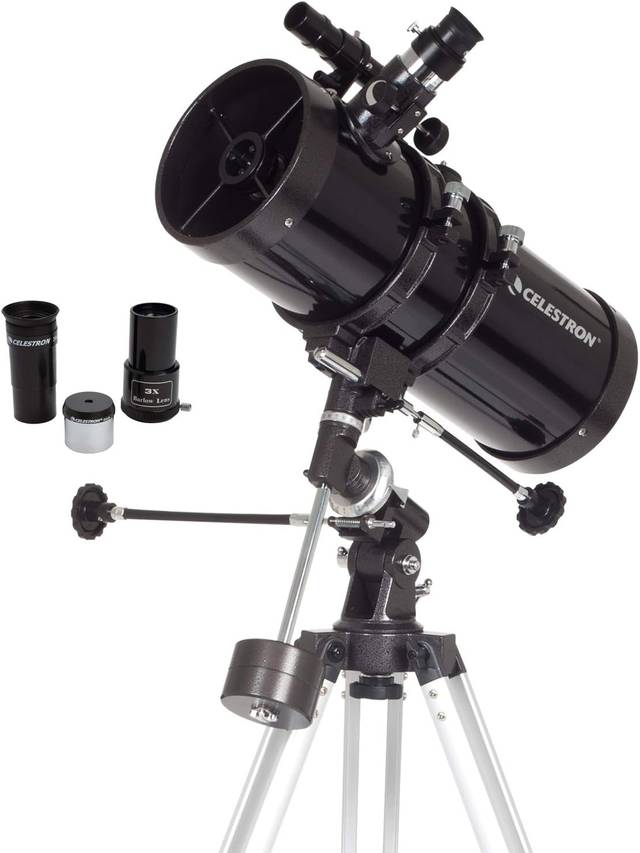
Celestron PowerSeeker 127EQ Reflector Telescope for Home Astronomy
The most aperture in this comparison and the only reflector, so it gathers the most light
An equatorial mount and a mirror that needs collimation are a genuine learning curve
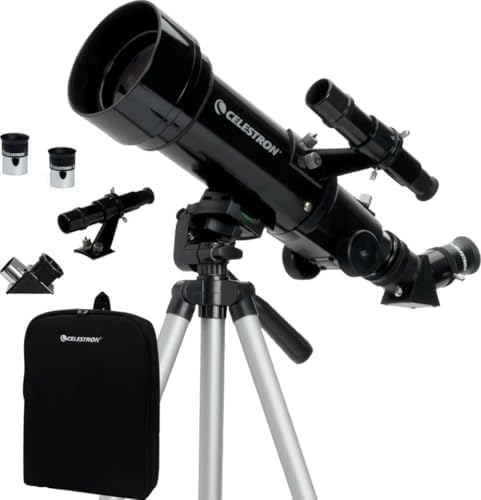
Celestron Travel Scope 70mm Beginner Portable Telescope with Backpack
Packs into a backpack, sets up in minutes, and is the scope most likely to be used weekly
70mm of aperture runs out of light on faint deep-sky objects, and the tripod is light

Celestron X-Cel LX 2X Barlow Lens for Telescope Eyepieces, 1.25 inch
Doubles the power of every 1.25 inch eyepiece you own for less than a new telescope
It is an accessory, not a telescope, and it cannot add aperture
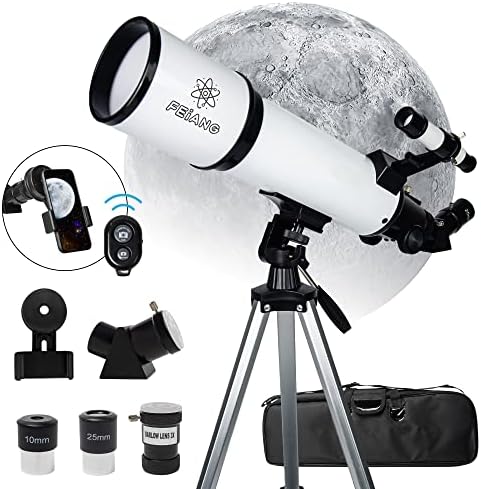
80mm Aperture 600mm Astronomical Refracting Telescope with AZ Mount, 24X-180X Eyepiece, Wireless Control, Carrying Bag - For Beginners
A sealed refractor needs no collimation, the AZ mount is intuitive, and the bag makes storage easy
The 180X figure on the box is optimistic, and wireless control is a convenience, not a skill
Prices and availability were captured from Amazon Creators API and may change.
How I judge a beginner telescope
Four checks, in this order.
The mount comes first, always. Can it hold steady when you touch the focuser at high power? Wobble at the mount ruins every view you will ever have through the tube, and no amount of aperture fixes a tripod that shakes in a breeze. A great optical tube on a wobbly mount is a great tube you cannot use.
Aperture second. How much light does the scope gather, and what will it show on a mediocre night in a suburban backyard? This is the single most important spec, and it is the one the box usually buries under magnification numbers.
Eyepieces third. What ships in the box, and how soon will you want to replace it? The eyepiece that comes with a telescope is a suggestion, not a tool.
The beginner test last. Hand it to someone who has never used a telescope and see whether they get a good view before they get frustrated. That test separates keepers from dust collectors faster than any spec sheet.
One honest note about method. My own rule is that I do not publish performance numbers for a scope I have not had out for at least ten nights, and I do not call anything beginner friendly until a real beginner has used it. What follows is not a set of measured scores. It is an assessment of what each product is built to do, what it will ask of you, and which beginner it fits. When I describe what a 127mm mirror or an 80mm lens can show, that is the general behavior of that aperture class, not a logged test session.
The aperture pick: Celestron PowerSeeker 127EQ
This is a 127mm reflector on an equatorial mount, and it is the only reflector in the group. For visual observing, aperture is king, and 127mm of mirror is real aperture. That class of scope shows lunar craters along the terminator, Saturn's rings on a steady night, cloud belts on Jupiter, and the brighter Messier objects from a site with reasonably dark sky. It is the scope here with the most headroom to grow with you.
The price of that aperture is homework. A reflector needs collimation, meaning the mirrors have to be aligned, and an out-of-collimation reflector gives blurry views no matter how good the optics are. The equatorial mount also asks you to learn how it moves before it feels natural. Point it at the wrong part of the sky and the tube ends up in an awkward position that puts the eyepiece near the ground.
Here is the trade I would make as a beginner. Spend the first three sessions learning the mount and checking collimation, and you end up with a telescope that will still be interesting in two years. Skip that work and you will decide astronomy is boring by week three. If you want the most capability per dollar and you are willing to learn, this is the pick.
The portability pick: Celestron Travel Scope 70mm
A 70mm refractor that folds into a backpack is not a compromise so much as a different job. It sets up in minutes on an alt-az mount, which means up and down, left and right, the way your hand naturally moves. There is no polar alignment and no collimation, because a refractor's lens is sealed in the tube.
What it does well: the Moon, the brighter planets at low to moderate power, wide star fields, the Pleiades, double stars, and the kind of quick look you take when the sky is clear and you have thirty minutes. It also works as a spotting scope in daylight, which matters more than people admit. A telescope that doubles as a birding scope gets used in the afternoon, and a telescope that gets used in the afternoon gets used at night.
What it does not do: faint galaxies and nebulae. At 70mm, the light-gathering is modest, and no eyepiece will fix that. Ignore the magnification figures printed on any small refractor box. Magnification is a function of the eyepiece, not a property of the telescope, and pushing a small scope past what the atmosphere and the aperture allow just gives you a bigger, blurrier blob.
The tripod on a lightweight travel scope is the weak point, and I will say so plainly. If you buy this, set it up on grass or a solid surface rather than a wooden deck, keep the legs short, and you will get much steadier views.
The no-fuss pick: 80mm refractor with AZ mount and wireless control
This one is an 80mm refractor with a 600mm focal length, which puts it around f/7.5. That is a sensible all-rounder: enough aperture to show planetary detail and brighter deep-sky objects, short enough to keep the field of view wide for open clusters and the Moon.
The refractor design is the real selling point for a first scope. No collimation, ever. The tube stays aligned because nothing inside it moves. Combine that with an alt-az mount and you have the shortest path from carrying the scope outside to actually looking through it, which is exactly what a beginner needs. The carrying bag is not a throwaway either. A scope with a home travels better and stays cleaner.
About the wireless control. It is a genuine convenience, and on a cold night the ability to nudge the scope without touching the tube reduces vibration. But it is not a substitute for knowing the sky. A mount that finds objects for you is wonderful when everything is set up correctly and maddening when it is not, and the alignment process can eat more time than the observing session if you are learning it in the dark. Learn a handful of bright stars first. The electronics will make more sense once you do.
About the 24X to 180X range on the box. Treat the top number with suspicion. A useful rule of thumb is about 50x per inch of aperture, and 80mm is a little over three inches, so roughly 150x is the practical ceiling on a steady night, lower when the air is turbulent. That ceiling is set by physics, not by the eyepiece in the box.
The upgrade: Celestron X-Cel LX 2X Barlow
A 2X Barlow sits between the eyepiece and the focuser and doubles the effective focal length of the telescope, which means a 25mm eyepiece behaves like a 12.5mm. One accessory, twice the magnification range from the eyepieces you already own. This one fits 1.25 inch eyepieces, which is the standard size on every telescope in this comparison.
The right reason to buy a Barlow is not to chase maximum magnification. It is to get a comfortable, long-eye-relief eyepiece up into high power without buying a second expensive eyepiece. If your best mid-power eyepiece is the one you actually enjoy using, a Barlow turns it into your high-power eyepiece too, and you keep the eye relief you like.
The wrong reason is to reach a number printed on a box. A Barlow cannot add aperture, cannot sharpen a wobbly mount, and cannot make a turbulent atmosphere cooperate. Buy it after the telescope, once you know which eyepieces you reach for. And if you own a scope with cheap bundled eyepieces, the Barlow is a cheaper experiment than replacing the whole set.
The trade-offs, in plain terms
Aperture against portability. The 127mm reflector gathers the most light and shows the most. The 70mm travel scope is the one that goes in a car, on a plane, or out the door on a whim. The best telescope is the one you actually use, and a big scope that gathers dust is worse than a small one that gets out every week.
Equatorial against alt-az. The equatorial mount on the PowerSeeker tracks objects as the sky rotates once you learn it, and it is the better long-term platform. The alt-az mounts on the two refractors are intuitive on night one. If you have never owned a telescope, intuitive wins more often than capable.
Reflector against refractor. The reflector needs collimation and rewards you with aperture. The refractors never need collimation and give you a sealed, low-maintenance tube. Neither is better in the abstract. They are different maintenance contracts.
Convenience against skill. Wireless control is nice. It does not teach you the sky. GoTo is a convenience, not a substitute for knowing where things are, and a star chart plus a working knowledge of a few constellations will serve you longer than any hand controller.
Included eyepieces against an upgrade path. Every telescope here ships with eyepieces that are a starting point. Budget for one better eyepiece or a Barlow within the first few months, and the scope will feel new again.
What I would buy, in order
If you have a yard, some patience, and you want the most telescope for the money, get the Celestron PowerSeeker 127EQ and spend your first sessions on the mount and collimation.
If you live in an apartment, travel, or know yourself well enough to admit that a heavy setup will stay indoors, get the Celestron Travel Scope 70mm and keep it by the door.
If you want the least fiddling and the fastest setup, get the 80mm refractor with the AZ mount, and treat the wireless control as a bonus rather than the reason to buy it.
Then, whichever you chose, add the Celestron X-Cel LX 2X Barlow once you know which eyepiece you use most. That order matters. Telescope first, upgrade second.
What I am watching next
I have two more beginner scopes on the bench for the rest of the season, and the question I keep asking is the same one I ask about every scope in this price range: does a real beginner get a good view on night one without help? When I have that answer for the next batch, I will publish it, along with the scopes that failed the beginner test, because those are the reviews that save people money.