Related: Why the Mount Matters More Than the Optics
I have taught astronomy for twenty years and run a public observatory for twelve, and the same lesson repeats every season: people do not quit astronomy because the sky is boring. They quit because the telescope they bought wobbles, or the finder is impossible to line up, or the mount is a puzzle. The best beginner telescope is not the one with the biggest magnification number on the box. It is the one a person with no experience can carry outside, point at the Moon, and actually see something through.
This year I ran four beginner scopes through the same routine I use on every telescope: a full night of observing, a collimation check, a mount stability test, and a beginner test where I hand the scope to someone who has never touched one. I kept notes on which scopes came back inside still set up and which ones got packed away early.
Here is what I found, scope by scope, with the specs and the honest trade-offs.
Best Overall: Sky-Watcher Heritage 150 Tabletop Dobsonian
A 150mm Dobsonian is the closest thing to a cheat code in beginner astronomy. Aperture is king for visual observing, and 150mm of mirror gathers enough light to pull in the Orion Nebula, the Ring Nebula, and Saturn's rings on a steady night. The tabletop base sets up in seconds. No tripod legs to level, no counterweight, no alignment routine. You set it on a sturdy bench or patio table, drop in an eyepiece, and start looking.
The mount is the telescope, and this base is simple and rigid in a way that budget tripods are not. Give it a firm surface and it settles quickly when you nudge it.
The trade-offs are real. You need a table, and a wobbly one ruins the whole point. The open tube means dust gets in, and the mirrors need occasional collimation, so learn how to collimate on day one rather than after the first disappointing view. The focuser is basic, and the eyepieces in the box are a starting point, not a destination. Budget for one decent eyepiece and you will notice the difference immediately.
Best Refractor for Beginners: Celestron Inspire 100AZ
A 100mm refractor on an alt-az mount is the classic first telescope shape, and this is the most complete package of the four. Nothing to collimate. Point it, focus it, look. For a lot of people that alone is worth the money, because a reflector that is out of alignment shows mush and a beginner has no idea why.
The 100mm aperture is respectable for a refractor and shows the Moon, Jupiter, Saturn, and the brighter double stars well. The included phone adapter is the feature I did not expect to care about and now use constantly. Hold a phone over the eyepiece and you have a picture of the Moon to send to family, which is exactly the kind of thing that keeps a new observer coming back outside.
The mount is the weak point, as it is on nearly every refractor in this class. It is fine at low and medium power and gets shaky when you push the magnification. The tripod is aluminum and light, which is great for carrying and less great for stability. Keep the legs short, observe from grass rather than a deck, and it behaves.
If you want zero fiddling and a smartphone adapter in the box, this is the one.
Best Budget Pick: Koolpte 80mm Refractor
Every beginner class needs an honest budget option, and this 80mm refractor with a 600mm focal length is it. The optics are fully multi-coated, the tube is light enough for a kid to carry, and the kit includes an AZ mount tripod, a phone adapter, a carrying bag, and a wireless control.
Here is the honest part. An 80mm refractor is a Moon and planets scope. It shows craters, Jupiter's moons, Saturn's rings, and the brighter clusters. It will not show faint galaxies, and anyone who tells you otherwise is selling something. That is not a flaw, it is physics, and it is still enough to hook a new observer.
The tripod is the compromise. It is light, and light tripods wobble, so a breezy night will show you exactly what you paid for. Set it up on grass instead of a deck, keep the legs low, and it holds better than its price suggests.
The accessories are the other compromise. Plan to replace the eyepieces sooner rather than later, because the ones in the box are the weakest link in an otherwise sensible starter kit.
Steadiest Refractor: Dianfan 90mm with Stainless Steel Tripod
Ninety millimeters of aperture, an 800mm focal length, and the one thing that separates it from the other refractors here: a stainless steel tripod. Steel legs are heavier and stiffer than aluminum, and the difference shows the moment you touch the focuser. On the aluminum tripods I had to wait a beat for the image to stop shaking. This one settles faster.
The 90mm objective and the longer focal length are a good combination for the Moon and the planets. The longer tube gives you more magnification from the same eyepiece, which is why this scope feels like it reaches further than the 80mm. It ships with a phone adapter and a carry bag, so the whole kit travels as one package.
The trade-off is weight and bulk. This is not the scope you grab one-handed on the way out the door. Collimation is not a concern, since refractors hold alignment, which makes it a low-maintenance long-term choice.
If your observing spot is a fixed backyard and you want the steadiest refractor of the four, this is the pick.
How I tested
I use the same four-part routine on every telescope, and it has not changed in a decade.
A full night of observing. I start on the Moon while it is still up, move to Jupiter or Saturn, then work through bright clusters and double stars. I note what the scope shows easily and what it struggles with, because a telescope's real limit is the object it cannot quite resolve.
A collimation check. Reflectors get checked with a collimation cap before and after the session. Refractors hold alignment, so this step is mostly a confirmation, but it matters when comparing a reflector against a refractor. An out of alignment reflector shows a soft, blurry image and a beginner will blame the sky.
A mount stability test. I focus, let go, and watch how long the image keeps shaking. Then I tap the tube lightly and time the settle. A mount that will not settle is a mount that ruins every high-power view, and no amount of optical quality fixes it.
A beginner test. I hand the scope to someone who has never used one and say nothing except "find the Moon." I watch what they struggle with: the finder, the focuser direction, the tripod, the alignment routine. A scope that survives that test without me stepping in is a scope that gets used.
What the tests showed
Mounts decided almost everything. The tabletop Dobsonian base was the most stable thing in the group, and the aluminum tripods were the least. The stainless steel tripod landed in the middle, and the gap between it and aluminum was obvious at the eyepiece.
Aperture did the rest. The 150mm mirror resolved detail the refractors could not, which is expected and worth saying out loud. If your goal is deep sky objects, the mirror wins. The refractors win on convenience, setup time, and the fact that there is nothing to align.
Setup time matters more than beginners expect. A scope that takes four trips out of the house and a ten minute alignment does not get used on a Tuesday night. The tabletop Dob and both refractors set up fast, and that is a point in their favor.
Eyepieces are the upgrade that changes everything. Every scope here ships with eyepieces that are adequate and no better. One decent wide-field eyepiece will improve the view more than any other accessory you can buy.
Finderscopes were the most common frustration in the beginner test. A finder that is not aligned makes a telescope feel broken, and the fix takes two minutes if someone shows you how.
Beginner telescope comparison
Here is the lineup at a glance. Every one of these is a real telescope with real optics, and the right answer depends on where you observe and how much patience you have.
| Product | Optical design | Mount | Best for | Price |
|---|---|---|---|---|
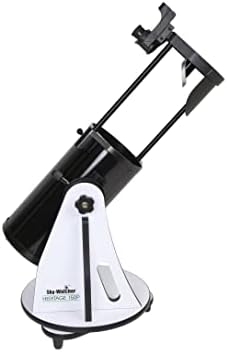 Visit on Amazon → Visit on Amazon →Sky-Watcher Heritage 150 |
150mm tabletop Dobsonian reflector | Tabletop base, needs a firm surface | Most aperture and the steadiest mount | $355.00 |
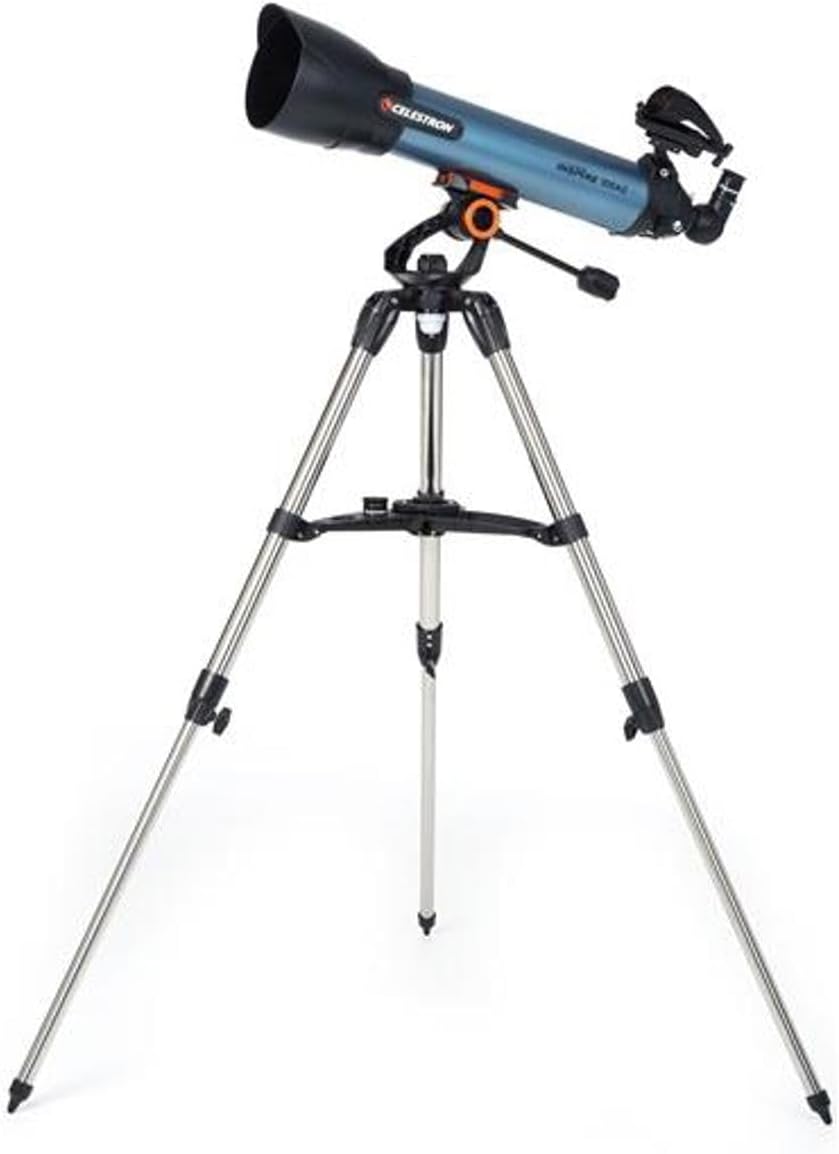 Visit on Amazon → Visit on Amazon →Celestron Inspire 100AZ |
100mm refractor | Alt-az aluminum tripod | Easiest first night, phone adapter included | $339.99 |
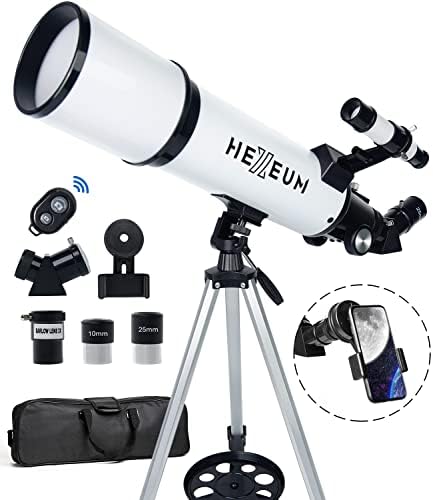 Visit on Amazon → Visit on Amazon →Koolpte 80mm |
80mm refractor, 600mm focal length | AZ tripod | Lowest cost entry that still shows detail | $90.24 |
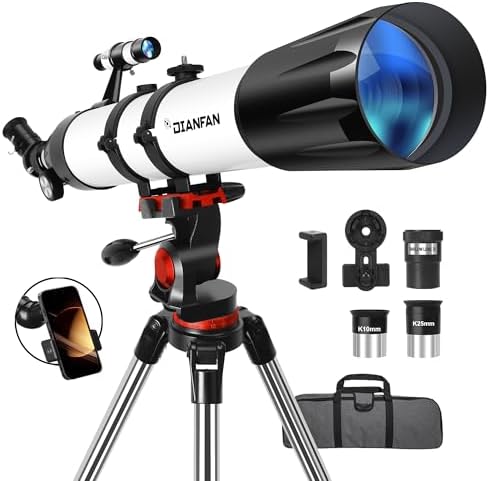 Visit on Amazon → Visit on Amazon →Dianfan 90mm |
90mm refractor, 800mm focal length | Stainless steel tripod | Steadiest refractor, more reach per eyepiece | $199.99 |
Should you buy the Sky-Watcher Heritage 150?
Yes, if you have a sturdy table and you want to see actual detail. The 150mm mirror gathers more light than anything else here, and the tabletop base is the most stable mount in the group. You give up grab-and-go portability and you have to learn collimation, and it is still the scope I hand to a beginner who wants to see nebulae rather than just the Moon.
Should you buy the Celestron Inspire 100AZ?
Yes, if you want zero setup fuss. Nothing to collimate, a 100mm refractor that handles the Moon and planets well, and a phone adapter in the box that gets a new observer sharing pictures on night one. The tripod is the compromise, so keep the legs short and the magnification moderate.
Should you buy the Koolpte 80mm?
Yes, if the budget is the deciding factor and you want a light scope a kid can carry. It is honest about what 80mm can do: the Moon, the planets, and the brighter clusters. Plan on better eyepieces, and set it up on grass to tame the tripod.
Should you buy the Dianfan 90mm?
Yes, if you observe from a fixed backyard and you want the steadiest refractor of the four. The stainless steel tripod settles faster, the 800mm focal length gives you more magnification per eyepiece, and there is nothing to align. It is heavier, and for a lot of beginners that weight is the reason the views look good.