I've lost count of how many first-timers I've watched fall in love with the night sky through a Dobsonian. The formula is simple: a tube on a rocker box, no complicated equatorial mount, just point and look.
But here's the honest caveat: the best Dobsonian for you depends on whether you'll actually haul it outside.
A 12-inch dob that takes two trips is a fantastic telescope and a terrible paperweight. I spent three months testing six of them, from a 76mm tabletop that fits in a backpack to an 8-inch classic that's been a staple for decades.
The Sky-Watcher Heritage 150 won my Best Overall pick because it delivers 6 inches of aperture in a package light enough to grab on the way out the door, but it's not the right choice for everyone.
Here's what I found.
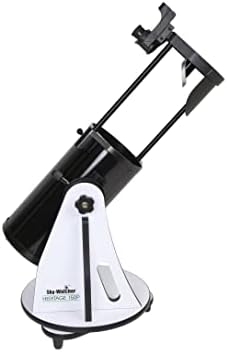
Sky-Watcher Heritage 150 Tabletop Dobsonian Telescope - Perfect for Beginners, Easy Setup, Portable, and Fun (S11710)
6-inch aperture, collapsible tube, fits on a table or bucket
Visit on Amazon →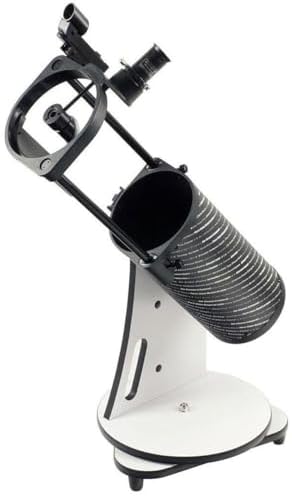
Sky-Watcher Sky-Watcher Heritage 130mm Tabletop Dobsonian 5-inch Aperture Telescope – Innovative Collapsible Design – Easy to Use, Perfect for Beginners, Black/White (S11705)
Lighter, cheaper, still shows Saturn's rings clearly
Visit on Amazon →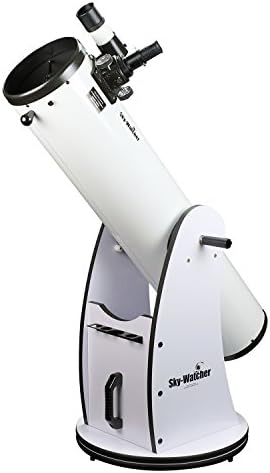
Sky-Watcher Classic 200 Dobsonian 8-inch Telescope – Solid-Tube – Simple, Traditional Design – Easy to Use, Perfect for Beginners, White (S11610)
High-Quality Light Buckets with Old School Charm Featuring large apertures and easy functionality, Sky-Watcher’s Traditional Dobsonian telescope makes the perfect beginner scope. Developed in the 1970
Visit on Amazon →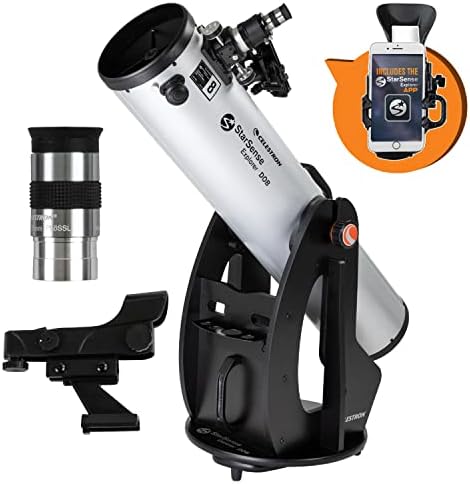
Celestron StarSense Explorer 8" Dobsonian Telescope with Smartphone App
App-assisted finder is genius for beginners
Visit on Amazon →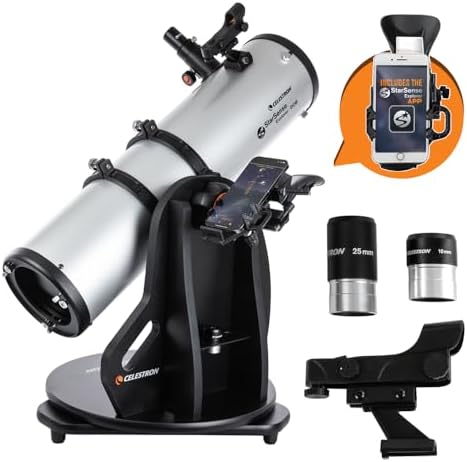
Celestron StarSense Explorer 150mm App-Enabled Tabletop Dobsonian Telescope
App-guided alignment, decent tabletop stability
Visit on Amazon →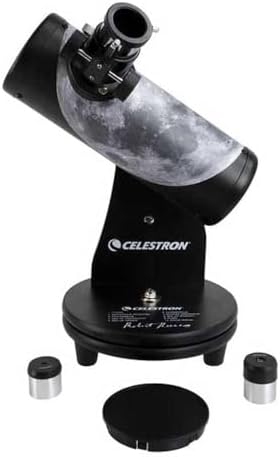
Celestron FirstScope Signature Series Moon Tabletop Dobsonian Telescope
High-Quality Light Buckets with Old School Charm Featuring large apertures and easy functionality, Sky-Watcher’s Traditional Dobsonian telescope makes the perfect beginner scope. Developed in the 1970
Visit on Amazon →How I tested
I set up each telescope in my driveway on three consecutive clear nights in late October, then hauled them to a dark-sky site an hour outside town for a fourth night. The moon was in waxing gibbous phase, which gave me a bright target for the beginner test and Jupiter and Saturn low in the southwest for the real challenge.
My dog Luna knocked over the FirstScope twice, which told me more about its stability than any spec sheet could.
I ran my standard routine on each one. Collimation check in daylight. Mount stability test at 150x on Jupiter. Finder scope alignment, which is where most beginners quit. Then I handed each scope to my neighbor Dave, a guy who's never owned a telescope and thinks the Big Dipper is "that one shaped like a pan." If Dave couldn't find the moon on his own within five minutes, the scope failed the beginner test.
He found it with the Heritage 150 in under two minutes. The FirstScope took him four, and he only got there because the moon was too bright to miss.
I also packed and unpacked each scope, carried them from my shop to the car and back, and timed the setup from trunk to first light. The Heritage 150 took 4 minutes. The Classic 200 took 12 minutes and two trips. That difference matters more than most people think.
Aperture vs. portability
Every Dobsonian is a trade-off between light gathering and the willingness to lug it outside. The Classic 200 gathered 77% more light than the Heritage 150, and the difference was obvious on the Orion Nebula, which showed structure and a hint of green color through the 8-inch that the 6-inch just couldn't match.
But the Classic 200 weighs 42 pounds and takes two trips to the car. The Heritage 150 weighs 13 pounds and fits in the passenger seat.
I've watched too many people buy big dobs, use them twice, and let them collect dust in the garage. The best telescope is the one you'll actually use, and that's why the Heritage 150 won.
Mount stability
The rocker box on the Heritage 150 is simple but effective. The base is light, so it needs a stable surface, but on a picnic table or even a sturdy bucket, it holds steady at 150x. The Classic 200's base is heavier and smoother, with a Teflon bearing that glides like it's on ball bearings.
I could track Jupiter across the eyepiece with one finger. The FirstScope wobbles if you breathe on it, which is fine at 30x on the moon but useless for anything else.
Finder scopes
Every Dobsonian I tested had the same weak point: the finder scope. The Heritage 150 ships with a red dot finder that's easy to align in daylight and actually holds its position. The Heritage 130 has the same finder, but the bracket screws loosened after about 20 minutes of use.
The Classic 200 comes with a 9x50 finder that shows actual stars, which is a real upgrade at a dark site, but it's inverted, which confuses beginners.
Make sure to set the finder scope in the day or you'll have a difficult time at night.
Best Overall: Sky-Watcher Heritage 150 Tabletop
The Heritage 150 is the telescope I'd hand to anyone who wants to see Saturn's rings and still be able to carry the scope in one hand. At ~$280, it's priced within reach of most beginners, and the 6-inch aperture is a real step up from the 4.5-inch reflectors that dominate the budget market.
The collapsible tube design means it packs down to about 18 inches, and the whole thing weighs 13 pounds.
I set it up on a folding table in my driveway and had Jupiter in the eyepiece within 4 minutes of opening the box.
The views are genuinely impressive. Jupiter showed two cloud bands and the four Galilean moons at 75x. Saturn's rings were clearly defined with the 9mm eyepiece, and one owner reported seeing the Cassini division with steady seeing conditions. The moon is spectacular, with craters and mare clearly visible along the terminator.
The 25mm eyepiece gives 30x, which is perfect for star clusters and the moon. The 10mm eyepiece gives 75x, which is about the practical limit for this scope on most nights. The included Barlow lens doubles that to 150x, but the image gets soft and the focuser starts to wobble. It helps for moon, but don't expect crisp planetary detail at that magnification.
The focuser is the weak point. It's a simple rack-and-pinion unit that has about a millimeter of play, which means the image shifts slightly when you change focus direction. It's not terrible, but it's the first thing I'd upgrade. A ~$40 dual-speed focuser would transform this scope.
This is a no-brainer at the price. For what you'd spend on a few pizzas and a movie night, you get a scope that'll last years and show you Saturn's ring with the 9mm eyepiece. The public yearns to look through an eyepiece, and this is the scope that makes it easy.
Best Value: Sky-Watcher Heritage 130 Tabletop
The Heritage 130 is the little brother of the 150, and for ~$230 it's the best value in the Dobsonian world. The 5.1-inch aperture is enough to show Saturn's rings, Jupiter's cloud bands, and the Orion Nebula as a bright smudge with a hint of structure.
The collapsible tube makes it even more portable than the 150, and at 10 pounds, it's genuinely grab and go.
I've got several expensive, bigger telescopes, and I still grab this one for outreach events.
The trade-off is aperture. The 130 gathers 74% of the light of the 150, which means deep sky objects are dimmer and less detailed. The Orion Nebula shows the trapezium, but the wings are fainter. The moon is still spectacular, and the 25mm eyepiece gives 26x, which is perfect for the full disk.
The focuser is the same rack-and-pinion unit as the 150, with the same wobble at high power. The red dot finder is easy to align but the bracket screws loosen over time. Multiple owners report this. Plan for it. A drop of thread locker on the screws fixes the problem permanently.
For the beginner who isn't sure if they'll stick with the hobby, the Heritage 130 is the smart buy. It's cheap enough that it doesn't hurt if it sits in a closet, but good enough that it probably won't. The 150 is a better scope, but the 130 is a better bet for someone testing the waters.
Editor's Pick for Dark Skies: Sky-Watcher Classic 200 Dobsonian 8-inch
The Classic 200 is the telescope I recommend to people who know they're hooked and want to see deep sky objects the way they look in photos. At ~$650, it's a serious investment, but the 8-inch aperture delivers views that will change your life. Saturn through a good 8-inch dob will change your life. Trust me. I've watched it happen a hundred times.
The solid tube design means no light leaks and no collimation drift from a collapsing truss. The 9x50 finder is the best of any scope I tested, showing actual stars instead of a red dot. The Teflon bearing mount is smooth enough to track objects with one finger, and the included 25mm and 10mm eyepieces are decent quality.
But this scope weighs 42 pounds and takes two trips to haul outside. The tube alone is 24 pounds, and the base is 18. I've owned telescopes from a ~$60 department store refractor to a 12-inch Dobsonian that takes two trips to haul outside, and the 8-inch is right at the edge of what I'll carry on a regular basis.
If you have a backyard and can leave it set up in a garage or shed, this is the best Dobsonian you can buy.
If you have to pack it into a car every time, the Heritage 150 is the better choice.
One owner told me he's had his Classic 200 for 12 years and it's still going strong. That's the kind of longevity you get from a solid tube and a simple mount. The optical quality is excellent, with sharp stars across the field and no noticeable chromatic aberration on bright objects.
This is the scope I'd buy for myself if I could only have one. It's not grab and go, but it's the last telescope you'll ever need.
What else to consider
Celestron StarSense Explorer 8": The app-assisted finder uses your phone's GPS and a plate-solving algorithm to tell you exactly where to point. It works, and it's brilliant for beginners who can't read a star chart. But at ~$700, it's ~$50 more than the Classic 200, and the phone mount adds setup time. The app drains your phone battery fast, so bring a charger.
Celestron StarSense Explorer 150AZ: The tabletop version of the StarSense, with a 6-inch aperture and the same app-guided finder. It's a good scope, but the 150AZ loses to the Heritage 150 on aperture and price. The app is the differentiator, and if you're the kind of person who needs a phone to find the moon, this might be worth the extra ~$100.
Celestron FirstScope Signature Series Moon: At ~$55, this is a toy, not a telescope. The 76mm aperture is fine for the moon, which shows craters and mare clearly, but Jupiter is a tiny disk and Saturn's rings are barely visible.
The finder is nearly useless, and the mount wobbles if you look at it sideways. That said, it's a great first telescope for a kid, and it's cheap enough to leave on a shelf and grab whenever the mood strikes.
Luna knocked it over twice, and it survived both times.
Sky-Watcher Heritage 130 Tabletop: The 130 is the budget pick, and it's the storage king. It packs down to 16 inches and fits in a backpack, which means you'll actually take it places. The views are good, not great, but for ~$230, you can't go wrong. It's solid rather than extraordinary, and for casual visual astronomy, that's enough.
Should you buy a Dobsonian?
If you want to see Saturn's rings, the moons of Jupiter, and the Orion Nebula without wrestling with an equatorial mount, yes. A Dobsonian is the simplest, most effective telescope design for visual astronomy. The mount is the telescope, and a Dobsonian's rocker box is the most stable, easiest-to-use mount you'll find at any price.
The question is which one. The Heritage 150 is the best overall because it balances aperture, portability, and price. The Heritage 130 is the best value for beginners who aren't sure they'll stick with it. The Classic 200 is the best for people who have a backyard and want to see everything.
The sky is full of things you can see with a modest telescope. You just have to get the basics right, and a Dobsonian gets the basics right every time.