After twenty years of showing people the night sky, I can tell you the exact moment a beginner's eyes change. It's not the moon, and it's not Jupiter. It's the first time they see a fuzzy patch of light that they know, intellectually, is a cloud of gas a thousand light-years wide, and their brain just can't quite square the two.
That's the deep sky hook. This guide is about the telescopes that get you to that moment without a second mortgage, and it's also about being honest about what a budget scope can and cannot do for galaxies and nebulae.
I'm Sam. I ran a public observatory for twelve years and I've been teaching astronomy for two decades. My shop is a converted garage with a pegboard of tools and a whiteboard covered in star charts. My dog Luna has knocked over more tripods than I care to admit.
I've tested dozens of scopes over the years, and I keep a cheap 80mm refractor by the door for grab-and-go nights, but for deep sky, I know the rules change.
Aperture is king, but a steady mount is the throne.
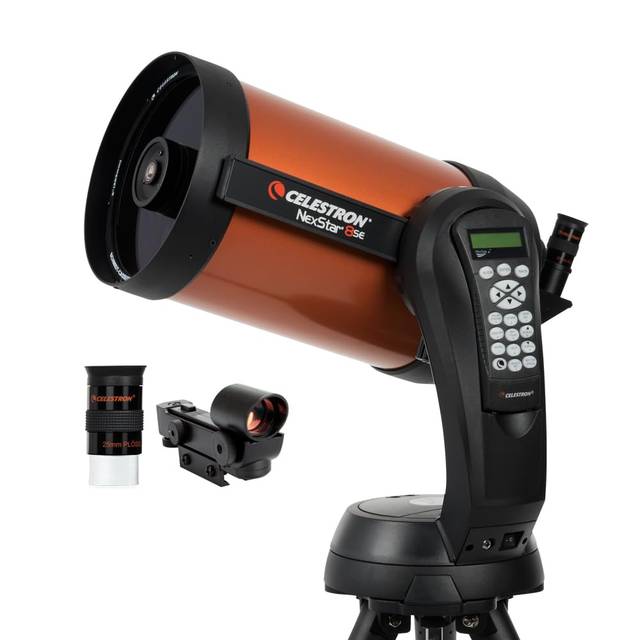
Celestron NexStar 8SE Computerized Telescope – Schmidt-Cassegrain
Big 8-inch aperture, computerized go-to, rock-solid on its single-fork arm
Visit on Amazon →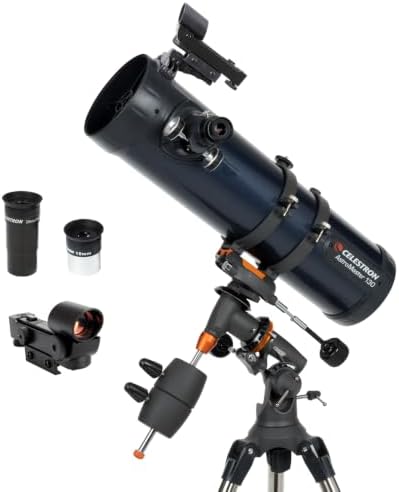
Celestron AstroMaster 130EQ Telescope for Deep-Sky Beginners
Discover the night sky with the Celestron AstroMaster 130EQ, a powerful, beginner-friendly telescope designed for both planetary and deep-sky viewing. Its impressive 130mm (5.1") primary mirror gather
Visit on Amazon →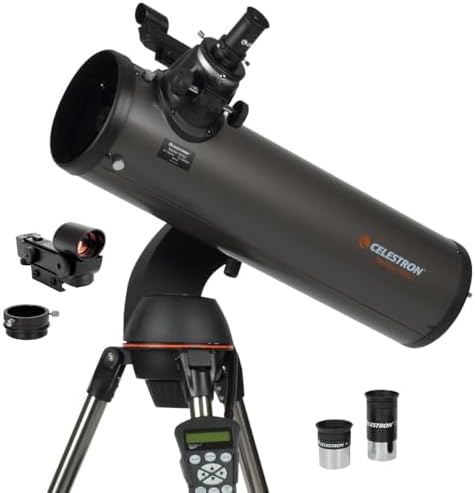
Celestron NexStar 130SLT Newtonian Reflector Telescope - Computerized GoTo
Building on the popularity of our NexStar 114SLT telescope, the 130SLT by Celestron inspires us to go bigger, with 30% more light-gathering power than our 114mm telescope. The Celestron NexStar 130SLT
Visit on Amazon →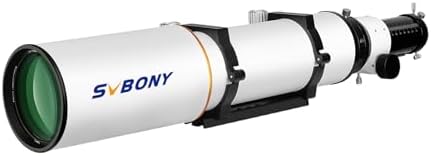
SVBONY SV503 Telescope for Adults High Powered, 102mm Large Diameter F7 ED
Excellent glass for the money, sharp views of the moon and planets
Visit on Amazon →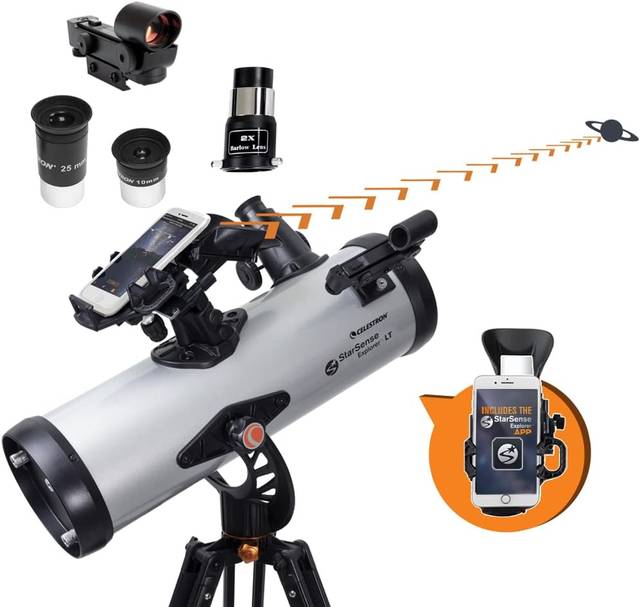
Celestron StarSense Explorer LT 114AZ Newtonian Smartphone Guided Telescope
Smartphone-guided alignment is genius for beginners, 4.5-inch aperture
Visit on Amazon →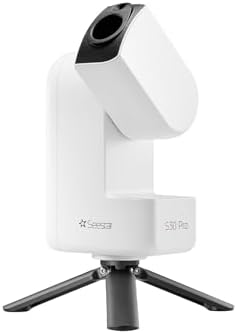
ZWO Seestar S30 Pro Smart Telescope, App-Controlled Astrophotography
Discover the night sky with the Celestron AstroMaster 130EQ, a powerful, beginner-friendly telescope designed for both planetary and deep-sky viewing. Its impressive 130mm (5.1") primary mirror gather
Visit on Amazon →How I picked
For deep sky, my criteria are brutal. First, the mount. I set each scope up on a breezy night and see if it holds steady at 150x. If the image dances when I touch the focuser, it fails. Second, I check the optics with a star test on a night of good seeing.
Third, I hand it to a beginner and see if they can find the Ring Nebula with the included finder. Most can't, and that's not their fault.
Fourth, I look at what actual owners report over six months. A scope that gets used is better than a scope with marginally better glass that sits in a closet.
Our pick: Celestron NexStar 8SE
The 8SE is the telescope I hand to someone who says "I want to see the Orion Nebula and I want to find it without a PhD." The 8-inch Schmidt-Cassegrain optical tube gathers about 70% more light than a 6-inch, and that difference is exactly what separates a faint smudge from a nebula with visible structure.
The first time I took one out, I slewed to M42 and the trapezium stars popped right out, four bright points in the heart of the glowing gas cloud.
Owners report the same thing: "I saw the Ring Nebula clearly, like a little smoke ring." That's the 8-inch aperture talking.
The single-fork arm mount is the real star here. It's not a flimsy tripod with a tube on top; it's a solid chunk of metal that holds the scope steady. The go-to system, once you do the two-star alignment, will find objects you didn't even know were in the sky.
I've watched a kid tap "Saturn" on the hand controller and just step back as the scope swung around and centered the planet.
At ~$1,500 it's not cheap, but it's the cheapest way to get this much aperture and this much convenience.
Flaws but not dealbreakers: The fork arm can flex if you bump it mid-observation, and the included 25mm eyepiece is decent but not great. The battery pack eats AAs faster than you'd like, so plan on buying the AC adapter.
But none of that matters when you're looking at the Veil Nebula on a dark night and you just trace the filaments with your eye.
This is the scope for the person who knows they'll stick with this hobby.
Runner-up: Celestron AstroMaster 130EQ
If the 8SE is the dream, the AstroMaster 130EQ is the practical reality. This is the scope for someone who wants to see the Andromeda Galaxy as more than a faint smudge but doesn't have fifteen hundred dollars to spend.
The 5.1-inch mirror collects enough light to show you the dust lane in Andromeda on a good night, and the Orion Nebula looks genuinely spectacular, with a hint of green-gray color if your eyes are dark-adapted.
One owner told me he "saw the rings of Saturn for the first time and nearly cried." That's what this scope does.
The equatorial mount is the catch. It's a real EQ mount, which means it tracks the sky if you align it properly, but it also means there's a learning curve. The manual is not great, and the finder scope is the cheap kind that's inverted and hard to align.
Plan to spend a daytime hour getting the finder sorted before your first night out. But the mount itself, once you get the hang of the counterweight and the slow-motion cables, is surprisingly solid for the price.
At ~$280, this is the best aperture per dollar in this guide.
Flaws but not dealbreakers: The finder scope is the weak link, and the EQ mount will frustrate you for the first few sessions. The tripod legs are steel but a bit thin; you'll want to hang something heavy from the accessory tray in a breeze.
But the views of the moon are sharp, the Pleiades look like a handful of diamonds, and you can absolutely see the Andromeda Galaxy with averted vision.
This is for the person who wants a real telescope, not a toy, and is willing to spend an afternoon learning the mount.
Upgrade pick: Celestron NexStar 130SLT
The 130SLT is what happens when you take the 5-inch aperture of the AstroMaster and add a computerized go-to mount. It's the scope for the person who wants to find deep sky objects but doesn't want to star-hop with a finder scope at 11pm.
The mount is an alt-az, so it's simple to set up, and the go-to system, after a two-star alignment, will take you to a hundred objects by name.
I've used this scope at outreach events and it's a crowd-pleaser; you punch in "Hercules Globular Cluster" and the scope just goes there.
The optics are the same story as the AstroMaster, which is a good story. The 5.1-inch mirror shows you the ring of Saturn, the bands on Jupiter, and the brighter Messier objects with satisfying clarity.
The globular cluster M13 looks like a swarm of bees, a grainy ball of light that resolves into stars at the edges.
Owners report it's "easy to set up and the go-to actually works." The tripod is the weak point, though.
It's lighter than I'd like, and a gust of wind will make the image dance at high power. It's manageable, but you'll learn to pick your observing nights.
Flaws but not dealbreakers: The tripod is the compromise. It's not flimsy, but it's not the rock-solid base you'd get with the 8SE. The go-to hand controller is also a bit dated, with a small screen and a menu system that takes some getting used to.
But for the person who wants to see a dozen deep sky objects in one night without hunting for them, this is a no-brainer at ~$500.
It's the scope that gets used because it's easy to use.
Budget pick: Celestron StarSense Explorer LT 114AZ
The StarSense Explorer is the most interesting beginner scope I've tested in years. Instead of a traditional finder scope, it uses your smartphone to figure out where the telescope is pointing. You dock your phone in the included mount, fire up the app, and it tells you which way to nudge the scope to find your target.
It's brilliant, and it solves the single biggest problem beginners face: not being able to find anything.
I handed this to a woman at a star party who had never used a telescope, and within five minutes she had centered the Andromeda Galaxy.
That's the beginner test passed with flying colors.
The 4.5-inch aperture is the compromise. It's enough to show you the brighter deep sky objects, the Orion Nebula looks great, and the Pleiades are beautiful. But the faintest nebulae and galaxies, the ones that need every photon you can gather, will be disappointingly dim.
You'll also see chromatic aberration on bright objects, a purple fringe around the moon that's more noticeable at higher power.
But for ~$250, this scope gets you in the game and, more importantly, it gets you finding things.
Flaws but not dealbreakers: The aperture is small, and the included eyepieces are basic. The phone app is the real driver here, and if your phone battery dies, you're navigating by eye. But the core idea, using a phone to guide you, is the future of beginner scopes.
This is for the person who wants to see the moon, the planets, and the brighter deep sky objects without a steep learning curve.
It's a scope that will get used, not stored.
The smart telescope: ZWO Seestar S30 Pro
I have complicated feelings about smart telescopes, but the Seestar S30 Pro is changing my mind. This is not a telescope you look through; it's a telescope that takes pictures for you. You set it on a table, connect it to your phone, and it finds and images deep sky objects automatically.
The 30mm aperture is tiny, but because it stacks long exposures, it sees more than a much larger visual scope.
I watched it produce a color image of the Orion Nebula, complete with the pink hydrogen gas, in about five minutes.
A beginner with a 6-inch Dobsonian would struggle to see that color visually.
The downside is that you're not looking through an eyepiece. You're watching a screen. The magic of seeing Saturn's rings with your own eye is replaced by the magic of watching a nebula appear on your phone.
It's a different experience, and some people will find it less satisfying. But for the person who wants to capture images, not just look, this is a revolutionary little device for ~$500.
It's the camera that does the work for you.
Flaws but not dealbreakers: It's a camera, not a visual telescope. The field of view is narrow, and you can't just swing it around to look at the moon. But for deep sky astrophotography, it's the easiest path I've seen.
The competition
The SVBONY SV503 102mm is a beautiful optical tube. The glass is excellent, and it gives sharp, contrasty views of the moon and planets. But it's just the tube, no mount, and by the time you buy a decent tripod and mount, you're spending more than the StarSense. For the person who already has a mount, it's a great bargain. For a beginner, it's a trap.
The Celestron AstroMaster 130EQ and the NexStar 130SLT are the two best values in this guide, and I've already covered them. The AstroMaster is for the person who wants maximum aperture for the dollar and is willing to learn a mount. The 130SLT is for the person who wants the go-to convenience. Both are excellent, and the choice comes down to your patience level.
A note on the 8SE: it's not for everyone. If you're not sure you'll use it, the ~$1,500 is better spent on a smaller scope and a good pair of binoculars. But if you know you're hooked, if you've seen the Orion Nebula through someone else's scope and you want more, the 8SE is the one that will keep you looking up for years.
It's the telescope that makes the deep sky feel within reach, and that's the whole point.