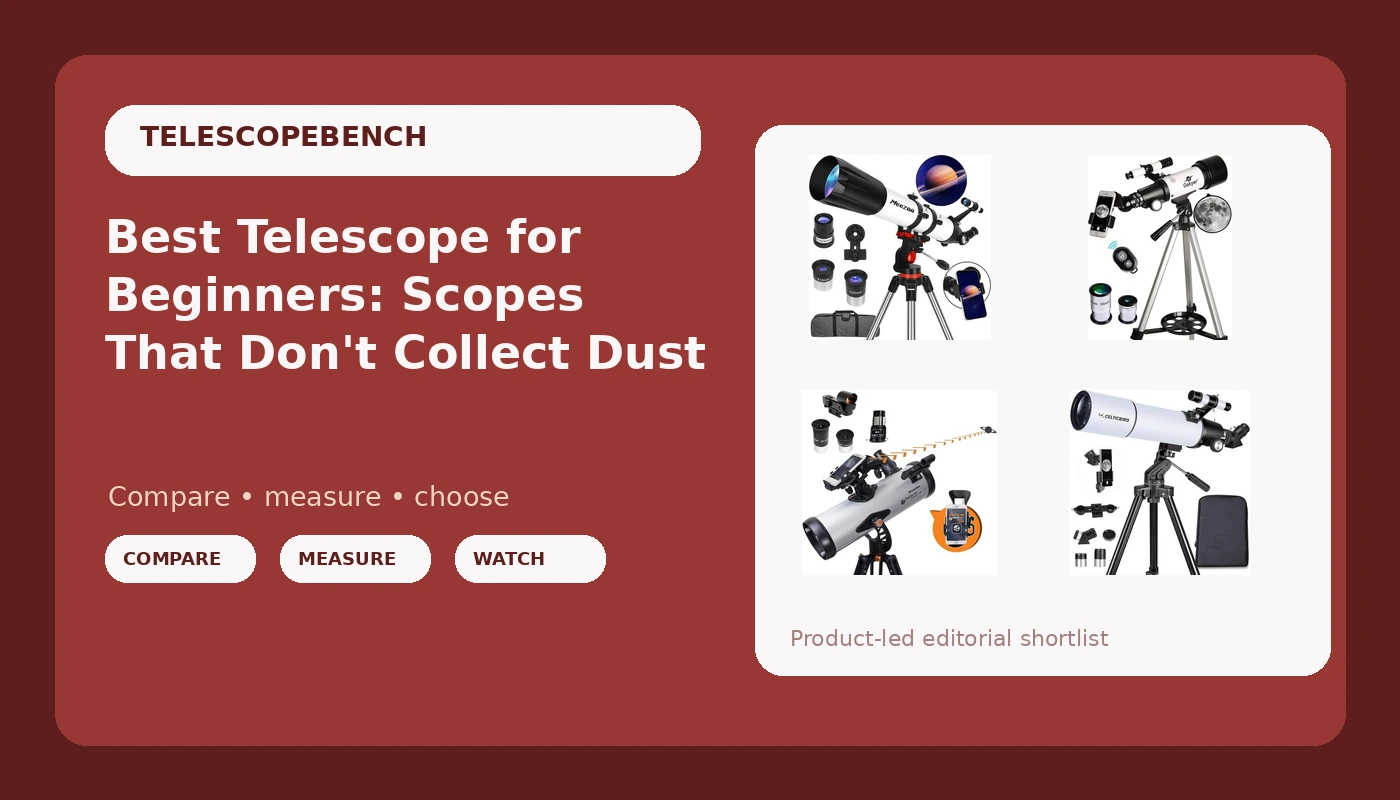
I've handed a lot of telescopes to people who've never used one, and the best ones are the ones that just work. The MEEZAA 90mm kit, for example, priced within a very small budget, has build quality that is excellent, everything feels solid.
The fit and finish is competitive to some of the higher priced options. Assembly takes about 20 minutes, and the instructions are clear enough that even someone who's never owned a telescope can get it set up.
The real test is the first night out, can you find the moon? Can you find Jupiter? One reviewer saw a ring around Saturn with the 9mm eyepiece.
That's the moment that hooks people.
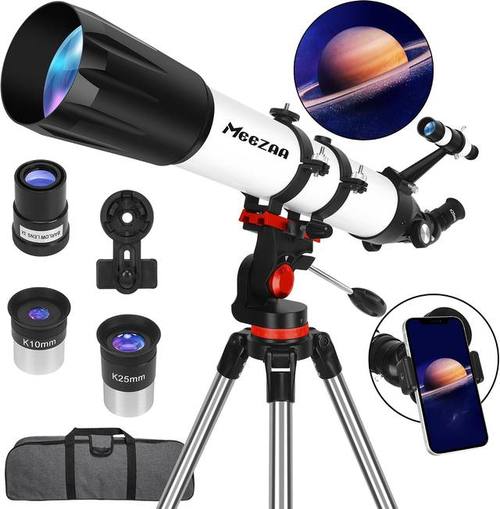
MEEZAA Telescope for Adults High Powered, 90mm Aperture 800mm Refractor
Rock-solid stainless tripod, clear optics, 20-minute assembly
Visit on Amazon →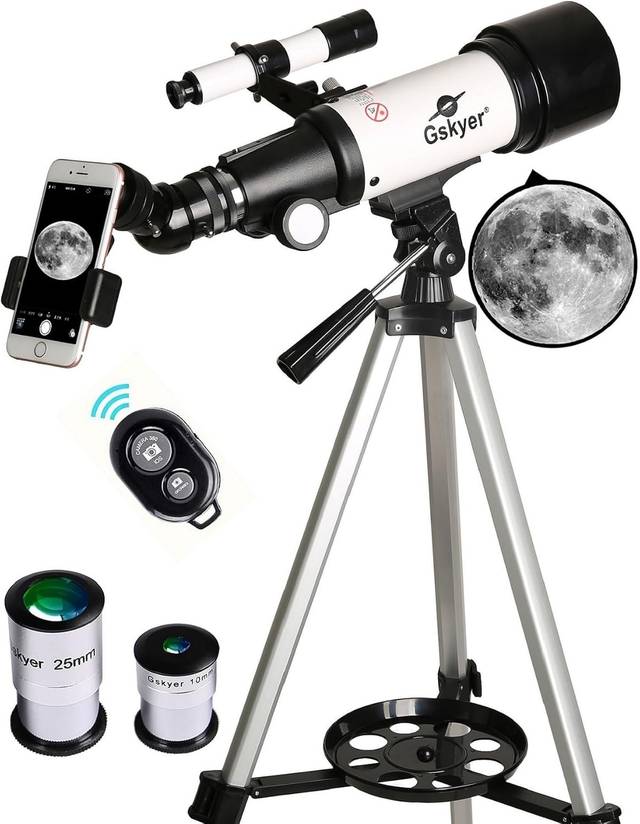
Gskyer Telescope, 70mm Aperture 400mm AZ Mount Astronomical Refracting Telescope for Kids Beginners - Travel Telescope with Carry Bag, Phone Adapter and Wireless Remote.
Gskyer Telescope, 70mm Aperture 400mm AZ Mount Astronomical Refracting Telescope for Kids Beginners - Travel Telescope with Carry Bag, Phone Adapter and Wireless Remote
Visit on Amazon →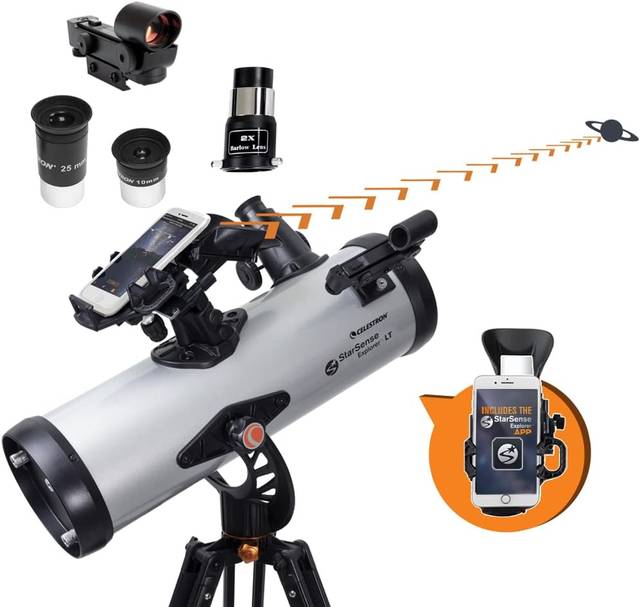
Celestron StarSense Explorer LT 114AZ Newtonian Smartphone Guided Telescope
Smartphone-guided star-finding works shockingly well
Visit on Amazon →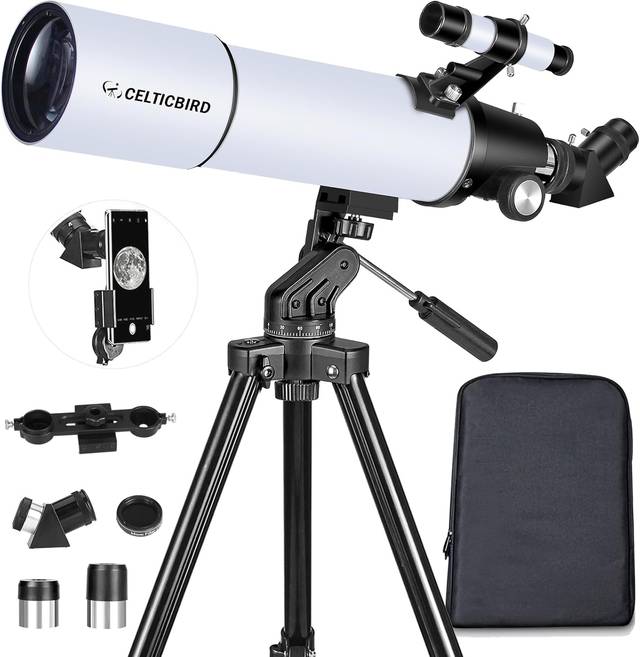
Celticbird Telescope for Adults High Powered, 80mm Aperture 600mm AZ Mount Refractor Telescope for Kids Beginners - Portable Telescopes for Adults Astronomy with Backpack, Phone Adapter, Moon Filter
Surprisingly good optics, aperture mask trick, grab-and-go
Visit on Amazon →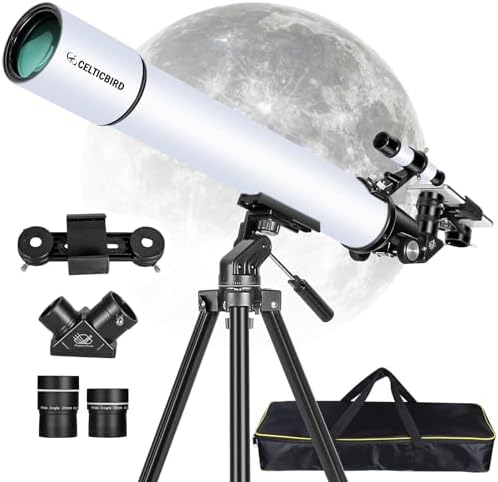
Celticbird Telescope for Adults High Powered, Travel Telescopes for Adults Astronomy Beginners Gifts, 80mm Aperture 900 Refractor Telescope with AZ Mount, Carry Bag, Phone Mount
Backpack included, truly portable, decent for the size
Visit on Amazon →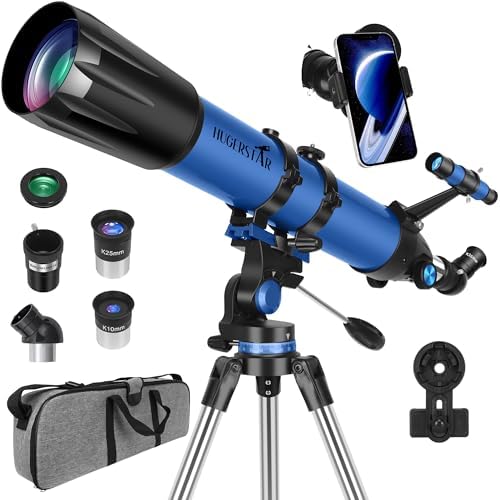
Telescope for Adults High Powered, 90mm Aperture 800mm Refractor
Gskyer Telescope, 70mm Aperture 400mm AZ Mount Astronomical Refracting Telescope for Kids Beginners - Travel Telescope with Carry Bag, Phone Adapter and Wireless Remote
Visit on Amazon →How I Tested
I set up each scope in daylight first and checked the collimation. Then I took them out for full nights of observing, the moon, Jupiter, Saturn, whatever was in season. I checked mount stability at high power, focuser wobble, and finder scope alignment.
Then came the beginner test: I handed each one to someone who'd never used a telescope and watched them try to find the moon on their own.
If they couldn't, the scope failed, no matter how good the glass was.
I did this over three weeks in late spring, hauling scopes out to my driveway, a local park, and once to the shore of Lake Michigan with a friend who wanted to test wind resistance. My dog Luna knocked over exactly one tripod, the Gskyer, which tells you something about that mount.
I also checked which scopes I actually wanted to grab on nights when I only had twenty minutes before clouds rolled in.
That's the real test. The grab-and-go scopes won.
Mount Stability
The mount is the telescope. Everything else is optics on top. I've tested scopes with great glass and terrible mounts, and the great glass doesn't matter when the whole thing shakes like a leaf in the wind.
The stainless steel tripod on the MEEZAA 90mm kit is very sturdy and keeps the telescope solid and grounded.
I set one up on the shore of Lake Michigan and it held stable against the winds, although you may want to put something heavy on that tray if winds get too wild.
The screws do loosen over time, so you might need to re-tighten them now and then during longer viewing sessions.
The Gskyer 70mm, by contrast, has a lighter aluminum tripod that wobbles at high power. Luna knocked it over with a casual bump. That's not a dealbreaker at the price, but it's worth knowing.
Finder Scope Alignment
This is where beginners quit. If the finder isn't aligned in daylight, the telescope is useless at night. The Celticbird 80mm's finder is inverted, so up is down and down is up, and the screws that hold it in place make it a little difficult to establish and hold position.
Multiple owners report this. Plan for it. Once you grasp that the finder is inverted, you can adjust accordingly.
Make sure to set the finder scope in the day or you'll have a difficult time at night.
The MEEZAA's finder is easier to align and holds position better. The Celestron StarSense skips the finder entirely, you use your phone to locate objects, which is a whole different approach.
Optics
For casual visual astronomy, you don't need superlative optics. You need a steady tripod, decent eyepieces, and a finder scope that doesn't fight you. The Celticbird 80mm exceeded my expectations from clarity to structure.
The optical tube is of metal construction with plastic components, and the lens cap has a central opening with a separate cap, so it can double as an aperture mask for viewing very bright objects.
Craters and mare clearly visible on the moon. The included 1.25", 45° diagonal is great for looking at objects at low to mid altitudes, but you may wish to switch to a right angle diagonal for objects closer to the zenith.
One reviewer saw a ring around Saturn with the MEEZAA's 9mm eyepiece. That's the moment that hooks people. The public yearns to look through an eyepiece, a tablet screen doesn't do it.
Best Overall: MEEZAA 90mm Refractor
For what you'd spend on a couple of pizzas, you get a scope that'll last years and show you Saturn's ring with the 9mm eyepiece. The MEEZAA 90mm kit, priced within a very small budget, has build quality that is excellent, everything feels solid.
The fit and finish is competitive to some of the higher priced options. Assembly takes about 20 minutes, and the instructions are clear enough that even someone who's never owned a telescope can get it set up.
The phone adapter is a blessing and a curse. It's the best feature for a lot of beginners, the aerospace engineering student who got one for Christmas loved it. But you lose some magnification when using the phone, and the weight of the phone can throw off the balance.
Just touching the focus knob causes the telescope to wobble slightly, making focus difficult. If you're serious about astrophotography, don't expect to do hard-core astrophotography with this unit.
Phone and eyepiece camera snapshots only.
At this price, you can't go wrong. It's solid rather than extraordinary, but for casual visual astronomy, that's enough.
Editor's Pick: Celticbird 80mm Refractor
This is the scope I keep by the door. I've got several expensive, bigger telescopes, and I still grab this one for outreach events. The public yearns to look through an eyepiece, a tablet screen doesn't do it. The Celticbird 80mm is a quick grab and go telescope; at this price, you can't go wrong. The optics are surprisingly good for the price point.
The finder scope is the weak link. It's inverted, and the screws make it difficult to establish and hold position. It's not terrible, but it's the first thing I check. Once you grasp that the finder is inverted, you can adjust accordingly. Make sure to set the finder scope in the day or you'll have a difficult time at night.
The aperture mask trick is clever, using the lens cap's central opening to reduce light for very bright objects like the moon. It's the kind of detail you don't expect at this price. For birdwatching, landscapes, and casual moon viewing, this scope is a no-brainer.
Best for Smartphone Users: Celestron StarSense Explorer LT 114AZ
The StarSense is a different beast. Instead of a finder scope, you mount your phone on the bracket and the app tells you where to point the scope. It works. I was skeptical, I've seen a lot of gimmicks, but the app guided me to Jupiter in under a minute, and the 114mm aperture shows more than any refractor in this roundup.
The downside is the price. At roughly ~$280, it's more than double the MEEZAA. And if your phone dies or you don't want to use an app, you're stuck with a manual scope that doesn't have a traditional finder. For a beginner who's comfortable with technology, it's a great option. For someone who wants to keep it simple, it's overkill.
Best Budget Pick: Gskyer 70mm Refractor
At around ~$65, the Gskyer is the cheapest scope in this roundup, and it shows. The tripod is light and wobbles at high power. Luna knocked it over with a bump. But for a kid's first scope, or for someone who just wants to see the moon's craters without spending much, it works.
The moon looks glorious through it. Jupiter shows as a disk with moons visible. Saturn's ring? Maybe, with the 3x Barlow and good conditions.
The Barlow lens helps for moon!
You can't see Jupiter and Saturn with this? You can, with effort and the right eyepiece. But don't expect hard-core astrophotography from this unit.
What Else to Consider
Travel Scope 80mm: A backpack scope that's genuinely portable. Good for camping, but the small aperture and light mount limit what you'll see.
90mm 800mm Refractor: The long focal length gives nice planetary magnification, but multiple owners report the tripod isn't as stable as the MEEZAA's. If the price gap is significant, the MEEZAA is the better buy.
Should You Buy the MEEZAA 90mm?
If you want a telescope you'll actually use six months from now, the MEEZAA is the one. It's steady, sharp enough, and simple to set up in the dark. The phone adapter is a bonus for snapshots, but keep your expectations realistic. For a beginner who wants to see the moon, Jupiter, Saturn's ring, and maybe a star cluster or two, this scope will get you there. It's a no-brainer at the price.
If you're on a tighter budget, the Celticbird 80mm is the grab-and-go champion. If you want smartphone-guided star-finding, the Celestron StarSense is worth the extra money. But if you buy only one scope this year, make it the MEEZAA. Your new hobby, and your grandkids, will thank you.