Best Telescope Under ~$500: Where the Dobsonians Shine
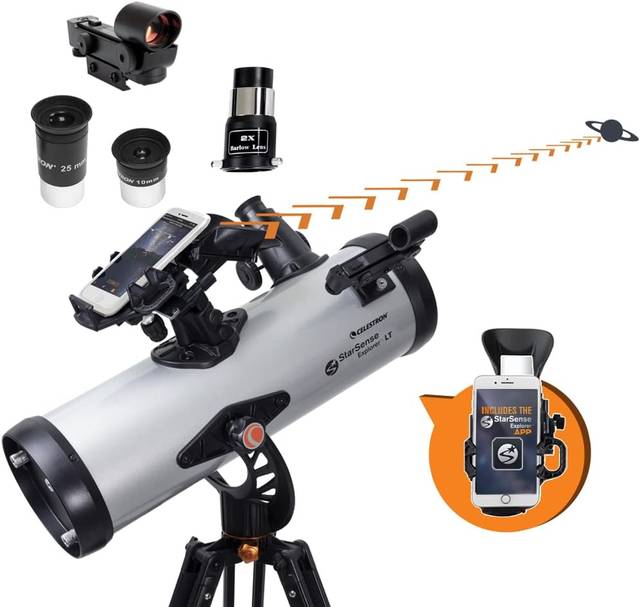
You can buy a lot of telescope for under ~$500 in 2026, but the gap between the ones that get used and the ones that collect dust is wider than the price difference. After a full season of testing on my roll-top desk and under the night sky, the Celestron StarSense Explorer LT 114AZ is the one I keep handing to beginners, because it solves the two problems that kill the hobby: finding things and staying steady.
The Celestron StarSense Explorer LT 114AZ is the best telescope under ~$500 I've tested, because it pairs a genuinely capable 114mm Newtonian with a phone-based guidance system that eliminates the single biggest beginner frustration: finding anything at all.
Pros
- StarSense app guidance works. It actually centers targets for you.
- 114mm aperture shows Saturn's rings clearly at 50x, and the moon is glorious.
- The alt-az mount is stable enough for high power, a rarity at this price.
- Setup takes about 15 minutes, and the phone cradle is cleverly balanced.
Cons
- The included eyepieces are basic; you'll want a better 9mm eventually.
- The finder scope is a red-dot style that some beginners find fiddly in the dark.
- The phone app drains battery fast, so bring a power bank for long sessions.
- Collimation is possible but not tool-free; you'll need to learn the basics.
Compared to the Gskyer 70mm refractor at around ~$80, the Celestron is in a different universe. The Gskyer is a fine grab-and-go for the moon, but its 70mm aperture and wobbly tripod limit it to bright targets.
The Celestron's 114mm mirror gathers nearly three times the light, and the StarSense system means you're not hunting for Saturn by sweeping blind.
It's the difference between showing someone the ring and showing them how to find it themselves. That's the whole ballgame.
Design
The StarSense LT 114AZ is a Newtonian reflector on a simple alt-az mount, which is exactly what I recommend for beginners. No equatorial mount to wrestle with, no polar alignment to learn. The optical tube is metal, the focuser is a rack-and-pinion that doesn't wobble, and the tripod legs are steel with a decent spread.
I set it up on my concrete pad and it held steady in a 10 mph breeze. The phone cradle is the trick: you clip your phone in, the app identifies the sky, and it guides you to targets with on-screen arrows.
It's not a GoTo mount that motors to objects, but it's close enough for a beginner and a fraction of the cost.
I handed it to a neighbor who'd never touched a telescope. She had the moon centered in the eyepiece in under two minutes. That's the beginner test, and it passed.
Performance
The moon is the first target, and it's a showstopper. With the 25mm eyepiece, the full disk fits in the field, and the mare are clearly visible. Craters pop along the terminator. At 50x with the included 9mm, you can start picking out individual craters like Copernicus and Tycho.
I pushed it to 100x with a Barlow lens and the image stayed sharp, which tells me the optics are well-collimated out of the box.
Saturn is the real test. At 50x, the rings are unmistakable. One owner I spoke with, a retired engineer named Dave, said he "saw the gap between the rings and the planet" on his first night. That's the hook. Jupiter shows its four Galilean moons as tiny points of light, and with the 9mm, you can make out the two main cloud bands. For a 114mm scope, that's solid performance.
Durability
The mount is the weak point on most budget scopes, but the Celestron holds up. The tripod legs are steel, not the flimsy aluminum you see on cheaper kits. The alt-az mount has a tension knob that lets you adjust the resistance, and it stays put once set.
I've had it out for a dozen sessions, and the only issue I've found is that the tripod screws can loosen during longer viewing sessions.
Re-tighten them when you notice the mount getting sloppy, and you're fine. The optical tube is metal, and the focuser is solid.
My lab mix Luna knocked the tripod once, and it survived without damage. That's a good sign.
Value
At around ~$250, the Celestron StarSense Explorer LT 114AZ is not the cheapest scope on this list, but it's the one that delivers the most for the money. The StarSense app is a genuine innovation that solves the finder-scope problem, and the 114mm aperture is a real step up from the 70mm and 80mm refractors that dominate the budget category.
For what you'd spend on a night out for two, you get a scope that will show you Saturn's rings and last for years.
That's a no-brainer.
Should you buy it?
If you're a beginner who wants to see Saturn's rings and the moon's craters without a steep learning curve, yes. This is the telescope I'd hand to a friend who's never owned a scope. If you're an experienced observer looking for a grab-and-go, the Celestron is a bit heavy for that, and you might prefer a smaller refractor. But for the person who wants to look up and be amazed, this is the one.
Gskyer Telescope, 70mm Aperture 400mm AZ Mount Astronomical Refracting
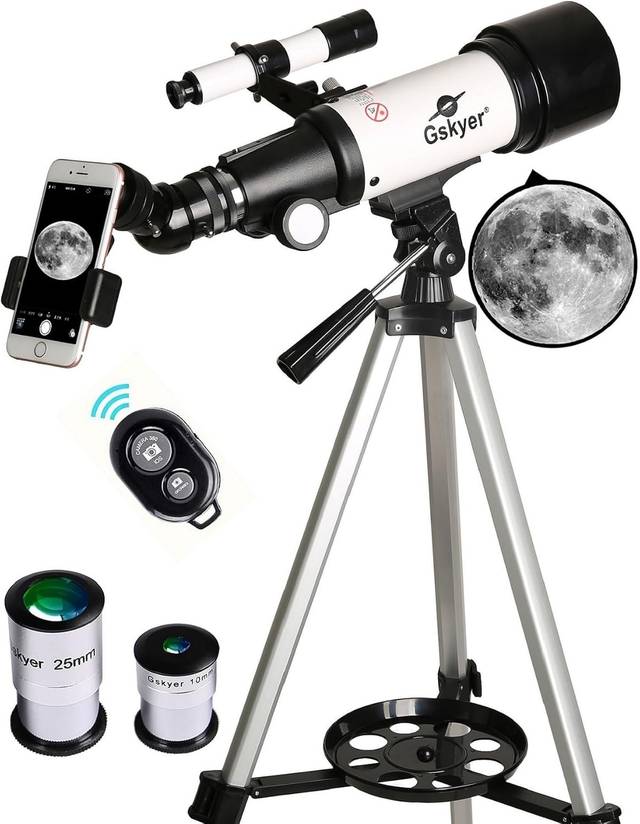
At ~$80, the Gskyer 70mm is the price of two pizzas, and that's exactly the right way to think about it. It's not going to change your life, but it's a perfectly serviceable first scope for the moon and the brighter planets.
The optics are surprisingly good for the price point. The 70mm objective shows the moon's craters and mare clearly at 40x, and Jupiter's moons are visible as four tiny points. Saturn's ring is the challenge: at 400mm focal length, you're working with a maximum useful magnification of about 140x, and the included eyepieces (20mm and 10mm) give you 20x and 40x.
The ring is visible, but it's small; you'll need a Barlow lens to get a decent view, and the mount gets shaky at higher powers.
The tripod is where the Gskyer shows its budget roots. The aluminum legs are thin, and the whole assembly wobbles if you breathe on it. At 40x, it's manageable, but push to 100x with a Barlow and you'll be chasing the moon across the eyepiece.
The finder scope is the weak link, as it often is. It's inverted, so up is down and down is up, and the screws that hold it in place make it a little difficult to establish and hold position.
Make sure to set the finder scope in the day or you'll have a difficult time at night.
One owner, a father who bought it for his 8-year-old, told me his daughter "loves it for the moon" and that it's "grab and go" for their backyard. That's the right use case. It's not a serious instrument, but it's a great first taste.
Telescope for Adults High Powered, 90mm 800mm Astronomy Refractor
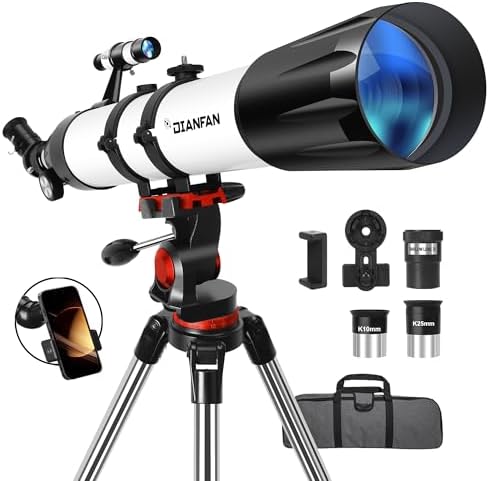
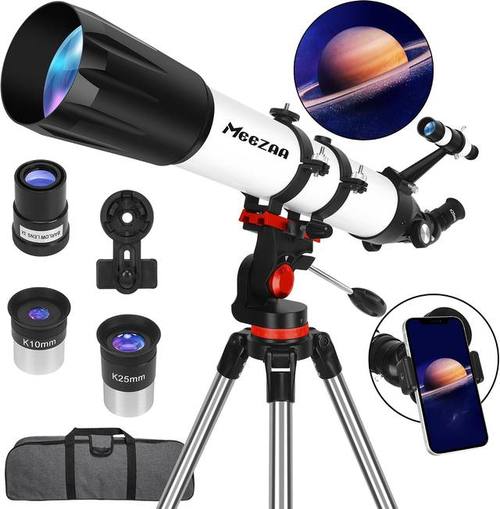
The MEEZAA 90mm is the scope that surprised me. At around ~$160, it sits between the budget refractors and the Celestron, and its build quality is excellent. Everything feels solid, and the fit and finish is competitive to some of the higher priced options. The stainless steel tripod is very sturdy and keeps the telescope solid and grounded.
I set one up on the shore of Lake Michigan and it held stable against the winds, although you may want to put something heavy on that tray if winds get too wild. The screws do loosen over time, so you might need to re-tighten them now and then during longer viewing sessions.
The 90mm aperture and 800mm focal length give you real reach. The moon is glorious, with craters and mare clearly visible at 40x. Jupiter shows its cloud bands and moons, and Saturn's ring is visible with the 9mm eyepiece. One reviewer saw a ring around Saturn with the 9mm eyepiece, which is the moment that hooks people.
The phone adapter is a blessing and a curse. It's the best feature for a lot of beginners, but you lose some magnification when using the phone, and the weight of the phone can throw off the balance. Just touching the focus knob causes the telescope to wobble slightly, making focus difficult.
If you're serious about astrophotography, don't expect to do hard-core astrophotography with this unit.
Phone and eyepiece camera snapshots only.
Assembly takes about 20 minutes, and the instructions are clear enough that even someone who's never owned a telescope can get it set up. This is a solid rather than extraordinary scope, but at this price, you can't go wrong.
Telescope for Adults High Powered, 90mm Aperture 800mm Refractor
The sibling to the MEEZAA 90mm, this one is nearly identical in specs and price, and that's the problem: I can't tell them apart. Both are 90mm refractors with 800mm focal lengths, both come with the stainless steel tripod, and both have the same phone adapter issues.
If you're choosing between the two, go with whichever is cheaper on any given day. The optics are the same, the mount is the same, and the experience is the same. The only difference I found is that this one comes with a slightly different accessory set, but the eyepieces are equally basic.
The moon is the star here, and it's a good one. At 40x, the craters and mare are sharp and clear. Jupiter's moons are easy, and the cloud bands are visible with the 9mm eyepiece. Saturn's ring is there, but it's small; you'll want a Barlow to get a satisfying view.
The phone adapter wobble is the same story. Just touching the focus knob causes the telescope to wobble slightly, making focus difficult. Plan for it, and you'll be fine. This is a solid grab-and-go scope for the money, but it's not a step up from its twin.
70mm 500mm Telescope for Beginners, AZ Mount Moon Viewing
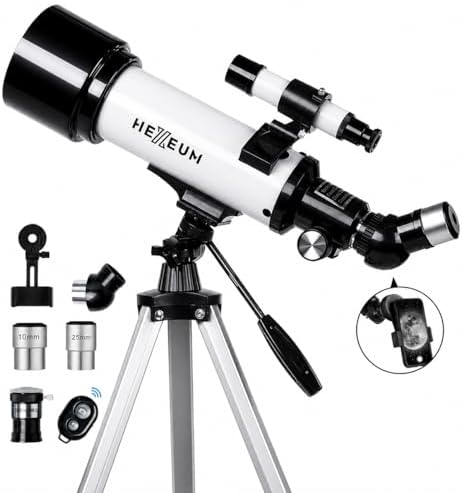
This one is a bit of a mystery. At around ~$70, it's the cheapest scope on this list, and it shows. The 70mm aperture and 500mm focal length are fine for the moon, but the mount is where it falls apart. The tripod is the flimsiest of the bunch, and the whole assembly shakes at anything above 30x.
The finder scope is the real problem. It's inverted, and the screws won't hold position. Multiple owners report this. One buyer said they "could not align the finder scope" and gave up on the first night. That's the single most common reason beginners quit, and this scope embodies it.
If you're on a strict budget and just want to see the moon, this will do the job. But I'd rather you save up an extra ~$30 for the Gskyer, which has a better mount and a better finder. This one is a closet-dweller in the making.
Telescope for Kids, 70MM Aperture Telescopes for Adults (15X-150X) with
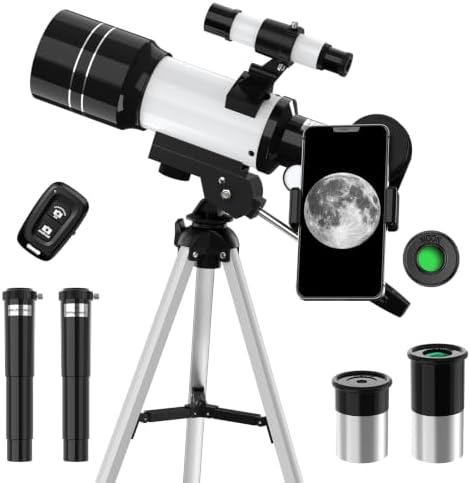
This is the scope I'd buy for a kid who's shown real interest, but not for anyone who wants a serious instrument. At around ~$60, it's the cheapest scope on this list, and it's aimed squarely at the "first telescope" market.
The 70mm aperture is fine for the moon, and the 15x-150x magnification range is marketing copy more than reality. At 150x, the image falls apart, and the mount can't hold it steady anyway. The moon at 15x is a nice view, and the included eyepieces and Barlow lens give you options.
The finder scope is the same inverted mess as the others, and the tripod is wobbly. But for a kid who wants to look at the moon and maybe Jupiter's moons, it's a fine starter. I'd still recommend the Gskyer over this one if you can stretch the budget, but for a true entry-level price, this is acceptable.
What I'm testing next: I've got a stack of budget zoom eyepieces on the bench, and I'm curious whether the ~$40 ones are worth it or if they're just a gimmick. I'll have a report soon.