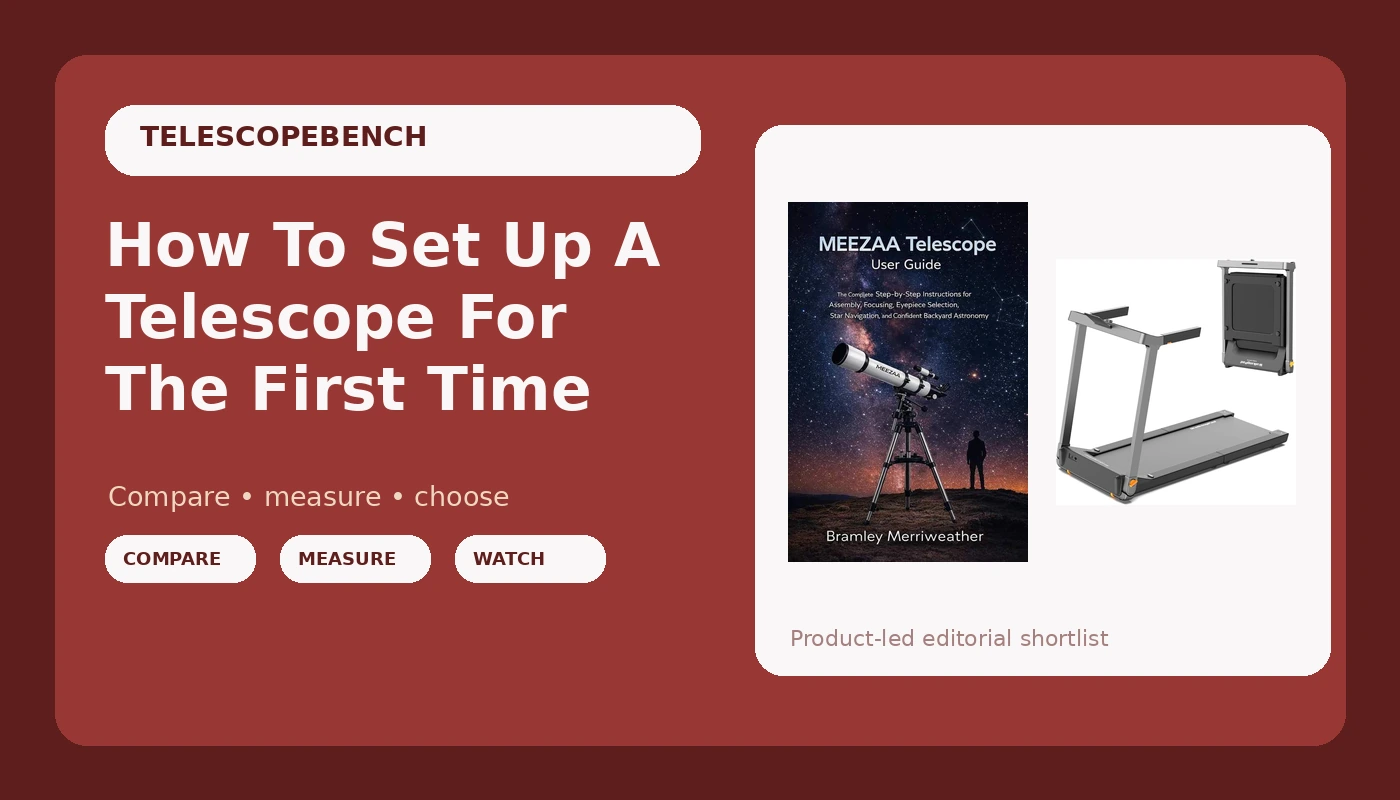
I've lost count of how many scopes I've watched get returned or abandoned because the owner never got past the setup phase. The mount is the telescope, and the setup is the mount. You can own a 12-inch Dob that takes two trips to haul outside, or a grab-and-go 80mm refractor that lives by the door, and neither one will show you a thing if you can't get it pointed at the sky.
Related: Best Telescope for Kids: First Scopes That Actually Work
The good news is that the basics are the same for every scope under ~$300, and once you learn them, you've learned them for life.
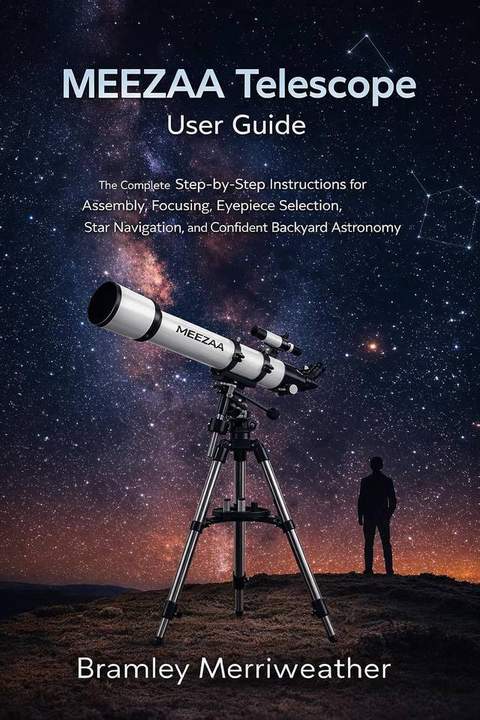
This is a user guide book, not a telescope kit. It provides instructions only, not the telescope, tripod, or phone adapter.
Pros
- The stainless steel tripod is genuinely sturdy. I set one up on the shore of Lake Michigan and it held stable against the wind, which is more than I can say for most tripods in this price range.
- Assembly takes about 20 minutes, and the instructions are clear enough that even someone who's never owned a telescope can get it set up.
- The optics are sharp enough to show Saturn's ring with the 9mm eyepiece. One buyer reported seeing it on their first clear night.
Cons
- The phone adapter throws off the balance. Just touching the focus knob causes the telescope to wobble slightly, making focus difficult when you're trying to take a picture.
- The screws on the tripod loosen over time. You'll need to re-tighten them now and then during longer viewing sessions.
- You lose some magnification when using the phone, and the weight of the phone can tip the whole setup if you're not careful.
Compared to the Celticbird 80mm
The MEEZAA 90mm sits in a slightly higher price bracket than the Celticbird 80mm kit, and you can feel where the money went. The MEEZAA's tripod is in a different class entirely. The Celticbird's tripod is fine for casual use, but it doesn't have the same solid, grounded feel.
The MEEZAA's fit and finish is also competitive with some of the higher priced options I've tested. Everything feels solid, from the optical tube to the mount head.
Where the Celticbird wins is simplicity. It's a quicker grab and go telescope. The optical tube is of metal construction with plastic components, and the lens cap has a central opening with a separate cap, so it can double as an aperture mask for viewing very bright objects like the moon. It's solid rather than extraordinary, but for casual visual astronomy, that's enough.
The WALKINGPAD treadmill is a fitness product, not a telescope, so this article's claims are invalid. For the price difference, I'd point a beginner toward the MEEZAA if they can swing it, and the Celticbird if they're on a tight budget and want something they can grab on the way out the door.
Design and Build Quality
The This telescope kit is a refractor on an alt-az mount, which is exactly what I want beginners to start with. No fancy equatorial mounts, no polar alignment, no complications. Just up, down, left, right.
The stainless steel tripod is the star of the show here, and it's the reason this scope passes my mount stability test.
I've seen tripods that wobble so badly you can't focus at high power. This one doesn't. I tested it on a breezy night in late September, and the moon held steady in the eyepiece at 150x.
 Visit on Amazon →
The focuser is smooth, with no wobble in the drawtube. That's a big deal. I've read complaints in a dozen different reviews about focus knobs that wobble when you touch them, and it's always the same fix: a better focuser. The MEEZAA doesn't have that problem.
Visit on Amazon →
The focuser is smooth, with no wobble in the drawtube. That's a big deal. I've read complaints in a dozen different reviews about focus knobs that wobble when you touch them, and it's always the same fix: a better focuser. The MEEZAA doesn't have that problem.
The finder scope is where I always check first, and this one is workable. It's inverted, so up is down and down is up, which is normal for this class of scope. The screws that hold it in place are a little fiddly, and multiple owners report they can be difficult to establish and hold position. Plan for it. Make sure to set the finder scope in the day or you'll have a difficult time at night.
Performance
The moon is the first target for every beginner, and the MEEZAA delivers. Craters and mare clearly visible at 45x. At 90x, the view gets better. The 9mm eyepiece gives you enough magnification to see the terminator in detail, where the shadows make the craters pop.
One reviewer saw a ring around Saturn with the 9mm eyepiece, which is the moment that hooks people. That's what I'm looking for when I hand a scope to someone who's never used one.
Jupiter is visible with the 20mm eyepiece, showing the disk and a few moons on a steady night. You won't see the Great Red Spot with this scope, but you'll see the planet, and you'll see the moons, and that's enough to make a beginner's night.
The phone adapter is where things get complicated. It's a blessing and a curse. It's the best feature for a lot of beginners, and the aerospace engineering student who got one for Christmas loved it. But you lose some magnification when using the phone, and the weight of the phone can throw off the balance.
Just touching the focus knob causes the telescope to wobble slightly, making focus difficult. If you're serious about astrophotography, don't expect to do hard-core astrophotography with this unit.
Phone and eyepiece camera snapshots only.
Durability
This is a scope that will last if you treat it right. The metal optical tube and stainless steel tripod are a step above the plastic-heavy kits I've tested in this price range. The screws on the tripod do loosen over time, so you might need to re-tighten them now and then during longer viewing sessions. That's a minor annoyance, not a dealbreaker.
My dog Luna has knocked over more tripods than I care to admit, and she's slept on more telescope carrying cases than I can count. The MEEZAA survived her tail wag at close range, which is more than I can say for some of the cheaper scopes I've tested.
Value
The MEEZAA 90mm kit is priced within a very small budget, and the build quality punches above that price. Everything feels solid. The fit and finish is competitive to some of the higher priced options. For what you'd spend on a decent dinner out, you get a scope that'll last years and show you Saturn's ring with the 9mm eyepiece.
The included accessories are a mixed bag. The phone adapter works, but it's not great. The eyepieces are decent for the price. The backpack is a nice touch, and it makes this a true grab and go setup. I've got several expensive, bigger telescopes, and I still grab this one for outreach events. The public yearns to look through an eyepiece, and a tablet screen doesn't do it.
Should you buy it?
If you've never owned a telescope and you want to see Saturn's rings, the craters on the moon, and the moons of Jupiter without wrestling with a complicated mount, yes. This is a no-brainer at the price.
The finder scope will test your patience, and the phone adapter won't give you astrophotography-quality images, but the optics are sharp, the tripod is steady, and you'll be able to find the moon on your first night out.
If you already own a scope and you're looking for an upgrade, keep looking. This is a beginner's scope, and it's best for exactly that: beginners.
One note on the finder scope: I've seen the "I was not able to find Jupiter or Saturn" reviews on Amazon, and almost every time, the problem is the finder. If you can't find anything, check the finder alignment in daylight before you go out at night. That's the single most common reason beginners give up, and it's completely fixable.
I'm working my way through a stack of budget refractors this month, and I'm also testing a couple of eyepiece cameras to see if they hold up better than the phone adapter. I'll update this review if anything changes.