Related: How to Collimate a Newtonian Without Losing Your Mind
I have handed a lot of telescopes to people who have never used one. Twenty years teaching astronomy and twelve running a public observatory in Tucson taught me the same lesson over and over: the scope that actually gets used is never the one with the biggest magnification number printed on the box. It is the one that holds steady, points where you aim it, and shows something worth staying up for.
This comparison covers a reflector vs refractor telescope decision plus one pair of giant binoculars that solves a completely different problem. Four options, three optical designs, two mount types, and one of them with no mount at all.
Start With the Mount, Not the Magnification
The mount is the telescope. Everything above it is optics sitting on top of a decision. A 150mm mirror on a mount that shivers when you touch the focuser will show you less than an 80mm on something solid. This is the most common mistake I see in first purchases, and it is why so many telescopes end up in closets by February.
Aperture comes second, and it comes second by a wide margin over magnification. Magnification is a math problem: a telescope's useful limit is roughly 50x per inch of aperture on a steady night, and the desert air out here is steadier than most. Any box promising 500x on a small scope is promising something the atmosphere will not deliver. When someone asks me about the number printed in the biggest font, I give the same answer every week. Ignore it, and look at the aperture instead.
The eyepiece in the box is a suggestion, not a tool. Plan on replacing it within a few months. A decent plossl or a wide-field eyepiece changes what a modest scope can show, and it costs less than upgrading the tube.
GoTo is a convenience, not a substitute for knowing the sky. A computerized mount that finds objects for you is wonderful when it aligns cleanly and infuriating when it does not. Learn a handful of bright stars first. Then GoTo becomes a time saver instead of a crutch.
Best for Learning the Sky: Celestron PowerSeeker 80EQ Refractor Telescope
An 80mm refractor on an equatorial mount is the classic first telescope, and this is the classic example of the form. A refractor has no mirrors to collimate, which matters more than beginners expect. You take it out, you point it, it works. That removes the biggest early frustration in one stroke.
The 80mm aperture makes this a moon and planet scope. Craters along the terminator, Jupiter's cloud belts, Saturn's rings, the phases of Venus. Those targets are bright enough that a small, sharp refractor handles them well, and they are the targets that hook people on the hobby. It is not a deep-sky machine, and anyone who tells you an 80mm refractor will show spiral structure in galaxies is selling something.
The equatorial mount is the compromise. An EQ mount tracks objects by turning one knob, which is genuinely useful at high power, but it also has to be roughly polar aligned, and the learning curve on night one is real. Budget EQ mounts also carry more vibration than a simple alt-az head. Set it up once in daylight before you take it outside in the dark. That single afternoon saves an entire frustrating evening.
Best Aperture Per Dollar: MEEZAA 150EQ Newtonian Reflector Telescope
If you want the most light for the money, a Newtonian reflector is the answer, and 150mm is a real step up. Roughly double the light-gathering area of an 80mm, which means dimmer clusters resolve into individual stars, nebula structure starts to appear, and the moon and planets get more detailed rather than merely brighter.
The tradeoff is collimation. A Newtonian has two mirrors that must be aligned with each other, and shipping a telescope across the country is an excellent way to knock them out of alignment. Collimation is a ten minute job once you have done it twice, and it is the difference between sharp stars and fuzzy blobs. Learn it. It is not optional, and it is the single skill that separates people who love reflectors from people who give up on them.
The equatorial mount is the same story as above with more weight on it. A 150mm tube is heavier than an 80mm tube, so the same class of mount works harder. Balance the tube properly and the whole setup settles down. Skip that step and every touch sends the image swimming across the field.
What makes this a sensible first serious scope is the bundle: the equatorial mount, the tripod, a phone adapter for quick moon shots, a moon filter for cutting glare, and a large carry bag. The bag matters more than it sounds. A scope that lives in a bag gets carried outside. One that lives in three loose pieces does not.
Best GoTo: Celestron NexStar 130SLT Newtonian Reflector Telescope
Celestron's NexStar line is the GoTo I point people toward when they genuinely want the computer to do the finding. The alignment routine is forgiving, and that is the whole game. A GoTo that takes twenty minutes to align gets used once and then sits in the corner.
You get 130mm of aperture in a short Newtonian tube on a single-arm alt-az mount. Alt-az means no polar alignment, no counterweight balancing dance, and the tube sits in a natural viewing position instead of swinging to odd angles. Point it roughly north, level it, center two or three bright stars, and the hand control takes over.
What you are paying for is time under the sky. A beginner with a star chart and a manual mount spends a large part of the first session hunting. A beginner with a working GoTo spends that session looking at things. For a family scope that comes out a few nights a month, that difference decides whether it gets used at all.
The caveats are real. It needs power, so bring batteries or a pack. Alignment is only as good as your centering, so start with a low-power eyepiece and work up. And when it fails, it fails at the moment you least want to troubleshoot. Learn the bright stars anyway. The mount is a tool, not a teacher.
Best for Wide-Field Deep Sky: Celestron SkyMaster 20x80 Binoculars
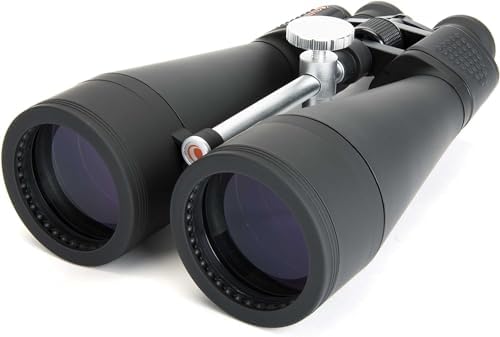
Not every night calls for a telescope. The SkyMaster 20x80 gives you two 80mm objectives and 20x magnification in something you can carry out with one hand. That combination is a genuinely different experience from a single tube: both eyes, a wide field, and the Milky Way sweeping through the view instead of pinpricked through a narrow one.
Twenty power is the point. Handheld binoculars at 10x show you stars. At 20x with 80mm of glass behind it, open clusters, the Andromeda galaxy, the Orion Nebula, and the moon's larger features all come through. Two 80mm objectives gather about as much light as a single 113mm lens, which is respectable aperture in a package that sets up in zero seconds.
The catch is that 20x is too much magnification to hold steady. You need a tripod or a monopod and a binocular adapter to mount them. Budget for that and they are a delight. Skip it and the view shakes enough to ruin the point.
They are also the best second instrument in astronomy. When the seeing is poor or you only have twenty minutes before clouds roll in, binoculars beat dragging out a telescope every single time.
How I Evaluate a Telescope
Every scope gets judged the same four ways, and the order matters.
Mount stability first. I tap the tube and watch how long the image takes to settle. Anything still wobbling after a second and a half is a scope you will fight all night at high power, no matter how good the glass is.
Collimation second. A reflector that is out of alignment shows soft stars regardless of mirror quality. If it cannot hold collimation through a normal car ride to a dark site, that is a problem worth knowing about before you buy.
The beginner test third. I hand it to someone who has never used a telescope and say nothing. If they can find the moon and focus it inside ten minutes without help, the design works. If I have to talk them through it step by step, the design has a flaw somewhere in the mount, the finder, or the focuser.
And finally the usage question: would this get carried outside on a random Tuesday? A scope that only comes out for planned sessions gets used four times a year. That is the number that matters most, and no spec sheet measures it.
The reference table
| Scope | Aperture | Mount | Best use |
|---|---|---|---|
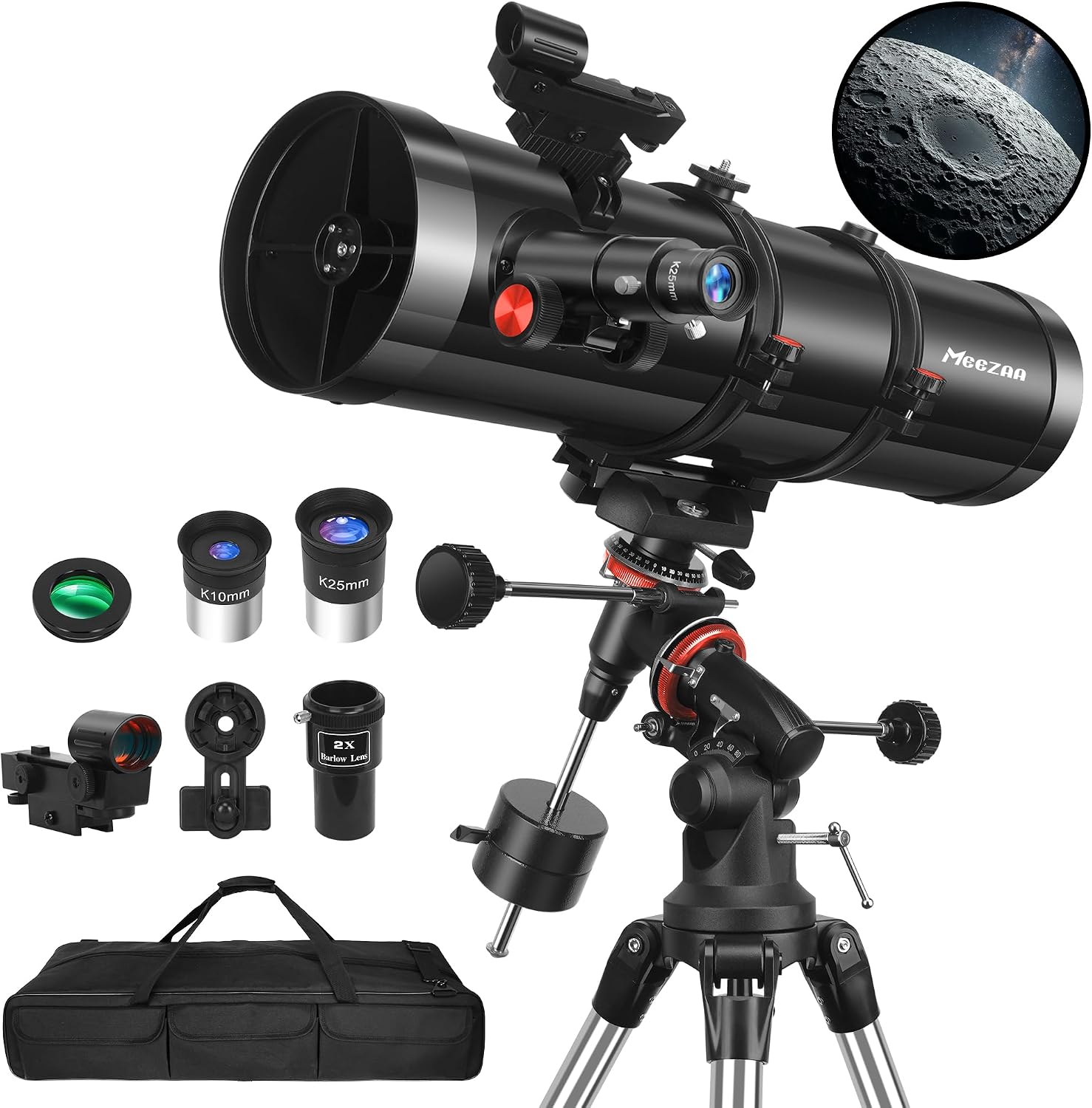 Visit on Amazon → Visit on Amazon →MEEZAA 150EQ Newtonian Reflector |
150mm | Equatorial | Most light per dollar, deep sky and planets |
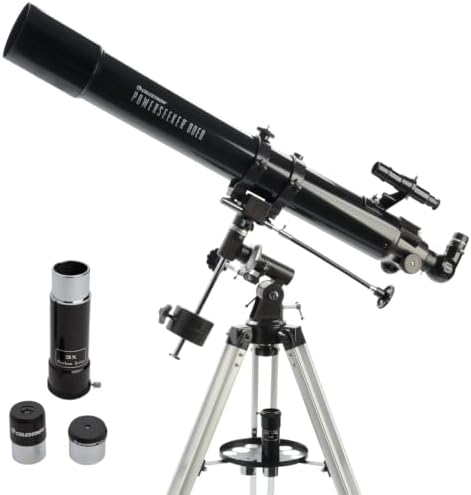 Visit on Amazon → Visit on Amazon →Celestron PowerSeeker 80EQ Refractor |
80mm | Equatorial | Moon and planets, no collimation needed |
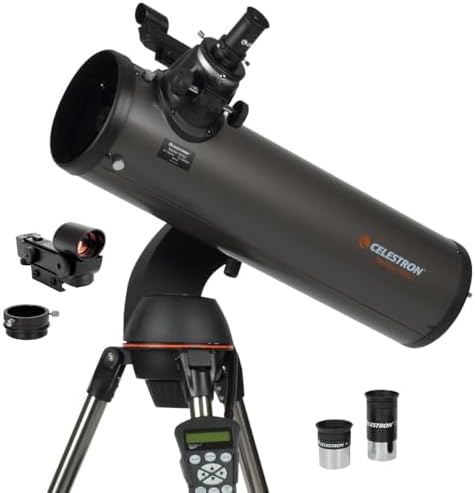 Visit on Amazon → Visit on Amazon →Celestron NexStar 130SLT |
130mm | Computerized GoTo alt-az | Finding objects fast, family and shared use |
 Visit on Amazon → Visit on Amazon →Celestron SkyMaster 20x80 Binoculars |
80mm objectives | None, needs a tripod | Wide-field deep sky, quick sessions |
Aperture is the column that matters most, then the mount, then everything else. Notice that the two equatorial scopes in this group carry the same warning: they work, and they ask you to learn how they work. The GoTo alt-az mount trades some of that setup work for electronics. The binoculars skip the mount entirely and hand you the problem of holding 20x steady.
What the specs actually tell you
Read the table again and the pattern is obvious. Aperture buys you faint objects. The mount decides whether you can look at them. The refractor at 80mm and the binoculars at 80mm objectives are both limited to bright targets, and both are excellent at what they do because nobody is asking them to do more. The 150mm reflector is the only scope here that will show you galaxies as more than smudges, and it is also the one that demands you learn collimation and balance.
Between the two Newtonians, the difference is not the mirror. It is how the scope gets pointed. The 150EQ on an equatorial mount is a manual instrument that rewards a little knowledge and a dark sky. The 130SLT on a GoTo alt-az mount is an instrument that trades that knowledge for a hand control, at the cost of batteries and alignment rituals. Neither is wrong. They are answers to different questions.
The refractor remains the best first telescope for a kid or a curious adult who wants to see Saturn this week. No collimation, no alignment ritual beyond a rough polar setup, and a bright, sharp image of the things that made all of us fall for this in the first place.
And the binoculars are the option I recommend most often to people who already own a telescope. They are the instrument that gets used when the telescope does not, and in this hobby, used beats impressive.
Should you buy the Celestron PowerSeeker 80EQ Refractor?
Yes, if the goal is to see the moon and planets clearly on night one and to avoid fiddling with mirrors. It is the least intimidating scope in this group, and the equatorial mount teaches you how tracking works without demanding much.
Understand the ceiling. Deep-sky objects will be faint or invisible from a city yard. The included eyepieces are a starting point, not a set. And the mount is budget class, so expect to steady it with a light touch. For a first scope that actually gets used, that tradeoff is worth it.
Should you buy the MEEZAA 150EQ Newtonian Reflector?
Yes, if you want the most aperture in this group and you are willing to learn collimation. That willingness is the entire question. A well-collimated 150mm reflector is a serious instrument that will keep you busy for years, and the equatorial mount plus accessories mean you are not buying a tube and then hunting for everything else.
If you will not spend twenty minutes learning to align two mirrors, buy the refractor or the GoTo instead. An uncollimated reflector is a frustrating way to spend an evening, and no amount of aperture fixes it.
Should you buy the Celestron NexStar 130SLT?
Yes, if the mount finding objects for you is what stands between you and regular observing. Forgiving alignment is the feature that matters most in a GoTo, and this mount has it. The 130mm tube is a genuine deep-sky instrument on a clear, dark night.
Bring power, level it properly, and center your alignment stars carefully. Do that and it is a pleasure. Rush it and you will spend the evening re-aligning instead of observing.
Should you buy the Celestron SkyMaster 20x80 Binoculars?
Yes, if you want a wide, two-eyed view of the Milky Way and you accept that 20x needs support. Add a tripod or monopod and an adapter and these become the most convenient deep-sky instrument you own. They are also the pair I reach for when the seeing is bad or the session is short.
Skip them if you want planets and detail. Binoculars at 20x show the moon's big features and Jupiter's moons, not cloud belts. They complement a telescope. They do not replace one.