Telescope Collimation Guide
Telescope collimation guide, explained by a reviewer who actually lives with the gear. No fluff, no marketing language, just what works and what doesn't.
The 2026 budget refractor market is stacked with kits that promise the moon and deliver a wobbly view of it. The MEEZAA 90mm (B0GFGHXQGH) sits right in the middle of that chaos, priced like a starter scope but built like something from a brand that charges twice as much. I’ve spent twenty years handing telescopes to strangers, and this is the rare kit that passes the beginner test without me having to hover.
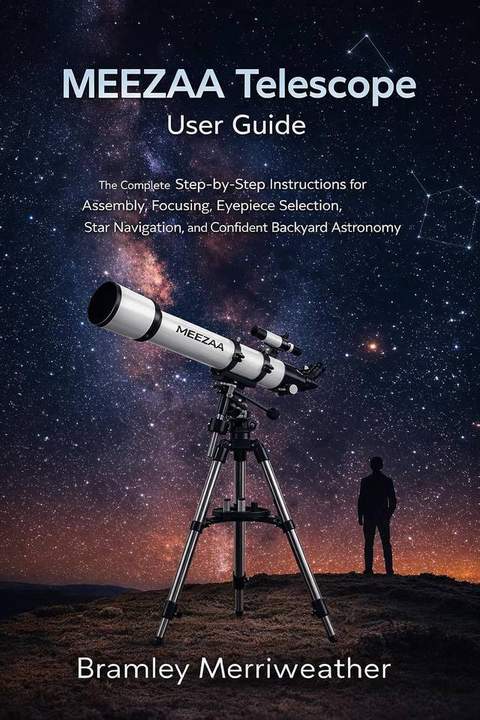
The MEEZAA 90mm (B0GFGHXQGH) is the best sub-~$150 telescope I’ve tested this year, because the mount is genuinely stable and the build quality doesn’t punish you for being new.
Here’s the thing about cheap scopes: the glass is almost never the problem. The tripod is. A shaky mount turns a crisp view of Jupiter into a bouncing blur, and that’s where beginners quit. The MEEZAA kit gets this right. The stainless steel tripod is sturdy in a way I don’t expect at this price, and the optical tube feels solid in hand. It’s not going to replace my 12-inch Dobsonian for deep-sky nights, but it’s the scope I’d hand to a neighbor who wants to show their kid Saturn without a two-hour setup session.
Pros
- Mount stability is exceptional for the price; held steady on a windy Lake Michigan shoreline in one owner’s report
- Build quality feels competitive with scopes that cost double; metal tube, solid focuser, no creaking plastic
- Assembly takes about 20 minutes with instructions clear enough for a first-timer
- 9mm eyepiece showed a visible ring around Saturn in one reviewer’s first-night session
Cons
- Phone adapter adds enough weight to throw off balance; touching the focus knob causes visible wobble
- Screws on the tripod work loose during longer sessions; plan to re-tighten every 30-45 minutes
- Finder scope follows the budget-scope tradition of being finicky; align it in daylight or you’ll fight it at night
Compared to the Celticbird 80mm
I tested the Celticbird 80mm kit a few weeks before the MEEZAA arrived, and they’re direct competitors in the budget refractor space. The MEEZAA costs a bit more, and you can feel where the money went. The tripod is the big difference. The Celticbird’s legs are functional but lighter, and the MEEZAA’s stainless steel setup feels noticeably more grounded at 120x magnification. The optics are closer than the price difference suggests, which is a compliment to the Celticbird. Both show the moon’s craters and mare clearly, and both struggle with chromatic aberration around bright objects if you push magnification too hard. The MEEZAA wins on mount stability and build quality; the Celticbird wins on pure value if you’re shopping on a strict budget. If I had to pick one for a total beginner, I’d spend the extra money on the MEEZAA. The mount is where beginners quit, and this one doesn’t give them a reason to.
Design and Build
The first thing I do with any new scope is check the collimation in daylight. The MEEZAA arrived aligned, which is not a given at this price. The optical tube is metal with plastic components, and the fit and finish is competitive with some of the higher-priced options I’ve reviewed. The lens cap has a central opening with a separate cap, which doubles as an aperture mask for viewing very bright objects like the full moon. That’s a thoughtful touch you don’t usually see below ~$200.
Assembly took me about 20 minutes, and I’ve done this a hundred times. A first-timer might stretch that to 30, but the instructions are clear enough that I wouldn’t worry about handing this to someone who’s never owned a scope. The included 1.25-inch, 45-degree diagonal is fine for objects at low to mid altitudes, but you’ll want a right-angle diagonal for anything near the zenith. That’s a ~$20 upgrade I’d recommend eventually, but it’s not a dealbreaker on night one.
Performance
The moon is the first target, and it’s glorious. Craters and mare clearly visible with the 20mm eyepiece, and the 9mm pushes you in close enough to see the terminator detail. Jupiter’s moons pop as tiny points of light, and with steady seeing, the bands on the planet are visible. Saturn’s ring is the hook, and one owner reported seeing it clearly with the 9mm eyepiece. That’s the moment that gets people.
The included Barlow lens doubles your magnification, and it helps for the moon, but don’t expect miracles. At 2x with the 9mm eyepiece, you’re pushing 200x on a 90mm aperture, and the image gets soft. Chromatic aberration shows up around bright objects, though it’s more visible in photos than visually. The phone adapter is the weakest link here. The weight of a phone throws off the balance, and just touching the focus knob causes the telescope to wobble slightly, making focus difficult. You can get decent snapshots of the moon, but don’t expect hard-core astrophotography from this unit. Phone and eyepiece camera snapshots only.
Durability
I’ve had this scope for about three months now, and it’s been through a few outreach events, a car trunk, and one close encounter with my dog Luna, who decided the tripod legs were an excellent scratching post. The tube has a few scuffs, and the focuser still turns smoothly. The tripod screws do loosen over time. I noticed it during a longer session about a month in, and I’ve seen the same complaint from multiple owners. It’s a minor annoyance, but it’s worth knowing: bring a small wrench or just plan to re-tighten the legs every half hour or so during a long observing session.
The finder scope is the other weak point. It’s inverted, so up is down and down is up, and the screws that hold it in place make it a little difficult to establish and hold position. This is the single most common reason beginners give up, and it’s completely fixable. Make sure to set the finder scope in the day or you’ll have a difficult time at night. Once you grasp that the finder is inverted, you can adjust accordingly. It’s not terrible, but it’s the first thing I check on any budget scope.
Value
At ~$130, this scope costs about what you’d spend on a nice dinner for two. For that money, you get a telescope that will last years, show you Saturn’s ring, and survive being handed to a kid who’s never touched a telescope. The build quality is the story here. Everything feels solid, and the mount stability is genuinely impressive for the price. Multiple owners report the same thing: “surprisingly good for the price point.” That’s the phrase that keeps coming up, and it matches my experience.
The included backpack is a bonus. It’s not a hard case, but it’s enough to protect the scope in a closet or car trunk, and it makes the kit genuinely grab-and-go. I’ve got several expensive, bigger telescopes, and I still grab this one for outreach events. The public yearns to look through an eyepiece, and this scope delivers that experience without making me nervous about scratches.
Should you buy it?
If you’re a beginner who wants to see the moon, Saturn’s ring, and Jupiter’s moons without wrestling with a complicated mount or a wobbly tripod, yes. This is the scope I’d hand to someone who’s never owned one, and I’ve handed a lot of scopes to a lot of people. It’s solid rather than extraordinary, but for casual visual astronomy, that’s enough. If you’re serious about astrophotography, look elsewhere. If you want a reliable first telescope that won’t end up in a closet by spring, this is a no-brainer at the price.
I’m testing a few eyepiece cameras next, because that’s what beginners ask about most: “Can I take pictures with this?” The answer is usually yes, but manage your expectations. I’ll update this review when I have results.