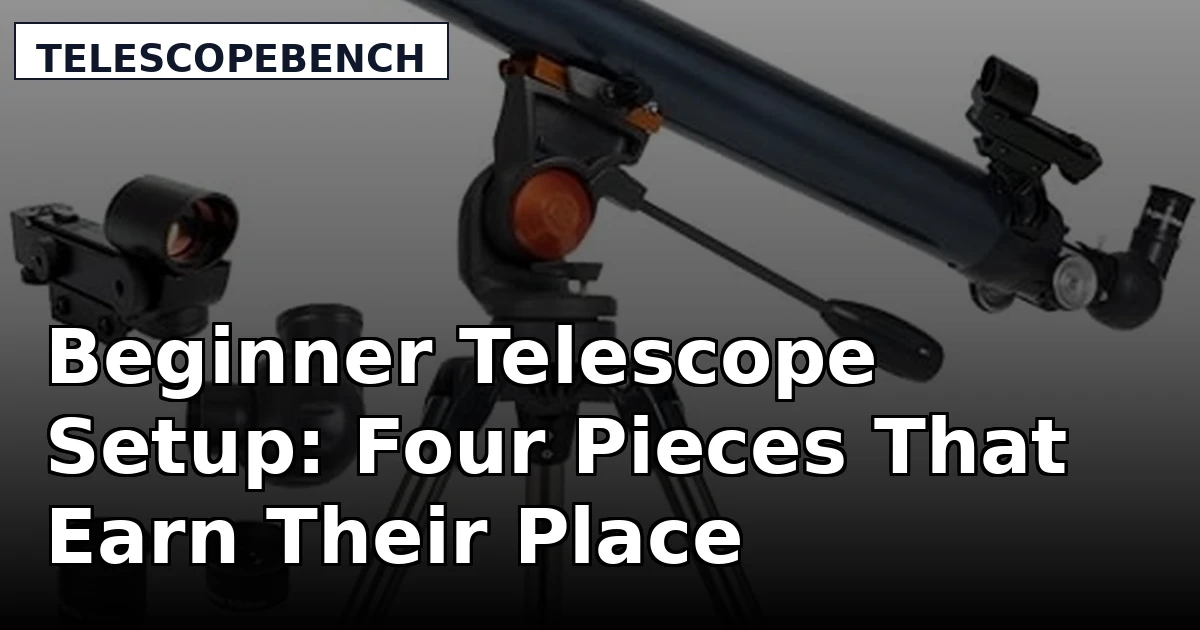
Related: Best Beginner Telescope Mounts That Don't Wobble
Most beginner telescope kits fail for the same reason. The box sells magnification, and the mount cannot deliver it. I have spent twenty years teaching astronomy and twelve running a public observatory, and I have watched hundreds of first scopes go from "this is amazing" to "it lives in the closet" in about six weeks. A beginner telescope setup does not need to be expensive. It needs a steady mount, honest aperture, and a plan for the first three nights out.
That is what this guide covers: four items that make the first year of stargazing work, in the order I would hand them to someone standing in my driveway. Two refractors for looking up tonight, one tool for the reflector you will eventually own, and one book that explains why the first two behave the way they do.
A quick word on how I think about this, because it shapes every recommendation below. The mount is the telescope. A great optical tube on a wobbly tripod is a great tube you cannot use. Aperture is king for visual observing, which is why the 60mm department-store scope that shows nothing is exactly the reason people quit. And the eyepiece that ships in the box is a suggestion, not a tool.
Best Overall First Refractor: WOZEL 90mm 600mm Astronomy Refractor
If you want the most sky per dollar on night one, this is the one I would point you toward. It is a 90mm refractor with a 600mm focal length, and 90mm of aperture is a genuine step up from the 60mm and 70mm scopes that dominate the beginner shelf. More aperture means more light, and more light means the moon shows texture instead of glare, Saturn shows a ring instead of a blob, and the brighter clusters stop looking like smudges.
A refractor is also the friendliest optical design for a beginner. There is no mirror to align, which means there is nothing to knock out of collimation on the drive home from the store. You take it out, you point it, you look. That simplicity is worth more than any feature on a spec sheet.
Two things to plan for. First, the mount. This class of scope lives or dies on its tripod, so when yours arrives, set it up indoors, tap the tube lightly, and watch how long the image shakes. If it keeps wobbling after a second or two, tighten everything and consider hanging a small weight from the center of the tripod. Second, the eyepieces. Plan on replacing them eventually. The included ones will get you to the moon and back, but a decent low-power eyepiece and a mid-power eyepiece will change what you can actually see.
Best Brand-Name Pick: Celestron AstroMaster 70AZ
Celestron is the name most beginners have heard, and the AstroMaster 70AZ is built for exactly what the product name promises: the moon and the planets. It is a 70mm refractor on an alt-az mount, which means it moves left and right, up and down, the way your hand moves. That is the right mount for a beginner. Equatorial mounts look scientific and confuse almost everyone for the first month.
What you get with Celestron is a known quantity: a company that will still be there in five years, documentation that makes sense, and a scope light enough to carry outside in one trip. What you give up is aperture. 70mm is a small lens. The moon and the brighter planets will look good. Most deep-sky objects will be faint gray smudges, and that is not a knock on Celestron, it is physics.
My advice if you go this route: keep the magnification reasonable. A 70mm scope runs out of light long before it runs out of magnification, and the giant magnification numbers printed on cheap boxes are marketing, not optics. On most nights the sharpest view will come from your lowest-power eyepiece, not your highest.
The Collimator You Only Need If You Own a Reflector: SVBONY SV121
Here is the honest part. A refractor does not need collimation. If you buy either of the scopes above, this tool will sit in a drawer. So why include it? Because the scope you buy in three years is probably a Newtonian, and collimation is the single thing that scares beginners away from the best value in astronomy.
Collimation is the alignment of the mirrors. Out of collimation means blurry views, and a blurry view is what convinces people their scope is junk when it is really just out of adjustment. The SVBONY SV121 is a 1.25 inch red laser collimator: you drop it into the focuser, switch it on, and adjust the mirrors until the beam lands where it should. It turns a mysterious ritual into a five-minute job.
One check when it arrives: rotate the collimator in the focuser and watch the dot. If the dot moves in a circle, the collimator itself is out of alignment and it will lie to you. Most are adjustable with a small screw, and it is worth five minutes to confirm before you trust it on a mirror.
The Book That Should Come in the Box: The Dobsonian Telescope Handbook
I recommend a book with every telescope, and this is the one I would hand over. Setup, collimation, eyepiece upgrades, and how to actually see things: it walks through all of it in order, which is the part most beginners miss. You cannot learn collimation from a forum thread at midnight. You can learn it from a book on a couch in the afternoon.
It pairs directly with the collimator above. The tool gets the mirrors aligned; the book explains why they drifted and how to keep them aligned. The eyepiece chapter is the one that will save you the most money, because it explains which upgrade actually changes what you see and which one just changes a number on paper.
Even if your first scope is a refractor, the star-hopping and observing chapters still apply. A star chart and a little knowledge beat a GoTo mount you cannot align, every time.
How I evaluate a beginner telescope
I do not judge a telescope on a spec sheet. Four checks decide whether a scope gets a recommendation from me, and they are the same four every time.
The mount test: set it up, tap the tube, and watch how long the image shakes at useful magnification. A scope that cannot hold steady is a scope that will not get used. The collimation check: are the optics aligned as delivered, and can a beginner keep them that way? The beginner test: hand it to someone who has never used a telescope and say nothing. If they find the moon in a few minutes, the design works. If they need a manual and a video, it does not.
And then the logbook test, which is the honest one. Does the scope get used on a random Tuesday, or only on the nights you plan a trip? The best telescope is the one you actually use. A big dob that gathers dust is worse than a small refractor that gets out every week.
What the specs actually mean
Aperture is the number that matters. It is the diameter of the main lens or mirror, and it decides how much light you collect. Magnification is a number you can create by swapping an eyepiece, which is why the giant numbers on a box mean nothing: any scope can be pushed there, and almost none of them will show anything but a blur when you do.
Focal length sets the shape of the view. A 600mm focal length refractor gives a wide enough field to fit the moon and to make star-hopping practical, which is what you want in a first scope. A longer focal length narrows the field and magnifies more, which sounds better and usually is not.
The mount is the other half of the telescope. Alt-az mounts move left and right, up and down, like your hand, and they are the right choice for beginners. Equatorial mounts track the sky properly but require polar alignment, and GoTo mounts are wonderful when they are aligned and miserable when they are not.
Eyepieces are where the money goes after the sale. The one in the box is a suggestion. Two decent eyepieces, one low power for finding things and one higher power for the moon and planets, will do more for your views than any other purchase you can make.
The reference table
This is the same table I keep in my observing log: one row per item, with what each thing actually is and where it fits in a beginner setup.
| Item | What it is | Where it fits | Notes |
|---|---|---|---|
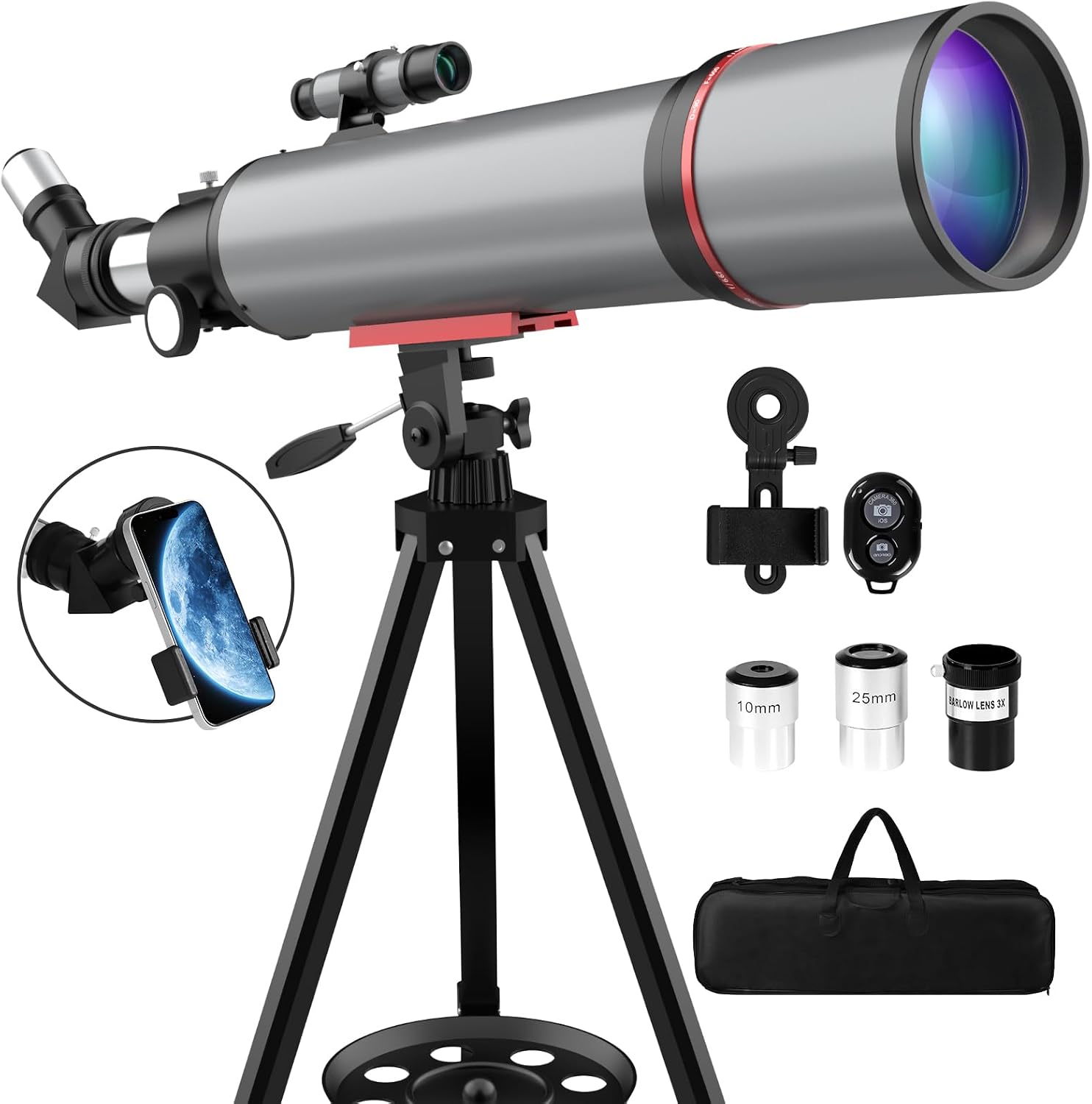 Visit on Amazon → Visit on Amazon →WOZEL 90mm 600mm refractor |
Refractor, 90mm aperture, 600mm focal length | Your first scope if aperture matters most | No collimation needed. Plan to replace the eyepieces |
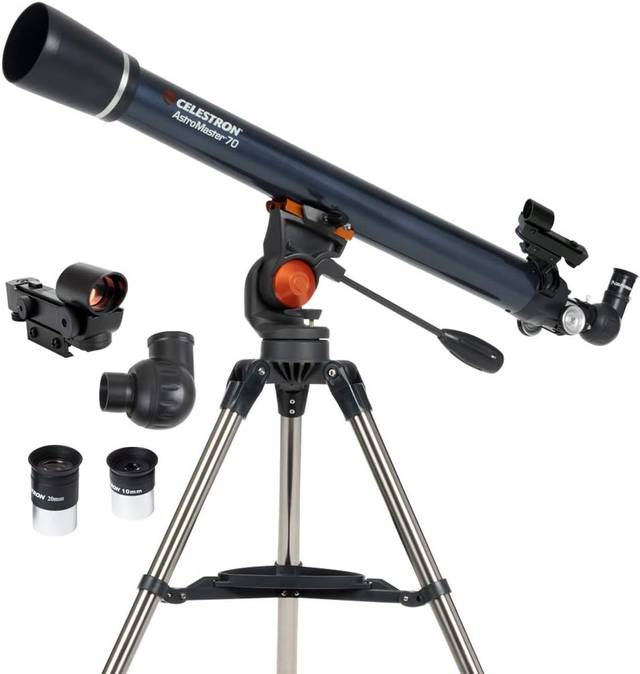 Visit on Amazon → Visit on Amazon →Celestron AstroMaster 70AZ |
Refractor, 70mm aperture, alt-az mount | Moon and planet viewing with brand support | Small aperture. Keep the magnification low |
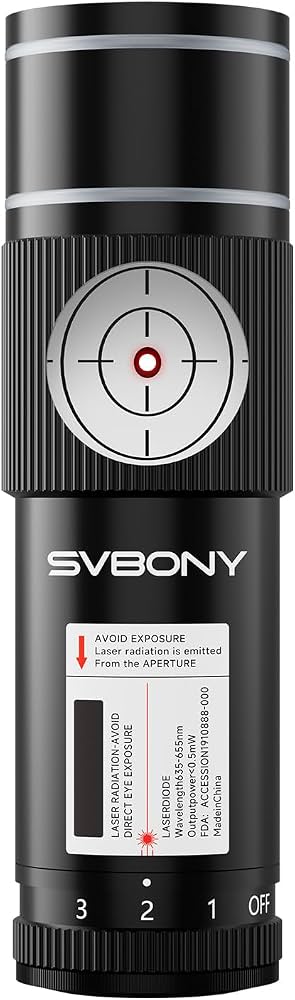 Visit on Amazon → Visit on Amazon →SVBONY SV121 laser collimator |
1.25 inch red laser collimator | For Newtonians and dobsonians | Not needed for either refractor above |
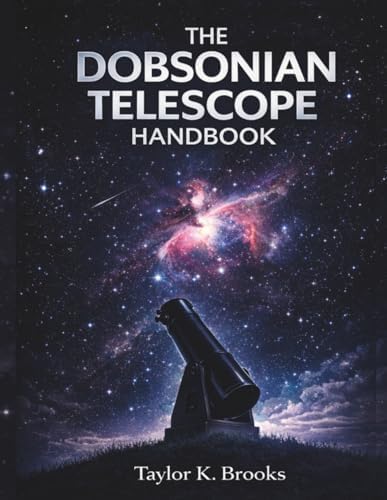 Visit on Amazon → Visit on Amazon →The Dobsonian Telescope Handbook |
Book | Setup, collimation, eyepiece upgrades | Buy it with the collimator, not after |
The pattern in that table is simple. Buy the aperture you can afford, buy the knowledge to go with it, and buy the maintenance tool only when you own something that needs maintaining.
Should you buy the WOZEL 90mm 600mm refractor?
Yes, if this is your first scope and you want the most aperture for the money. 90mm on a refractor is a genuine step up from the 60mm and 70mm scopes that fill the beginner aisle, and because there is no mirror to align, there is nothing for a beginner to break. Plan for the mount, plan to replace the eyepieces, and you have a scope that stays useful after you upgrade.
The catch is the same catch that comes with every budget refractor: the tripod decides how much you enjoy it. Set it up once indoors, tap the tube, and see how long it takes to settle. If it is still shaking after a second or two, fix that before you blame the optics.
Should you buy the Celestron AstroMaster 70AZ?
Yes, if you want a known brand and you are mostly interested in the moon and planets. Celestron will be around in five years, the documentation is written for people who have never owned a telescope, and the alt-az mount is the right design for a beginner. The moon through a 70mm refractor is genuinely beautiful, and so is Saturn on a steady night.
Just go in knowing what 70mm can and cannot do. It is a small lens. The bright objects look good; the faint ones are a gray smudge at best. If deep-sky observing is the goal, the 90mm above is the better call, and the honest answer is that a used 6-inch or 8-inch dob will beat both of them.
Do you need the collimator and the book?
Not the collimator, not yet. If both of your scopes are refractors, the SVBONY SV121 will sit in a drawer until you buy a Newtonian. When that day comes, it earns its place in about five minutes.
The book is the opposite. Buy it now, because the chapters on setup, collimation, eyepiece upgrades, and finding your way around the sky apply to every telescope you will ever own. A book that keeps a scope out of the closet is the best trade in this hobby.