The first telescope decides whether astronomy becomes a lifelong hobby or a box in the garage. That is a lot of pressure to put on one purchase, and the marketing on most beginner boxes does not help. Magnification gets printed in giant type, aperture hides in the fine print, and the mount, which is the part that determines whether the scope is actually usable, is barely mentioned at all.
This guide covers beginner telescopes for backyard astronomy across several approaches: a smartphone-guided Newtonian, three refractors at different apertures, a pair of astronomy binoculars, and an eyepiece upgrade that fixes the weakest link in most starter kits. Everything here is drawn from published specifications, mount design, and what ships in the box, so you can match an instrument to how you actually plan to observe.
Related: Telescope Mounts Explained: Alt-Az, Equatorial, and Dobsonian
Quick answer
The Celestron StarSense Explorer LT 114AZ Newtonian Smartphone Guided Telescope is the strongest fit for most beginners because it gathers the most light of anything in this group and pairs that aperture with a smartphone-guided mount that helps you find targets instead of hunting for them. Choose the Celestron Cometron 7x50mm Astronomy Binoculars instead when you want the simplest, most portable way to start learning the sky.
Beginner telescopes and astronomy gear worth comparing
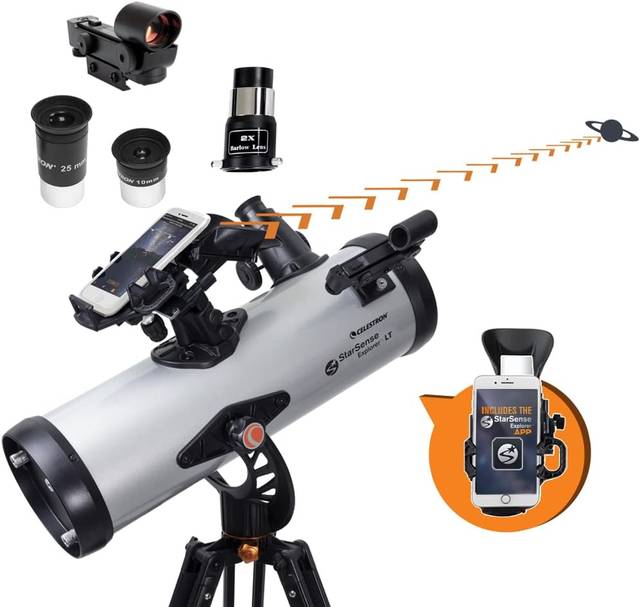
Celestron StarSense Explorer LT 114AZ Newtonian Smartphone Guided Telescope
A 114mm Newtonian reflector on an alt-az mount that uses your phone and the StarSense app to identify and point to objects overhead. The largest aperture here, and the option that removes the most guesswork from finding your first targets.
Visit on Amazon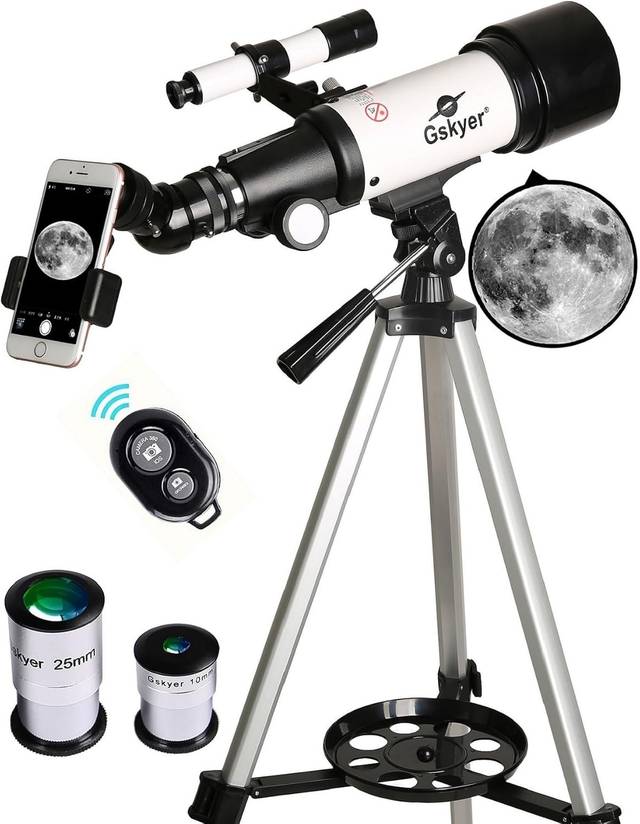
Gskyer Telescope, 70mm Aperture 400mm AZ Mount Astronomical Refracting Telescope for Kids Beginners - Travel Telescope with Carry Bag, Phone Adapter and Wireless Remote.
A 70mm refractor with a 400mm focal length on an alt-az mount, sold as a travel kit with a carry bag, phone adapter, and wireless remote. Light, packable, and a simple way to learn the sky.
Visit on Amazon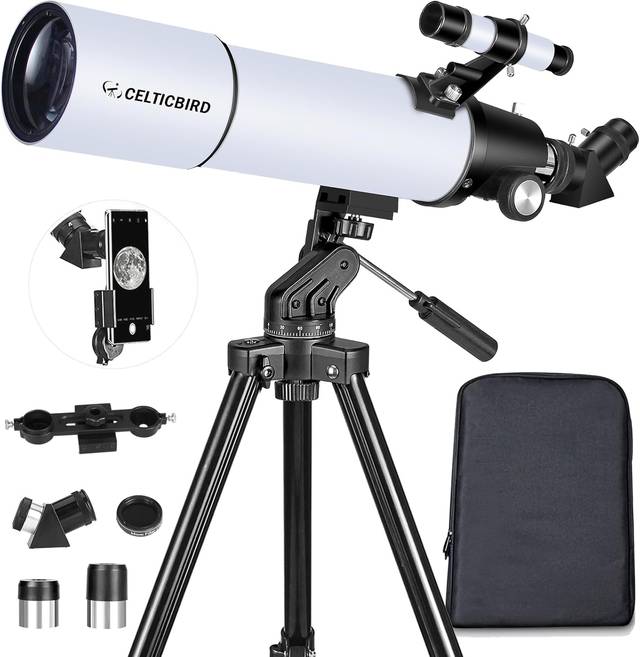
Celticbird Telescope for Adults High Powered, 80mm Aperture 600mm AZ Mount Refractor Telescope for Kids Beginners - Portable Telescopes for Adults Astronomy with Backpack, Phone Adapter, Moon Filter
An 80mm refractor with a 600mm focal length on an alt-az mount, bundled with a backpack, phone adapter, and moon filter. A useful middle step in aperture between the smallest travel scopes and the 90mm class.
Visit on Amazon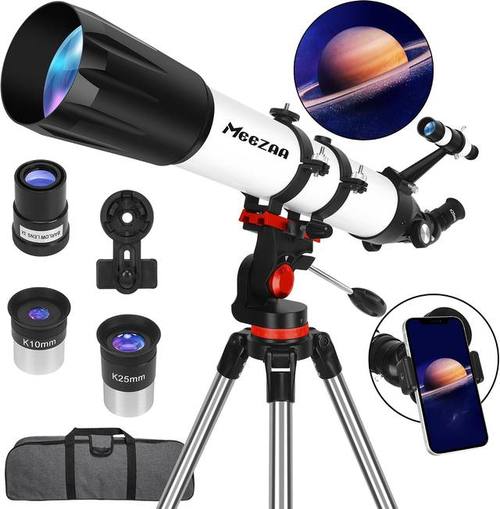
MEEZAA Telescope for Adults High Powered, 90mm Aperture 800mm Refractor
A 90mm refractor with an 800mm focal length on an alt-az mount. The largest refractor in this group, which means more light gathered for the Moon, the planets, and the brighter deep-sky objects.
Visit on Amazon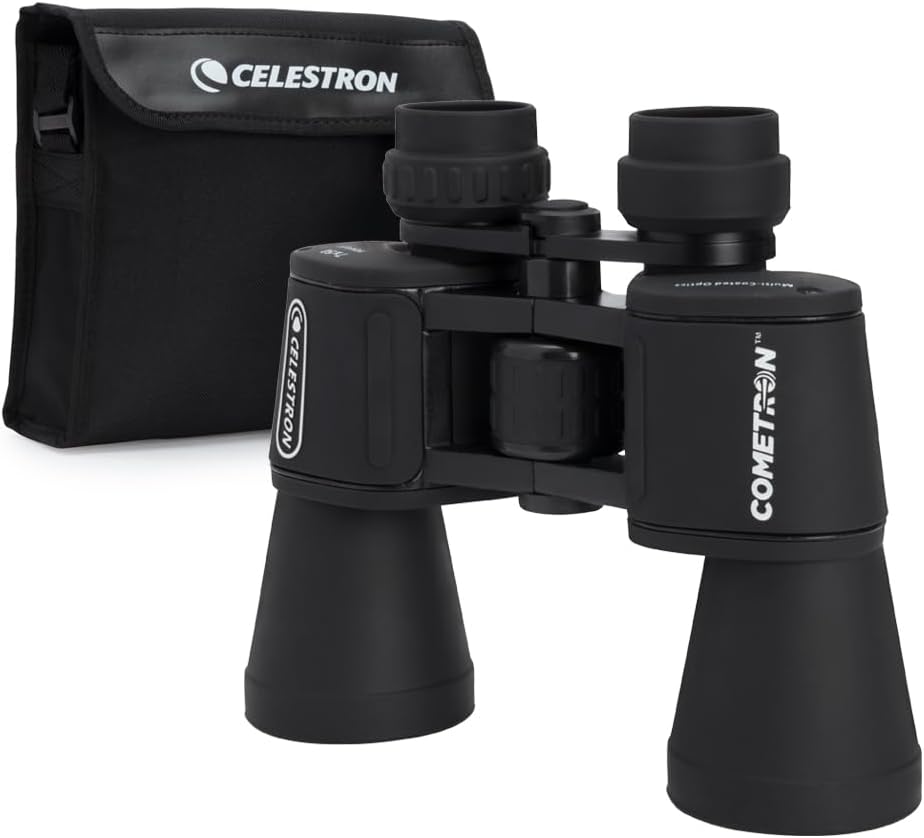
Celestron Cometron 7x50mm Astronomy Binoculars
Wide-field 7x50 astronomy binoculars. Not a telescope, but a genuinely useful first instrument for sweeping the Milky Way, learning constellations, and spotting the Moon and brighter clusters.
Visit on Amazon
Celestron Omni 1.25" 32mm Telescope Eyepiece for Expansive Star-Field Views
A 1.25 inch 32mm eyepiece built for low-power, wide-field views. The classic upgrade for the narrow eyepiece that ships with most beginner refractors and reflectors.
Visit on AmazonPrices and availability may change. Check the retailer for current details.
How these products were compared
This guide compares aperture, mount type and stability, guidance system, included accessories, and eyepiece compatibility. Product names, images, and retailer links are matched by product identifier so that every card points to the product shown.
The comparison is based on published manufacturer specifications, the design of each mount, and the accessories listed for each model. It is not a report of hands-on testing, and no performance figures beyond the stated specifications are claimed here. Where a judgment is offered, it rests on optical design and mount class rather than on a night of observing. Readers should confirm current price and availability through the retailer link on each card.
How to choose the right telescope
Aperture comes first, because it sets how much light you collect and therefore how much detail and faintness you can reach. The refractors here run from 70mm to 90mm, and the Newtonian in this group is 114mm. That difference is not cosmetic. A 90mm refractor will show more on the Moon, the planets, and the brighter star clusters than a 70mm, and a 114mm reflector pulls in more light still. If your budget allows only one upgrade over a department-store scope, spend it on aperture.
The mount comes second, and it matters just as much. Every telescope in this roundup uses an alt-az mount, which moves up and down and left and right, the way you would point at something with your hand. That is the right choice for a beginner because it is intuitive and needs no polar alignment. What separates these models is how steadily the tripod holds the tube. A long focal length tube on a light tripod will shake while you focus, and no amount of aperture fixes a view that will not settle. If you are choosing between two scopes and one has a visibly sturdier tripod, take the sturdier one.
Then think about how you will find things. The StarSense Explorer LT 114AZ uses your smartphone to identify the sky and guide you to targets, which removes the steepest part of the beginner learning curve. The refractors rely on you, a finder, and a star chart, which is slower at first but teaches the sky in a way that sticks. If you want to learn the constellations properly, pair any of these scopes with a planisphere and a copy of Turn Left at Orion.
Finally, look at what ships in the box. A phone adapter lets you take simple snapshots through the eyepiece. A moon filter keeps the lunar surface comfortable to look at when it is near full. A carry bag or backpack decides whether the scope leaves the house. And the eyepiece that comes with any of these is a starting point, not a finished kit, which is why the 32mm wide-field eyepiece is in this roundup at all.
Celestron StarSense Explorer LT 114AZ Newtonian Smartphone Guided Telescope
This is the top pick because it makes the two hardest parts of a first telescope easier at the same time. The 114mm Newtonian optical tube is the largest aperture in this group, so it gathers more light than the 70mm, 80mm, and 90mm refractors here. The alt-az mount is paired with the StarSense Explorer system, which uses your phone to recognize the sky above you and direct you to objects, turning the search for a target into a guided step rather than a test of patience.
The trade-offs are real and worth naming. A Newtonian reflector needs collimation, the alignment of its mirrors, and that alignment can drift when the scope is bumped or transported. It is a larger, heavier instrument than a small refractor, so it is not the one you toss in a backpack on a whim. And the guided pointing depends on your phone, its battery, and the app, so the convenience comes with a small dependency. What it does not compromise on is the thing that matters most at the eyepiece, which is light gathering.
Alternatives to consider
The Celestron Cometron 7x50mm Astronomy Binoculars are better suited to someone who wants to start tonight with zero setup, since binoculars need no alignment, no collimation, and no tripod to deliver a wide, bright view of the Moon and the brighter star fields. The Gskyer Telescope, 70mm Aperture 400mm AZ Mount Astronomical Refracting Telescope is the stronger fit when portability and a low-fuss first experience matter more than aperture, and its carry bag, phone adapter, and wireless remote make it a natural travel kit.
The Celticbird 80mm refractor sits a step up in aperture from the 70mm travel scope while keeping the backpack-and-accessory approach, including a moon filter. The MEEZAA 90mm refractor is the choice when you want the most aperture among the refractors here and expect to spend most of your time on the Moon, the planets, and double stars. The Celestron Omni 32mm eyepiece covers a different need entirely: it is the upgrade that widens the field of view on any 1.25 inch focuser, which is the most common weak point in a beginner kit.
Day-to-day use and maintenance
Set a refractor or reflector outside 20 to 30 minutes before you observe so the optics can reach the outdoor temperature. A tube that is warmer than the air around it will show soft, shimmering views until it settles. Keep the tripod legs short and spread wide, and observe from grass or dirt rather than a deck or concrete, because solid ground and a low center of gravity are what stop the image from shaking when you touch the focuser.
For the Newtonian, check collimation before a session rather than during one. A quick look at a bright star or a collimation cap will tell you whether the mirrors are aligned, and a small adjustment at the start is far less frustrating than fighting a blurry image all night. Clean optics sparingly. Blow off dust with a bulb blower, use a soft lens brush for stray particles, and leave anything stubborn alone rather than scrubbing at a coated surface.
Store the scope somewhere dry, and bring it inside with the caps on so moisture does not settle on the glass. If you observe in cold weather, let the scope warm up indoors before you open it. Never point any telescope or binocular at the Sun without a proper solar filter fitted over the front aperture, and never rely on a solar filter that screws into an eyepiece. The Moon is the safest and most rewarding first target, and a moon filter makes it far more comfortable to study.
Buying checklist
- Decide whether you want guided pointing or a scope that teaches you the sky, because that choice narrows the list fast.
- Choose aperture based on your usual targets rather than an occasional best-case night.
- Confirm the mount class and tripod design, since stability matters more than any specification on the box.
- Check which accessories ship with the exact model: phone adapter, moon filter, carry bag, or backpack.
- Confirm the eyepiece barrel size if you plan to add eyepieces later, since 1.25 inch is the common standard.
- Verify the current retailer price, availability, and return terms before you commit.
Final recommendation
Choose the Celestron StarSense Explorer LT 114AZ Newtonian Smartphone Guided Telescope when you want the most aperture in this group and a guided mount that helps you find targets from your first session. Choose the Celestron Cometron 7x50mm Astronomy Binoculars when you want the simplest possible start and the widest field of view, and add a telescope once you know the constellations. If portability leads your list, the 70mm travel refractor and the 80mm refractor are the two that will actually leave the house with you, while the 90mm refractor is the one to pick when aperture matters more than packing light.