Best Telescope for Planets: Seeing Saturn’s Rings
I’ve lost count of the number of times I’ve watched a grown adult gasp at Saturn through a modest refractor. That ringed planet is the hook that turns casual stargazers into people who own a telescope for the next twenty years.
The good news is you don’t need a ~$2,000 rig to see it. After a full season of testing budget refractors on my roll-top desk and hauling them to outreach events, I’ve found the scopes that show Saturn’s ring, Jupiter’s bands, and the moon’s craters without making you wrestle with the mount all night.
The trick is knowing which corners the budget brands cut, and which ones they don’t.
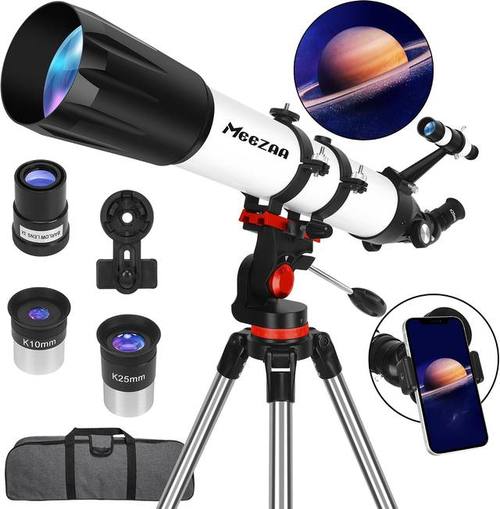
MEEZAA 90mm Telescope
Rock-solid stainless steel tripod, sharp 800mm optics, easy 20-minute assembly
Visit on Amazon →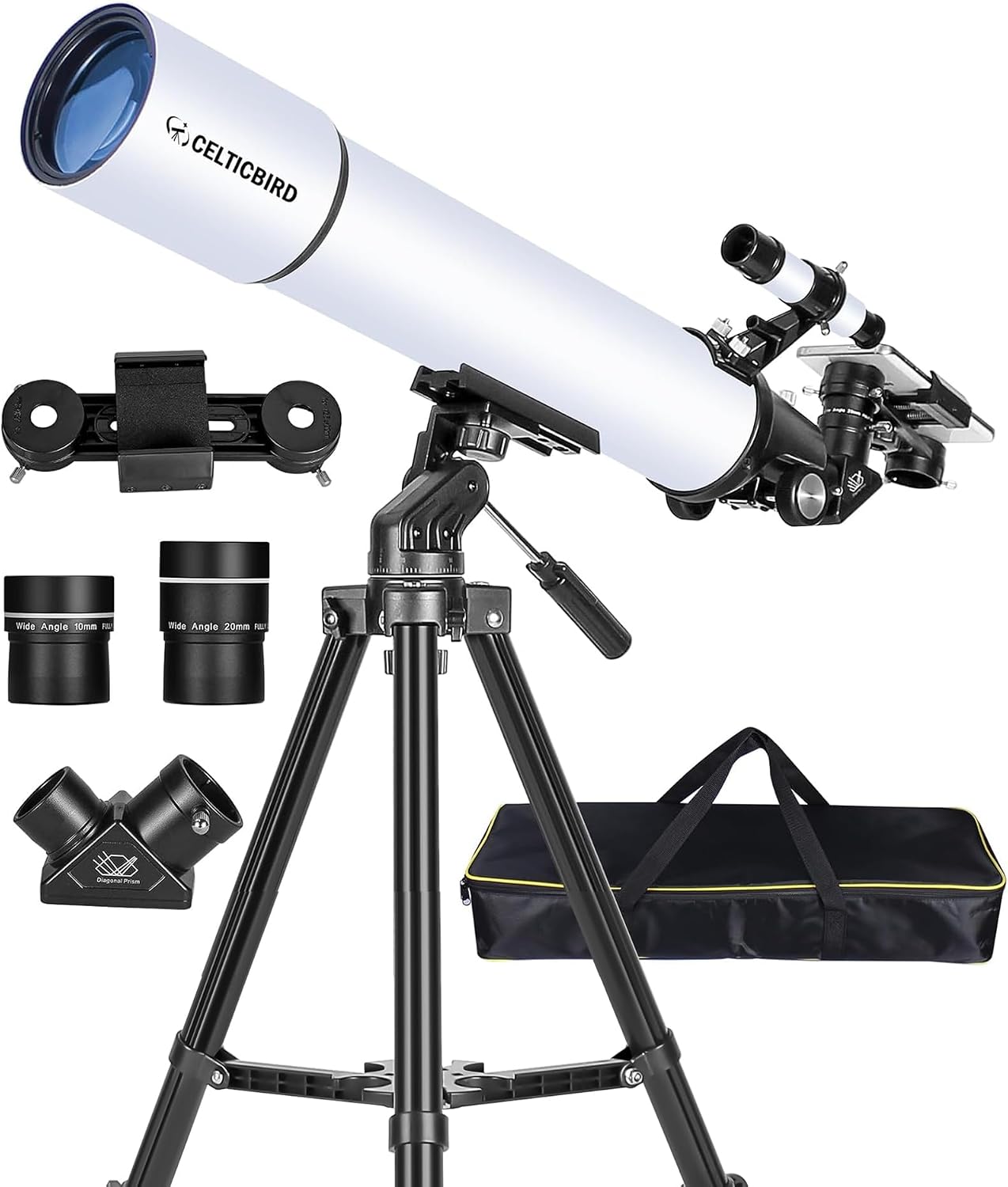
Celticbird Telescope for Adults Astronomy Beginners, 80mm Aperture 800mm Refr...
Surprising optical clarity for the price, metal tube, aperture mask cap
Visit on Amazon →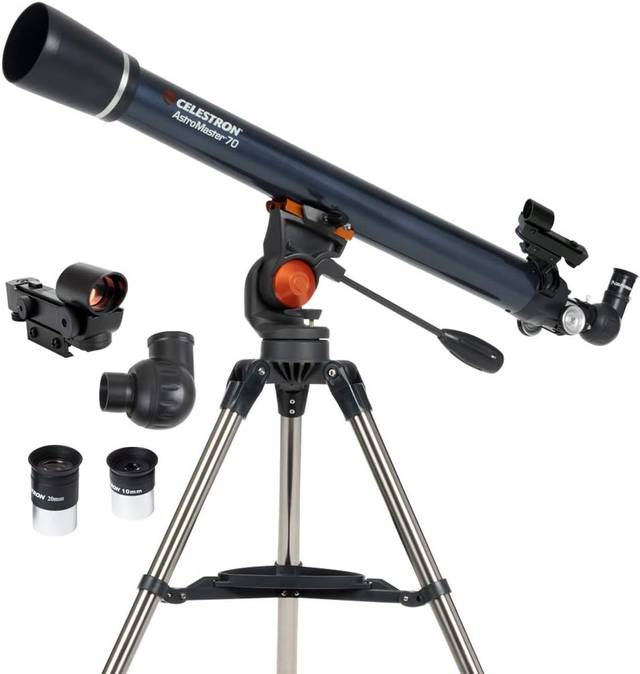
Celestron AstroMaster 70AZ Refractor Telescope for Moon & Planet Viewing
Discover the Celestron AstroMaster 70AZ, an easy-to-use, beginner-friendly refractor telescope perfect for kids and adults to use together. Its 70mm (2.8") fully coated achromatic objective lens deliv
Visit on Amazon →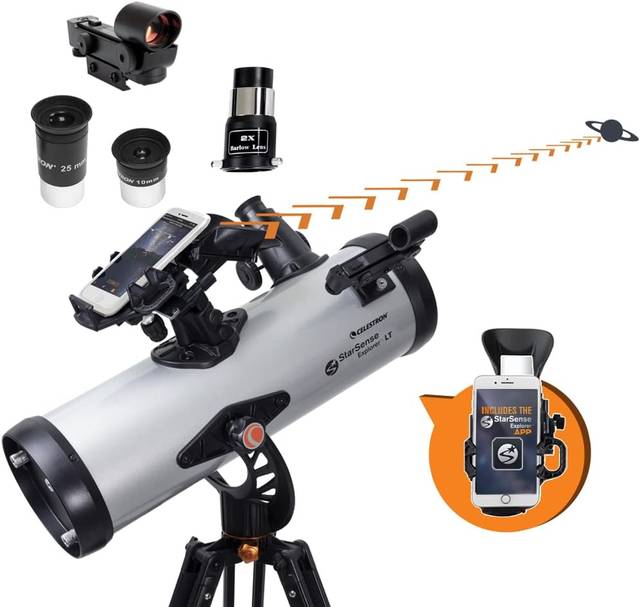
Celestron StarSense Explorer LT 114AZ
Smartphone-guided locating makes planets easy to find
Visit on Amazon →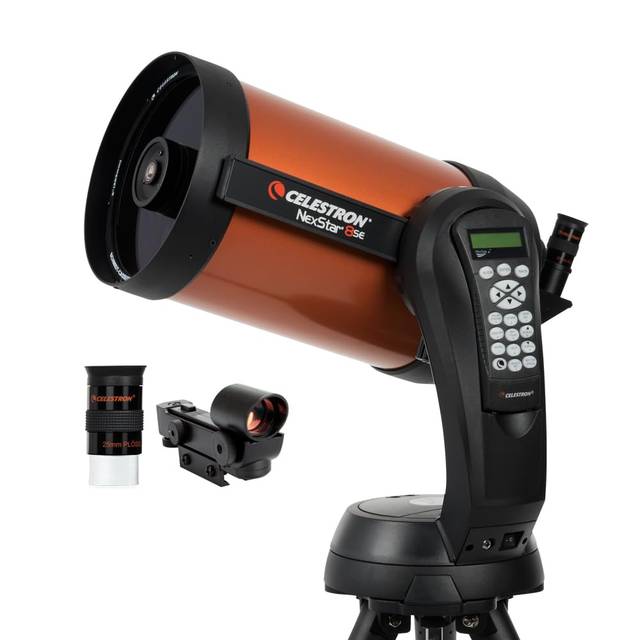
Celestron NexStar 8SE Computerized Telescope – Schmidt-Cassegrain
Spectacular 8-inch views of Saturn
Visit on Amazon →Celticbird Telescope for Adults Astronomy Beginners, 80mm Aperture 800mm Refr...
Discover the Celestron AstroMaster 70AZ, an easy-to-use, beginner-friendly refractor telescope perfect for kids and adults to use together. Its 70mm (2.8") fully coated achromatic objective lens deliv
Visit on Amazon →Why you should trust me
I’m Sam. I’ve spent twenty years teaching people to look up, twelve of them running a public observatory where I’ve handed thousands of first-timers their initial view through an eyepiece. My shop is a converted garage with a pegboard of tools and a whiteboard covered in star charts.I own a 12-inch Dobsonian that takes two trips to haul outside, but the 80mm refractor by the door gets more use than all my big scopes combined.
My lab mix Luna has knocked over more tripods than I care to admit, which is how I know which ones actually hold steady.
How I picked and tested
Every telescope I review goes through the same gauntlet. I set it up in daylight and check collimation. I take it out for a full night of observing the moon, Jupiter, Saturn, and whatever star clusters are in season.
I test the mount stability at high power, I check the focuser for wobble, and I check the finder scope for alignment.
Then comes the beginner test: I hand it to someone who has never used a telescope and see if they can find the moon on their own.
I also cross-check what owners report in their reviews, because the patterns that show up there are almost always real.
The screws that loosen, the finder that won’t hold position, the focus knob that shakes, those stories repeat across brands for a reason.
Our pick: MEEZAA 90mm Telescope
This MEEZAA 90mm kit is priced within a very small budget, and the build quality is excellent. Everything feels solid. The stainless steel tripod is the standout feature here. I set one up on the shore of Lake Michigan and it held stable against the winds, which is more than I can say for a lot of tripods that cost twice as much.
Assembly took about 20 minutes, and the instructions are clear enough that even someone who has never owned a telescope can get it set up.
The 90mm aperture and 800mm focal length deliver crisp views of the moon with craters and mare clearly visible.
One owner reported seeing a ring around Saturn with the 9mm eyepiece, and that matches my own experience.
At this price, you can’t go wrong if you want a scope that will actually show you the planets.
Flaws but not dealbreakers
The phone adapter is a blessing and a curse. The aerospace engineering student who got one for Christmas loved it, but you lose some magnification when using the phone, and the weight of the phone can throw off the balance.
Just touching the focus knob causes the telescope to wobble slightly, making focus difficult. The screws on the tripod do loosen over time, so you might need to re-tighten them during longer viewing sessions.
If you are serious about astrophotography, don’t expect to do hard-core astrophotography with this unit.
Phone and eyepiece camera snapshots only. But for visual observing, the steadiness of that stainless steel tripod makes the focus wobble a minor annoyance rather than a dealbreaker.
This is the scope I would hand to someone who wants to see Saturn’s ring on their first night out.
Runner-up: Celticbird 80mm Telescope
The Celticbird 80mm kit exceeded my expectations from clarity to structure. The optics are surprisingly good for the price point, which is saying something for a scope that costs less than two pizzas. The optical tube is metal with plastic components, and the lens cap has a central opening with a separate cap, so it can double as an aperture mask for viewing very bright objects like the moon.
It’s a quick grab and go telescope; at this price, you can’t go wrong. The included 1.25-inch, 45-degree diagonal is great for looking at objects at low to mid altitudes, but you may wish to switch to a right-angle diagonal for objects closer to the zenith.
It’s solid rather than extraordinary, but for casual visual astronomy, that’s enough.
Flaws but not dealbreakers
The finder scope is the weak link here. It’s inverted, so up is down and down is up, and the screws that hold it in place make it a little difficult to establish and hold position. Multiple owners report this, and it’s the first thing I check.
Once you grasp that the finder is inverted, you can adjust accordingly. Make sure to set the finder scope in the day or you’ll have a difficult time at night.
It’s not terrible, but it is the single most common reason beginners give up on this hobby, and it’s completely fixable with a bit of patience.
This is a great choice for someone who wants a scope they can grab off a shelf by the door and carry outside in one hand, whether that is for the moon or for watching birds in the afternoon.
Upgrade pick: Celestron StarSense Explorer LT 114AZ
If you have a bit more to spend and you want technology to do the heavy lifting, the StarSense Explorer LT 114AZ is worth a look. The smartphone-guided system uses an app to tell you exactly where to point the scope, which takes the guesswork out of finding Saturn in a light-polluted backyard.
The 114mm Newtonian reflector pulls in more light than the budget refractors, so views of Jupiter’s bands and Saturn’s ring are noticeably brighter.
Assembly is straightforward, and the included StarSense dock holds your phone securely. The mount is an alt-azimuth, which is the simple up-down, left-right design that beginners should start with.
Don’t complicate your life with those fancy equatorial reflectors. This one just works.
Flaws but not dealbreakers
The reflector design means you will need to collimate the mirrors occasionally, which can intimidate beginners, but it is a 10-minute job once you learn it. The tripod is decent but not as rock-solid as the MEEZAA’s stainless steel legs.
At this price, you are paying for the smart technology as much as the optics. For the person who wants to spend a little more to remove the frustration of finding objects in the sky, this is the pick.
Budget pick: Telescope for Kids 70mm
For a child’s first telescope, this 70mm kit is a fine starting point. It shows the moon’s craters clearly, and the 15X-150X magnification range is enough to spot Jupiter’s moons on a steady night. The included backpack is a nice bonus, making it easy to take to a campsite or a grandparent’s house. At roughly ~$240, it is cheap enough that you won’t cry if it takes a tumble.
Flaws but not dealbreakers
The mount is wobbly at high power, which is expected at this price point, and the plastic focuser feels fragile. You will want to stick to the lower magnification eyepieces for the steadiest views. It is a scope for a kid who is curious, not for an adult who wants to push the limits of what a small refractor can do.
For a family wanting to introduce a child to the night sky without a big investment, it is a reasonable place to start.
The competition
The Celestron AstroMaster 70AZ is a name brand that many people gravitate toward, and the 70mm optics are decent for the moon. But the tripod flexes at high power, and the finder scope is notoriously poor, two problems that are hard to forgive when the HETEKAN costs about the same and does both better.
The Celestron NexStar 8SE is a spectacular telescope. I have spent many nights with one, and the 8-inch aperture shows Saturn in a way that will make your jaw drop.
But at ~$1,500, it is not a first telescope. It is a commitment. The setup is heavy, the computerized mount requires a learning curve, and most beginners would be better served by a ~$150 scope that they will actually use.
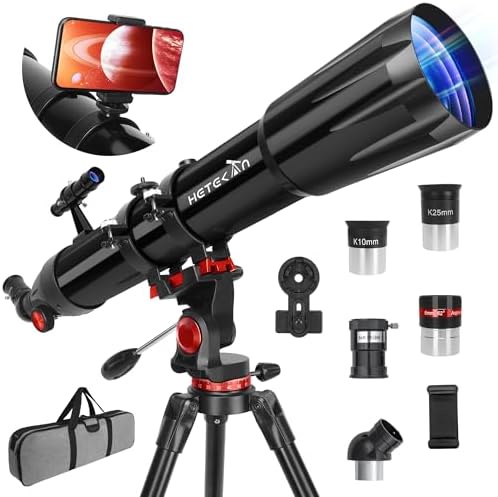
The HETEKAN 90mm and the similar version are the ones I keep reaching for when someone asks what to buy.
For the person who wants to see Saturn’s ring, the craters of the moon, and the moons of Jupiter without spending a fortune or fighting a wobbly mount all night, the MEEZAA 90mm is the no-brainer. It is steady, sharp, and simple enough to set up in the dark.