I have taught astronomy in Tucson for 20 years and ran a public observatory for 12 of them. In that time I have watched a lot of people buy a first telescope, and I have watched a large share of them stop using it inside a month. The failure is almost never the optics. It is the sequence. Someone buys a tube, skips the part where anybody explains what they are looking at, and then stands in the dark with a wobbly image and no idea whether the blur is Saturn or a streetlight. This comparison covers four purchases that attack that problem from different directions: one tabletop Dobsonian and three books that each promise to be a beginner telescope setup guide. Two of those books even carry the same title, which is its own small puzzle, and I will explain what to do about that before you spend anything.
If you are buying for yourself or for a kid this fall, the Sky-Watcher Heritage 130mm tabletop Dobsonian plus one honest setup book is the combination I would hand a beginner on night one. The scope gives you enough aperture to see something genuinely worth seeing, and the book keeps you from burning that first night fighting a finderscope.
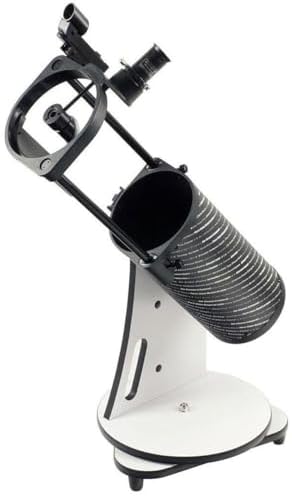
Sky-Watcher Heritage 130mm Tabletop Dobsonian
Five inches of aperture on a dead simple alt-az base, collapsible tube, nothing electronic to misalign
Needs a solid table or stool under it, and the included finder plus eyepieces are the first things you will want to replace

How to Use a Telescope for Beginners
Walks the exact order a beginner needs: setup, alignment, focusing, then finding planets, stars, and deep-sky objects
Same title as a second listing, so you have to confirm which one you are actually buying
How to Use a Telescope for Beginners
Covers the same ground as the listing above, and the two are worth comparing side by side before you commit
Duplicate title means duplicate confusion, and neither listing tells you up front how they differ

How to Use Your First Telescope
Sets up a target list, planets, star clusters, nebulae, and galaxies, so you always know what to point at next
A list of objects is not the same as a lesson in how to find them, and the title promises a lot of ground to cover
Prices and availability were captured from Amazon Creators API and may change.
How I judge beginner gear
The mount is the telescope. I have said that in every class I have taught, and it is still the fastest way to explain why a cheap department-store refractor ends up in a closet. A tube with good glass on a tripod that shakes in a light breeze is a tube you cannot use. You touch the focuser, the image swims, you wait four seconds for it to settle, and by then whatever you were looking at has drifted out of the field. Beginners read that experience as "astronomy is boring" when what actually happened is "the mount is bad."
Aperture is the second filter. For visual observing, the diameter of the main mirror or lens decides how much light you collect and how much detail you can pull out. A 60mm scope that shows a gray smear where Jupiter should be is why people quit. Something in the 130mm range collects roughly five times the light of a 60mm, and that difference is the difference between a hobby and a dust collector.
The third thing I look at is whether the scope asks you to align electronics before it shows you anything. Computerized GoTo mounts are wonderful when they work and maddening when they do not, and the alignment routine is where a tired beginner at 10 p.m. gives up. A manual alt-az mount has no alignment step. You point it, you look.
Last, the eyepieces. Whatever ships in the box is a suggestion, not a tool. Every beginner should expect to buy one decent eyepiece within the first few months. That is normal, not a defect.
The telescope: Sky-Watcher Heritage 130mm Tabletop Dobsonian
This is the one piece of hardware in this comparison, and it is the one I would actually spend money on first. A Dobsonian is the simplest serious telescope design there is: a mirror in a tube, sitting in a rocker box that moves up and down and side to side. No motors, no hand controller, no batteries. The Heritage 130mm takes that formula and collapses the tube so the whole thing fits on a shelf.
The 5-inch aperture is the headline. That is enough light to resolve the rings of Saturn on a steady night, to see cloud bands on Jupiter and the four Galilean moons as tiny disks, to split a double star, and to pull in the brighter deep-sky objects like the Orion Nebula and the Andromeda Galaxy as something more than a smudge. It is not a faint-galaxy machine, and nobody should tell you otherwise. It is a "show me why this hobby is worth it" machine.
The collapsible tube is a real feature, not marketing. A solid 5-inch Dob is a piece of furniture. A tube that shortens for storage is a scope that lives near the door, and the scope near the door is the scope that gets used. I have watched that pattern play out with students more times than I can count.
Two honest catches. First, "tabletop" is literal. This scope needs a sturdy table, a stool, or a solid crate under it, and if that surface wobbles, the scope wobbles. Plan for that before the scope arrives. Second, the finder and the included eyepieces are the weak links. A finder that is harder to align than the telescope is a classic beginner trap. Budget for one better eyepiece and you will be much happier.
What a setup guide has to actually do
Here is the thing about telescope books: most of them are object catalogs wearing a beginner's hat. They show you gorgeous photographs and tell you the Ring Nebula is in Lyra, then leave you outside at night with no idea how to get from Vega to the Ring.
A useful beginner telescope setup guide does four things in order. It tells you how to assemble the scope and get it balanced. It explains collimation, which is the alignment of the mirrors, because an out-of-collimation scope gives blurry views no matter how good the glass is. It teaches you to align the finder with the main tube in daylight, before you ever try it in the dark. And then it teaches you to focus and to find your first targets by star hopping, which means moving from a bright star you can identify to a fainter object you cannot, in small steps.
If a book skips the finder alignment step, it is not a beginner book. That one paragraph saves people more frustration than any other page in the volume.
The three books
I am not going to pretend I logged ten nights on each of these. What I can tell you is what each listing promises and how that maps to what a beginner actually needs.
How to Use a Telescope for Beginners is the most on-target title in the group. It advertises setup, alignment, focusing, and finding planets, stars, and deep-sky objects, which is exactly the four-step sequence I just described. Notice that there are two separate listings with this same title in the table. That is common with independently published beginner guides, where an earlier and a later version end up as two product pages. Before you buy either, open both and use the sample to check whether the text inside actually differs. If it does not, buy one and move on.
How to Use Your First Telescope takes a different angle. Its title promises setup, alignment, and focusing like the others, but it also advertises a target list running to 110 objects across planets, star clusters, nebulae, and galaxies. That is a real strength for a beginner who has learned the basics and now wants somewhere to go each session. The risk is the reverse of the usual problem: a large target list can become a checklist you grind through instead of a set of skills you build. Pair it with a star chart or a planetarium app and it works. Hand it to someone who has never focused a scope and it may overwhelm them.
One more caution that applies to all three. You cannot judge a beginner astronomy book from its cover or its star rating. Check the sample. Look for a page on collimation, a page on finder alignment, and a page that explains what magnification is actually useful. If those three things are missing, the book is a picture book.
Where each option loses
The Sky-Watcher loses on two counts. It is manual, so it will not find anything for you, and if you want the convenience of a GoTo mount you will have to look elsewhere and pay for it. And it is a tabletop, so it needs furniture under it. If you observe from a lawn with nothing flat and solid, that is a real limitation.
The books lose on a simpler axis: a book cannot show you a steady image, and it cannot tell you that your scope is out of collimation. It can only tell you how to check. If you buy a book and no telescope, you have a plan and nothing to point. If you buy a telescope and no book, you have a tool and no plan. That is why I keep recommending the pair rather than picking a winner between them.
The duplicate-title listings lose on trust. Two product pages, one title, no clear explanation of the difference. Check before you buy, and do not assume the newer-looking listing is the better one.
What I would actually buy, in order
Buy the telescope first, if you can only buy one thing. Aperture and a steady mount are the two things you cannot fix later with a $30 accessory, and the Heritage 130mm gets both right for a beginner budget. Then buy one book. If you want the straight sequence of setup, alignment, focusing, and first targets, the How to Use a Telescope for Beginners listing is the closest match to what a new owner needs. If you already know your way around the sky and want a target list to work through, How to Use Your First Telescope is the better second purchase.
Then buy one better eyepiece, and stop. The most common mistake I see is not a cheap first scope. It is a beginner who owns three scopes, no eyepiece they like, and no logbook. A 5-inch Dobsonian, one honest guide, and a notebook will keep you busy for two years.
The part nobody puts in the listing
The best telescope is the one you actually use, and the thing that decides whether you use it is how quickly you can get from the door to a focused image. A tabletop Dob that lives by the back door, a book that tells you what to look for tonight, and a table that does not wobble will beat a bigger scope in a closet every single time. That is the whole test. Not magnification numbers, not the box art, not the spec sheet. Get outside, point it at something real, and let the sky do the rest.