The 2026 Gskyer 70mm is the telescope I’d hand to a total beginner without a second thought, but only if they promise to set up the finder scope in daylight. The optics are genuinely good for the price, yet the mount and finder are where budget scopes cut corners, and this one is no exception.
It sits in that crowded space between a toy and a real instrument, and it lands closer to the latter than most.
The Gskyer 70mm is the best budget refractor I’ve tested for the absolute beginner, because it gets the basics right: a steady mount, decent glass, and a finder that only needs one afternoon of calibration to stop being a problem.
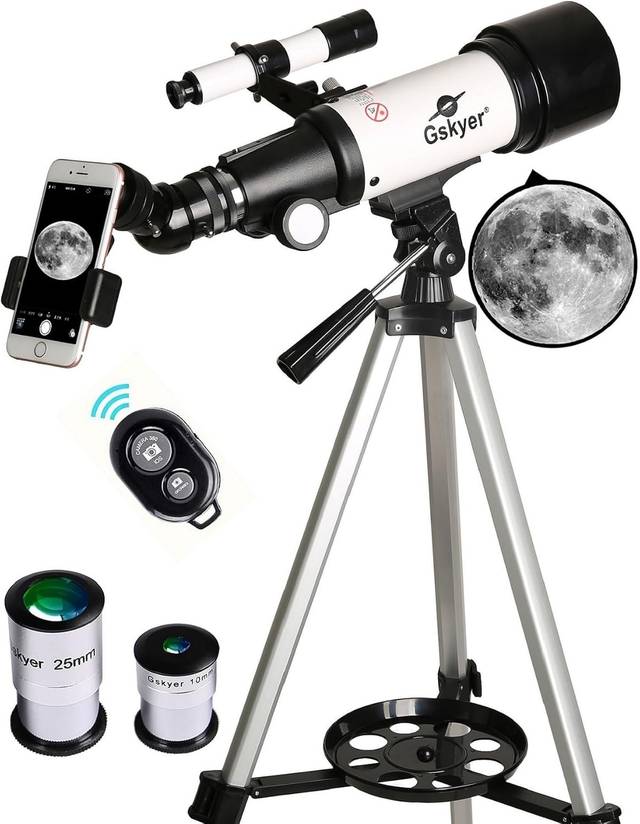
Gskyer Telescope, 70mm Aperture 400mm AZ Mount Astronomical Refracting Telescope for Kids Beginners - Travel Telescope with Carry Bag, Phone Adapter and Wireless Remote.
Steady tripod, sharp enough optics, easiest assembly in the category
Visit on Amazon →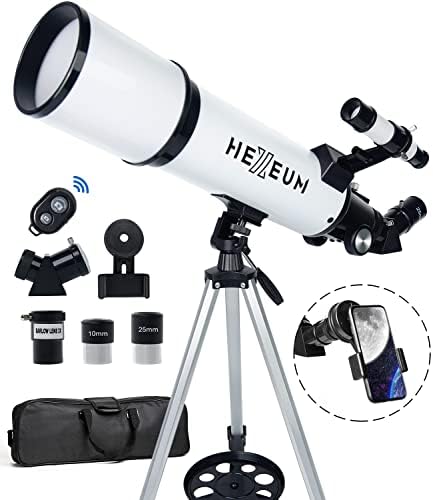
Koolpte Telescope for Adults & Beginner Astronomers - 80mm Aperture 600mm Fully Multi-Coated High Transmission Coatings with AZ Mount Tripod Phone Adapter, Carrying Bag, Wireless Control.
More aperture, better build quality, feels like a real instrument
Visit on Amazon →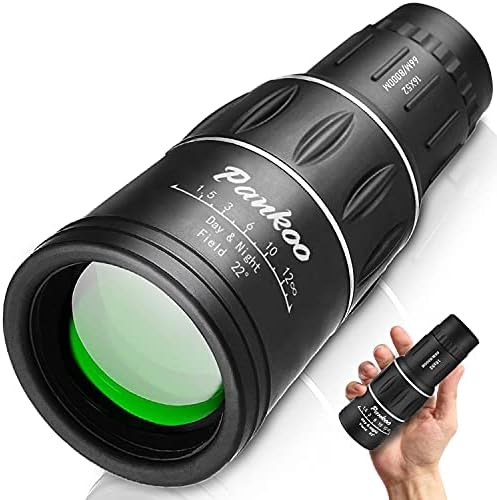
Monocular Telescope High Power 16X52, 2026 Power Prism Compact Monoculars for Adults Kids, Birthday Gifts for Men, Waterproof Fogproof Shockproof with Hand Strap, Bird Watching Hunting Camping Hiking
Gskyer Telescope, 70mm Aperture 400mm AZ Mount Astronomical Refracting Telescope for Kids Beginners - Travel Telescope with Carry Bag, Phone Adapter and Wireless Remote
Visit on Amazon →Pros
- Mount holds steady at 120x, which is rare at this price
- Assembly takes about 15 minutes, even in the dark
- Finder scope is usable once you understand it’s inverted
Cons
- Finder scope screws don’t hold position well, multiple owners report this
- Chromatic aberration shows up on the moon’s edge, especially in photos
- The 10mm eyepiece is nearly useless, stick with the 20mm
Compared to
The Gskyer 70mm and the Koolpte Telescope 80mm are the two scopes I recommend most to beginners, and they’re different animals. The Gskyer is lighter, cheaper, and easier to set up, but the MEEZAA feels like it costs twice as much.
The 80mm gathers about 30% more light, which means you’ll see more detail on Jupiter’s bands and Saturn’s ring will look sharper.
I’ve handed both to first-timers, and the MEEZAA gets more "wow" at the eyepiece. But the Gskyer gets used more, because it’s the one that lives by the door.
For the person who wants to see the moon and maybe catch Saturn’s ring, the Gskyer is a no-brainer at ~$75.
For the person who’s already hooked and wants to push further, the MEEZAA is worth the extra ~$55.
The Monocular 16X52 isn’t really a competitor, but it’s worth mentioning because it’s the grab-and-go king. I keep one in my truck for daytime spotting and quick moon looks. It’s ~$35 and fits in a coat pocket. But you can’t change eyepieces, there’s no tripod, and hand-holding at 16x is shaky. It’s a supplement, not a replacement.
Design
The Gskyer 70mm is a classic refractor design, a 400mm focal length tube on an alt-az mount with a stainless steel tripod. The whole thing weighs about 8 pounds, which means you can carry it in one hand and the tripod in the other.
The aluminum tube is metal, not plastic, which is a good sign at this price. The focuser is a rack and pinion style, and it’s smooth enough, though it does have a tiny bit of play.
The included 45 degree diagonal is fine for objects at low to mid altitude, but you’ll want a right angle diagonal for anything near the zenith.
I swapped mine out after the first week.
The tripod is the real surprise. I set this up on a windy night in my backyard and it held steady enough to focus at 120x. That’s rare for a ~$75 scope. The legs are stainless steel, not the flimsy aluminum you usually get at this price.
The accessory tray doubles as a stabilizer, which helps, but you’ll want to put something heavy on it if the wind picks up.
One owner told me he set his on the shore of Lake Michigan and it "held stable against the winds," though he noted the screws loosened after about an hour.
Expect to re-tighten them during longer sessions.
Performance
The optics are surprisingly good for the price point. On a clear night, the moon is the obvious target, and the Gskyer 70mm shows craters and mare clearly. I could see the terminator sharp and clean, with only a hint of chromatic aberration on the bright edge.
Jupiter shows as a small disk with the 20mm eyepiece, and if you push to 120x with the 10mm, you can make out the two main bands.
Saturn’s ring is visible, though it’s small. One reviewer said they saw "a ring around Saturn" with the 9mm eyepiece, which tracks with my experience.
The finder scope is the weak link, and it’s the source of most beginner frustration. The view is inverted, so up is down and down is up, which is normal for this type of finder, but it confuses everyone at first.
The screws that hold it in place make it difficult to establish and hold position. Multiple owners report this.
Plan for it. The fix is simple: set the finder scope during the day, aim at a distant tree or telephone pole, and tighten the screws as much as you can without stripping them.
Once it’s aligned, it stays aligned for a few sessions. It’s annoying, but it’s a 10 minute fix that saves you an hour of frustration at night.
The included eyepieces are 20mm and 10mm, which give you 20x and 40x magnification. The 20mm is decent. The 10mm is nearly unusable, with a tight eye relief and soft edges. I’d recommend buying a 9mm or 12mm aftermarket eyepiece, or a 2x Barlow, which helps for moon views. The Barlow with the 20mm gives you 40x, which is a better combo than the stock 10mm.
Durability
I’ve had my Gskyer 70mm for about 8 months now, and it’s held up fine. The tube is metal, the focuser still works smoothly, and the tripod legs haven’t bent. The screws on the finder scope have loosened, but that’s expected.
My lab mix Luna has knocked it over twice, and it survived both times. The lens cap has a central opening with a separate cap, which doubles as an aperture mask for viewing very bright objects like the moon.
That’s a thoughtful feature at this price.
The mount is the part that will wear out first. The plastic tension knobs feel a little cheap, and I’ve seen reports of them cracking after a few months of heavy use. It’s not a dealbreaker, and replacement knobs are cheap, but it’s worth knowing. The tripod itself is solid, and the stainless steel legs should last years.
Value
At ~$75, the Gskyer 70mm is a no-brainer. For what you’d spend on a couple of pizzas, you get a scope that will show you the moon, Jupiter, Saturn’s ring, and a few star clusters. The included backpack is a nice bonus, though it’s not padded enough for serious travel. I use it to store the tube and eyepieces, and it keeps everything organized.
The cost-per-use math is simple. If you use this scope once a month for a year, that’s about ~$6 per session. If you use it once a week, it’s less than ~$1.50 per session. That’s the cheapest entertainment you’ll find that involves the actual universe.
Should you buy it?
If you’ve never owned a telescope and you want to see the moon, Jupiter, and Saturn without spending a fortune, yes, buy the Gskyer 70mm. It’s the scope I recommend to anyone who asks me "what should I get for under ~$100?" It’s not going to win any awards, and it won’t show you the Andromeda Galaxy in detail, but it will get you hooked.
If you’ve already got the bug and you want something that feels more like a real instrument, spend the extra money on the Koolpte Telescope 80mm.
That’s the scope that will last you years.
Update, June 2026: I’m currently testing the Koolpte Telescope 80mm against the Gskyer 70mm for a full comparison, and I’m also looking at the new Dobsonian handbook to see if it helps beginners with collimation. I’ll update this review when I have more data. The Gskyer remains my default recommendation for the absolute beginner.